Assignment 3

Draw an outside scene of your choice.

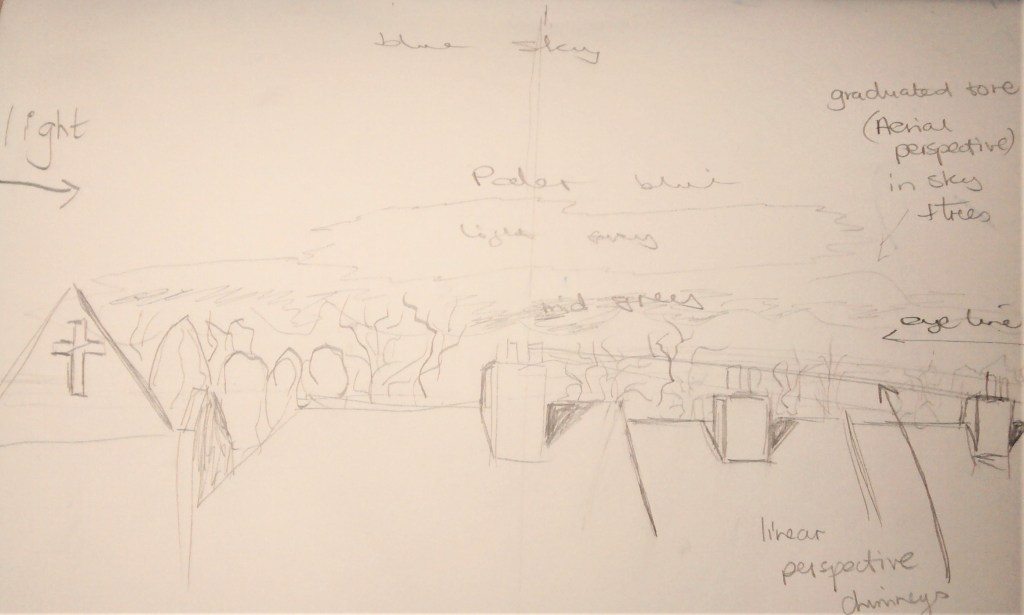
Preliminary drawings

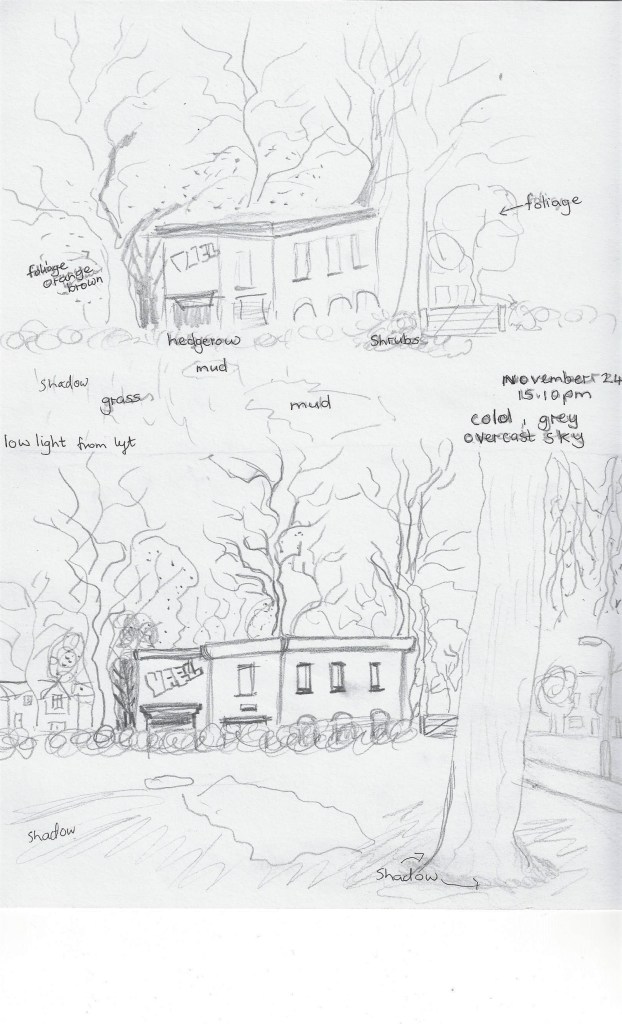
Experimenting with the composition – view A
Experimenting with the composition – view B
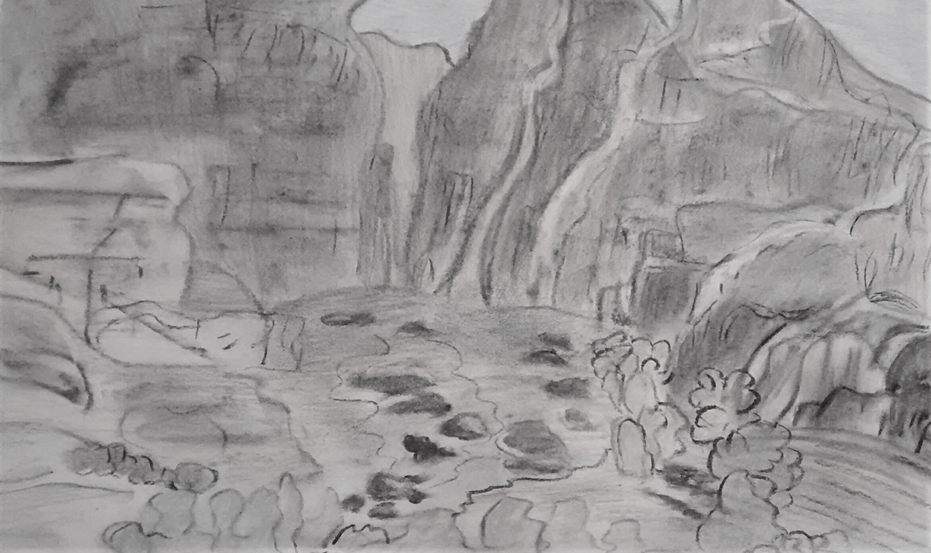
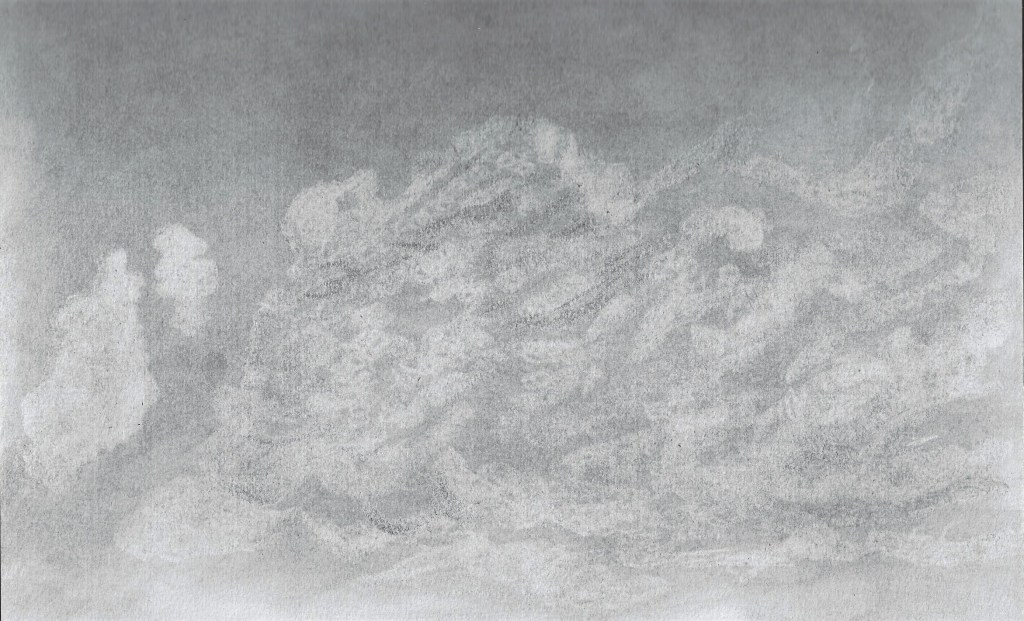
Practising graduated tone ( aerial perspective )
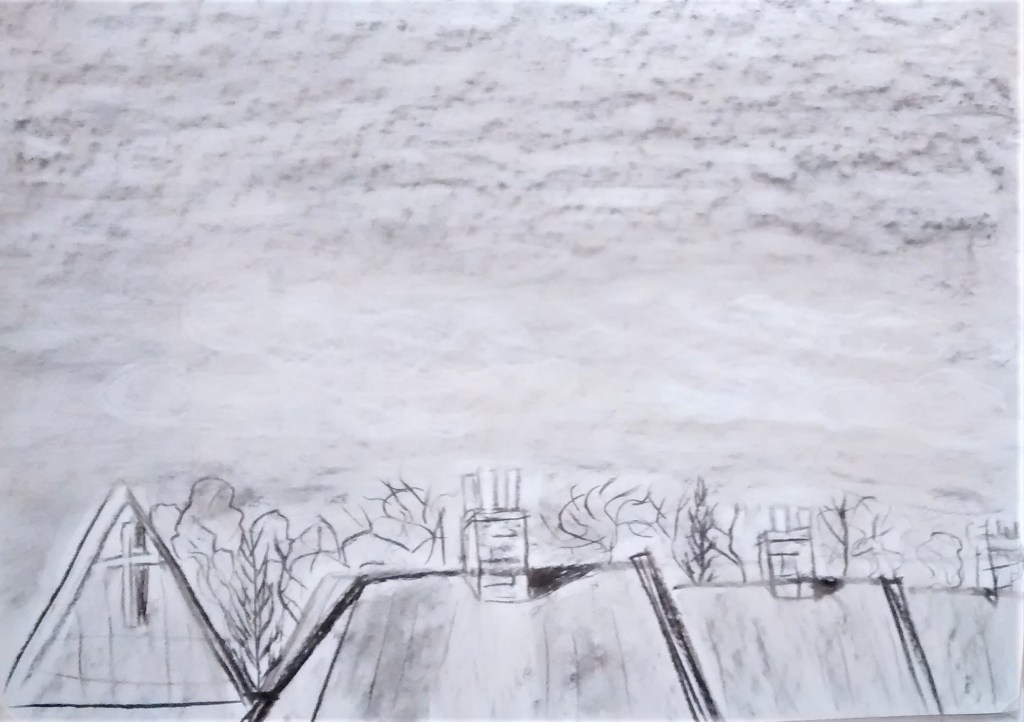
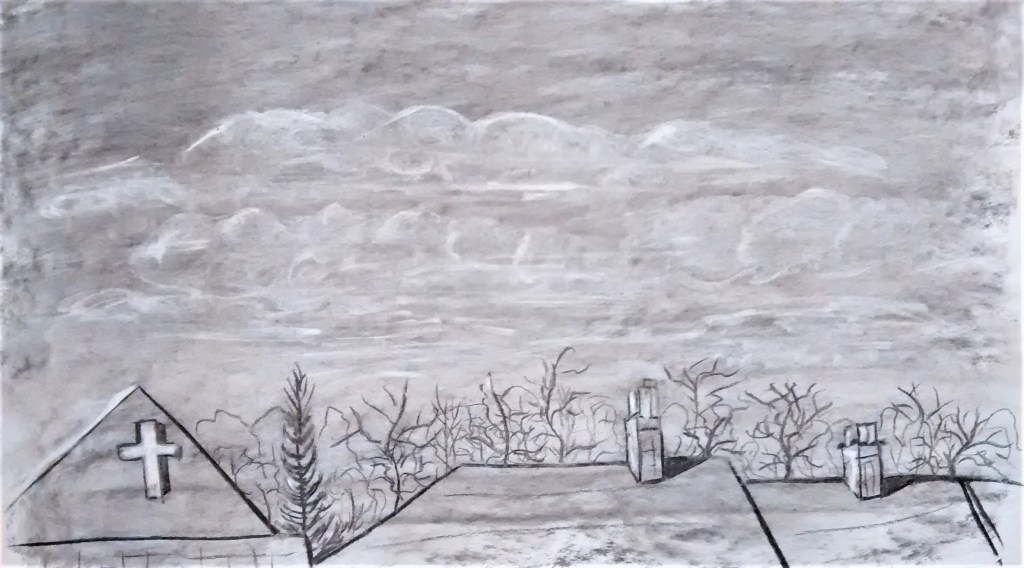
Broad sketch in light charcoal
Broad sketch in dark charcoal
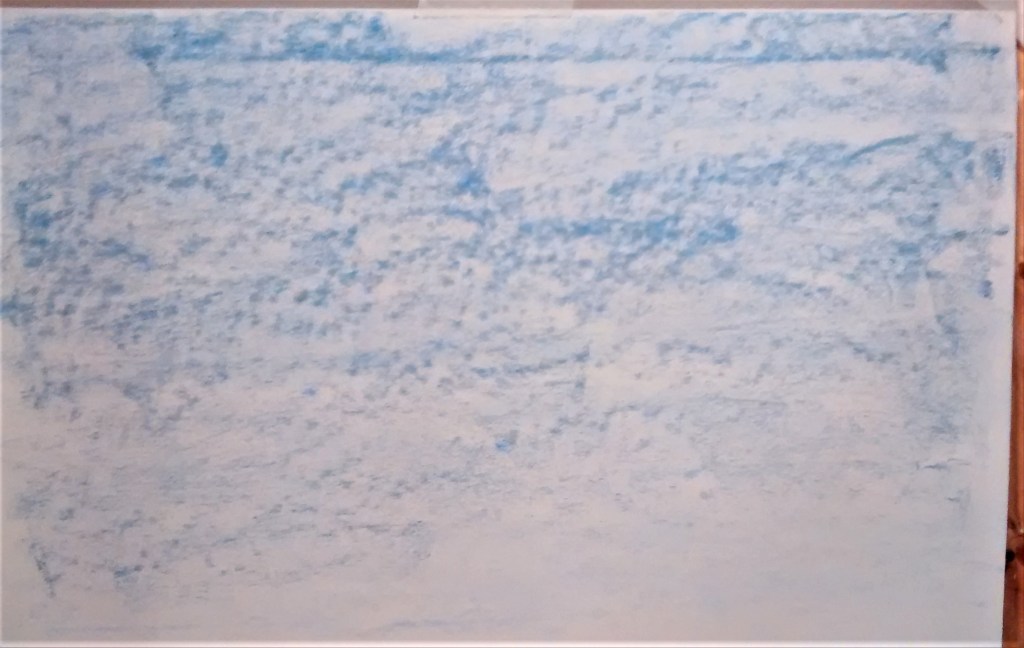
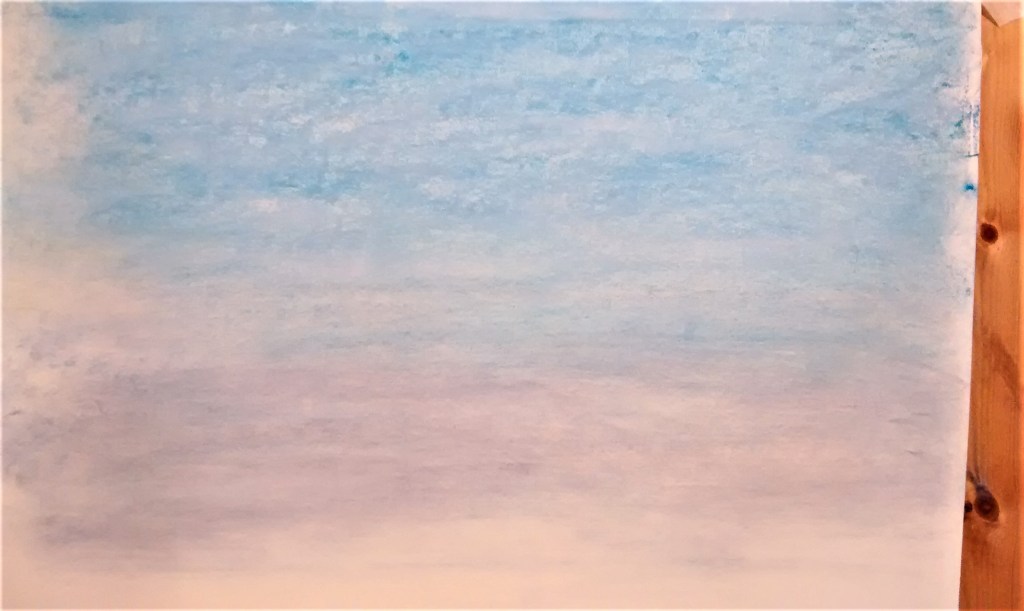
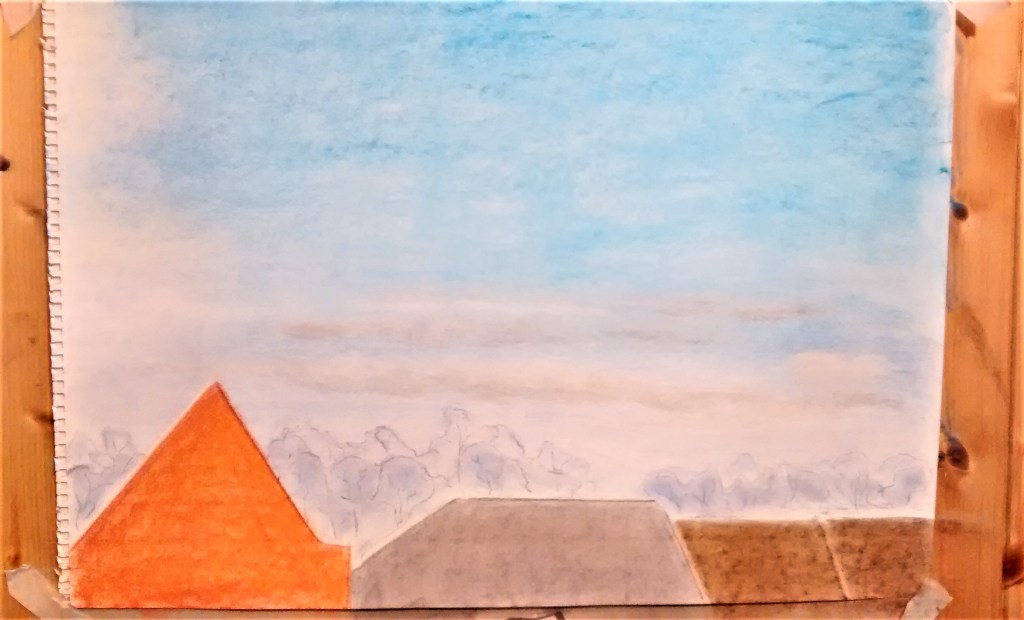
With my A2 heavy cartridge paper taped to a board and surrounded by my preliminary drawings I sketched lightly in pencil where the main shapes and eyeline would be . I began with a layer of two shades of blue soft pastel and blended it in with a cloth.
I then added layers of violet soft pastel and another shade of blue blended in with a cloth.
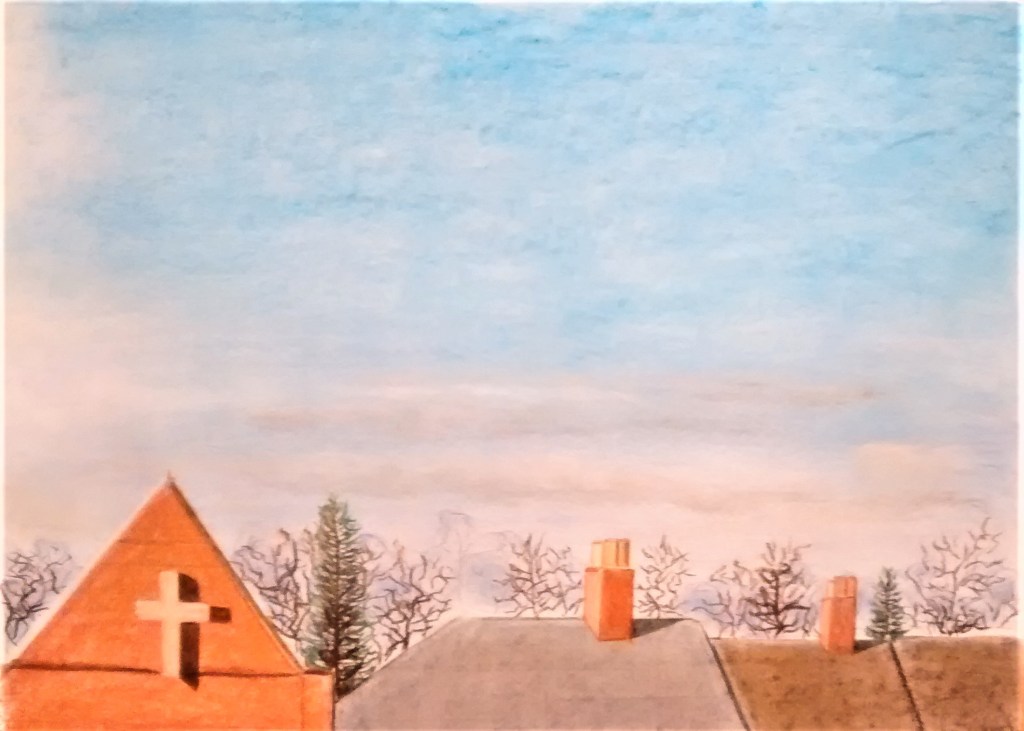
I added several layers of grey and white soft and hard pastels for the clouds , violet for the distance and middle trees. The rooftops to the left and right are orange, red and dark brown soft pastels, white pastel pencil, terracotta drawing pencil. black watersoluble pencil and violet and grey soft pastel for the middle rooftop. A putty rubber was used to lift some areas of the clouds.
For the final layers I added the the straight lined objects . For the closer trees I used dark, mid brown, yellow and green soft pastels. The chimneys and cross are done with orange, red , cream and brown soft pastels and terracotta drawing pencil. I added the shadows last using black watersoluble pencil.

Assignment 3

Reflection

Demonstration of technical and visual skills

Throughout this assignment I have constantly felt challenged and pushed to explore new skills in drawing. It has been the most difficult work so far and I have learned so much. Working with linear and angular perspective is something I need to work on, my rooftop drawings conveyed in some way the urban beauty I was attempting to show but the accuracy has weaknesses I feel.

I have been experimenting with using mixed media in my work and trying different supports but I need to do this more. My observational skills and visual awareness are improving although I am aware of sometimes drawing what I think I see rather than what is actually there. I have noticed that my design and compositional skills are increasing slowly as I work through the exercises and look at other artists work. I also am realising that the exercises are a guide and that I can use them to do further sketches beyond what is being asked.

 The exercises with aerial perspective felt more enjoyable and I was able to demonstrate this more easily in the final drawing.

Quality of outcome

I can see that the quality of my work is improving and especially as I focused on using preliminary drawings to inform the final piece and present the work in a coherent way. This is especially evident in the assignment final drawing of rooftops. I also found the sketchbook walks exercise improved the quality of the outcome for the composition I did with acrylic inks. Discernment is developing with each project and conceptualisation of thoughts is something I want to develop as I become more confident and not worry about my drawings being carefully composed. I am seeking to communicate my ideas in a small way and this course is aiding that process.

Demonstration of creativity

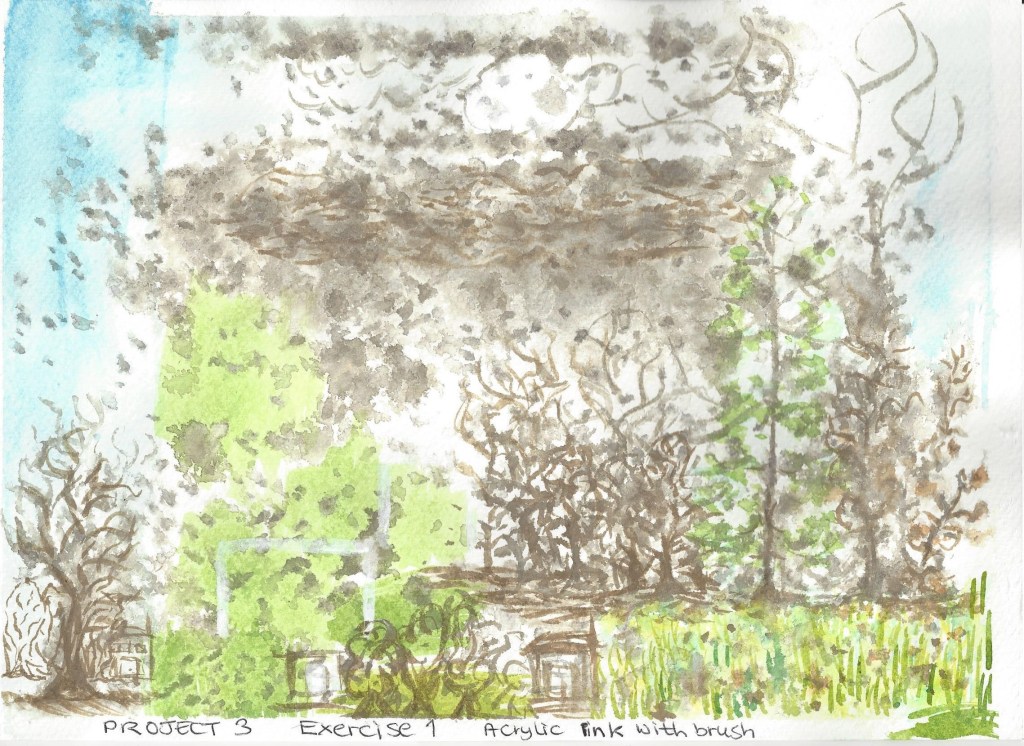
I sought to demonstrate creativity particularly in project 3, ex 1, with experimenting in mark making to inform future drawings some of which I used for landscape drawings but not so much for townscapes. I tried to use imagination by recreating other artists work in my own style which I enjoyed and found helpful. The work for project 3 was my most creative and I experimented more with different media.

Context reflection

I have gained knowledge of other artists techniques through the research in these projects and made notes when finding a new technique that I want try in the future (this was recommended by my tutor in previous assignment feedback).

I am developing critical thinking and meeting up with local art groups, attending an OCA study event has been invaluable.

Part 3 Expanse

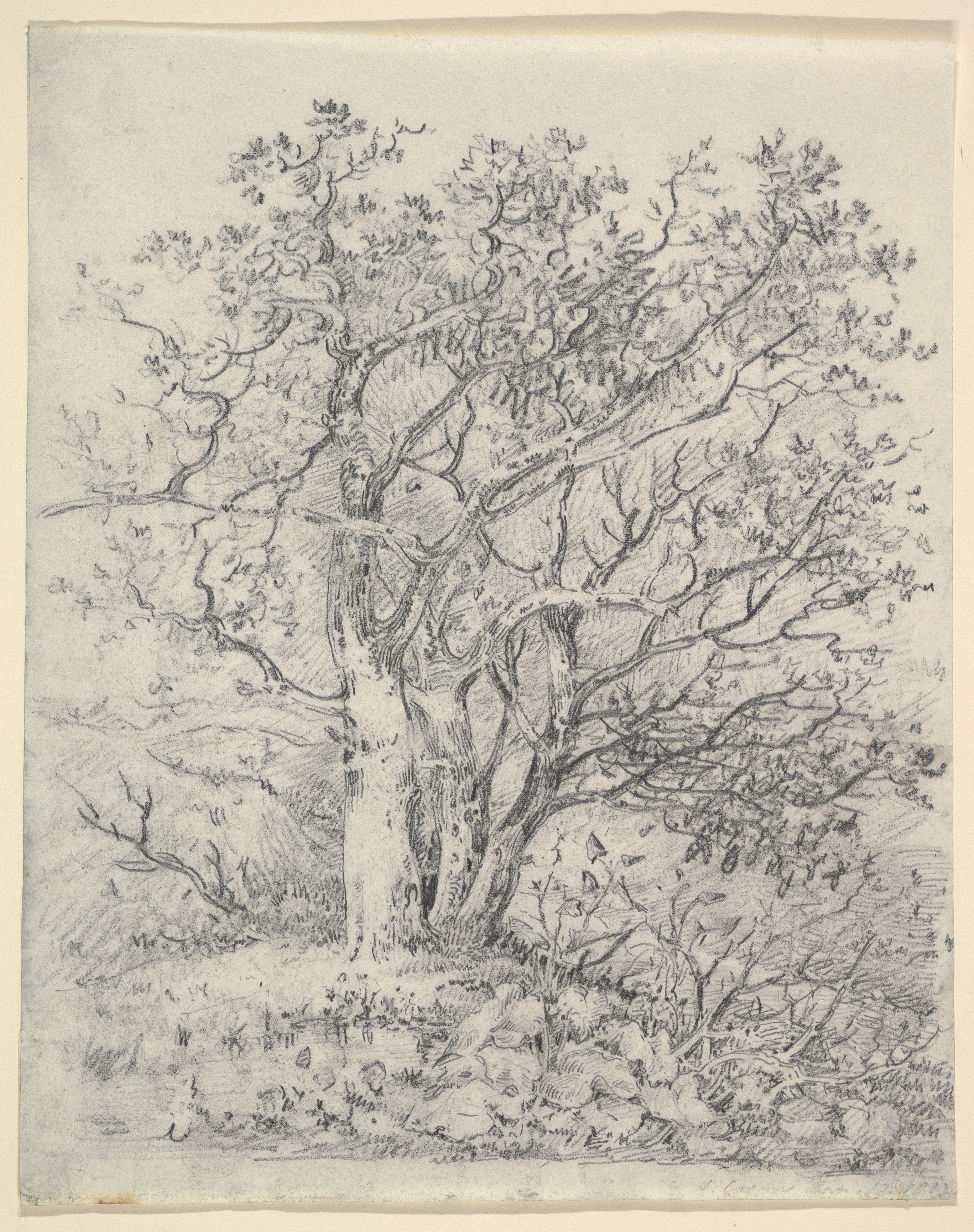
Project 1 Trees I am looking forward to this project as I feel trees will be such an interesting subject to look at and study. I Found this great drawing by the artist – J.Chrome which shows lots of mark making which I feel gives a sense of movement to the drawing.

Fig.1 Three trees (1812)

Exercise 1 – Sketching individual trees

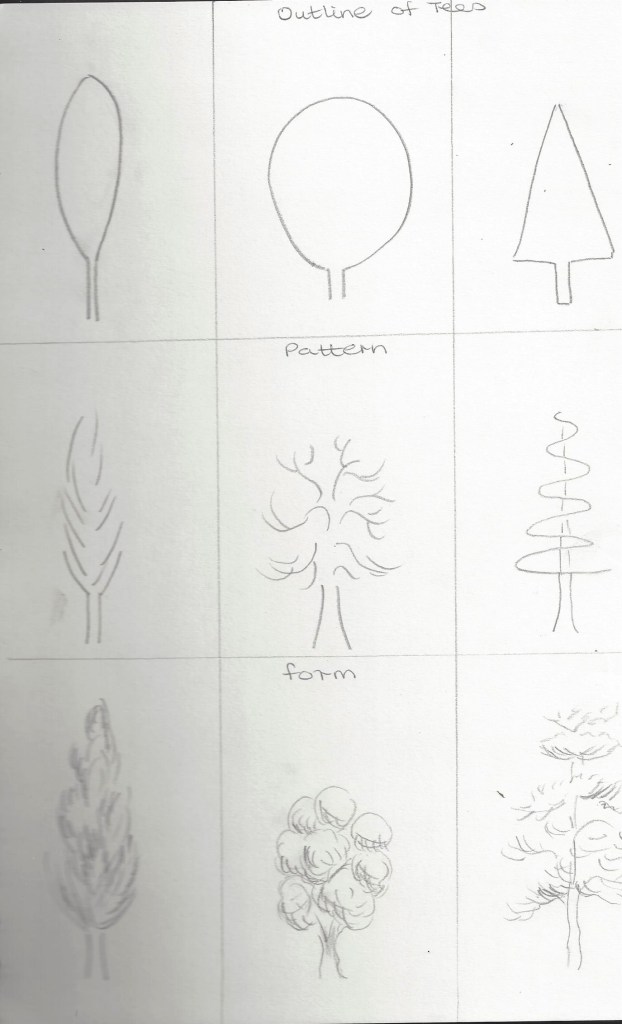
We were asked to build up and sketch the overall shape and outline of the trees.This is a helpful way to start to observe the simple shape and will inform my future drawings of landscapes.

This drawing above was done on a canvas board and mostly copied from a found picture – possibly an old Christmas card or calendar. I used a HB pencil to sketch out the tree shapes , moon and path. I then used acrylic paint to add colour and tone. I like the repeated shapes of the fir trees as it makes it easy to observe the way they diminish in the distance. The pathway draws the eye to look from front to back and gives a flow to the landscape.

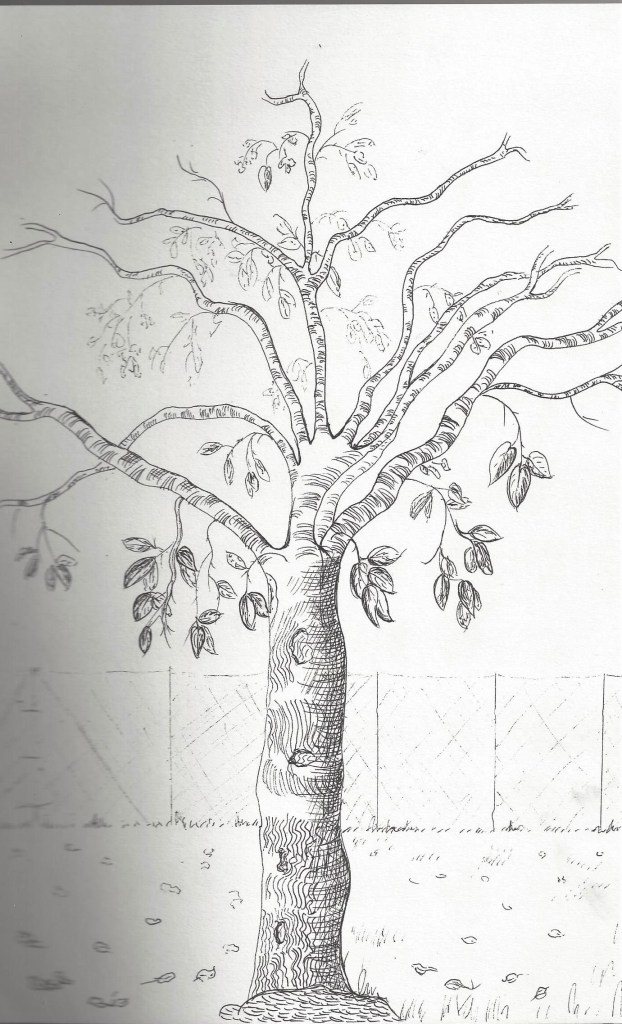
Exercise 2 – Larger observational study of an individual tree.

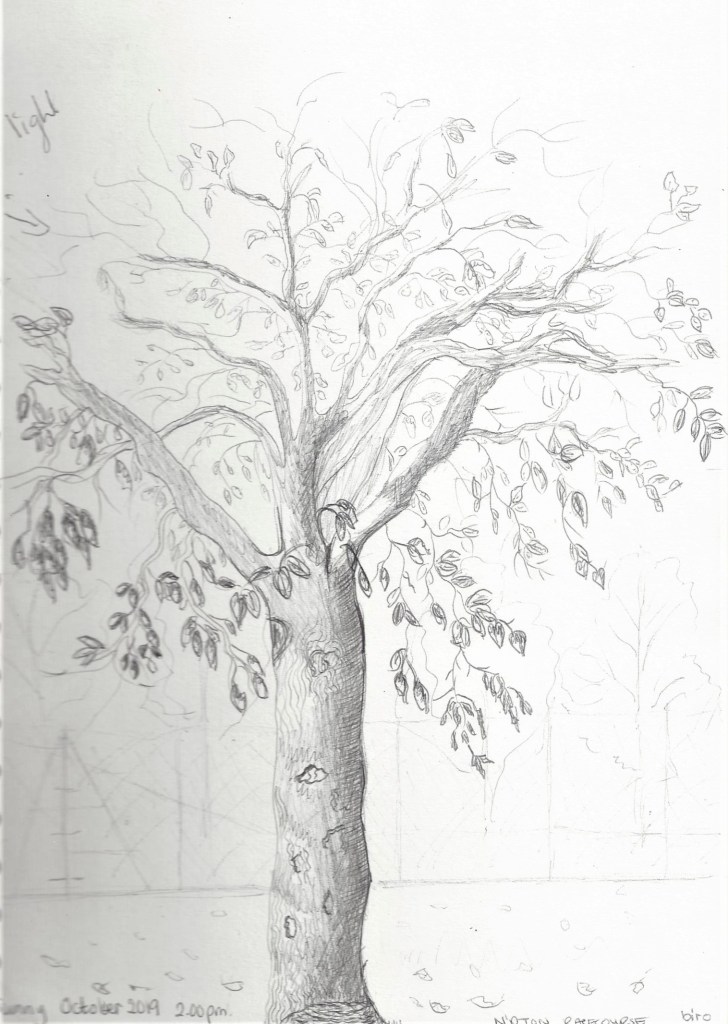
Large sketch bottom- I drew this whilst sitting in the park on an Autumn day. A good season to be able to observe the branches without a lot of foliage. This was done in ballpoint pen. I enjoy the flow of the pen and smoothness of texture. Light was coming from the right – ballpoint is good for darkening shadow areas. I realise now that I forgot to note any shadow on the ground – must remember to look next time.
The top left sketch was done using fine liner pen and drawn back at home using the first sketch for reference. Fine liner gives more of an illustrative look which I think suits the subject.
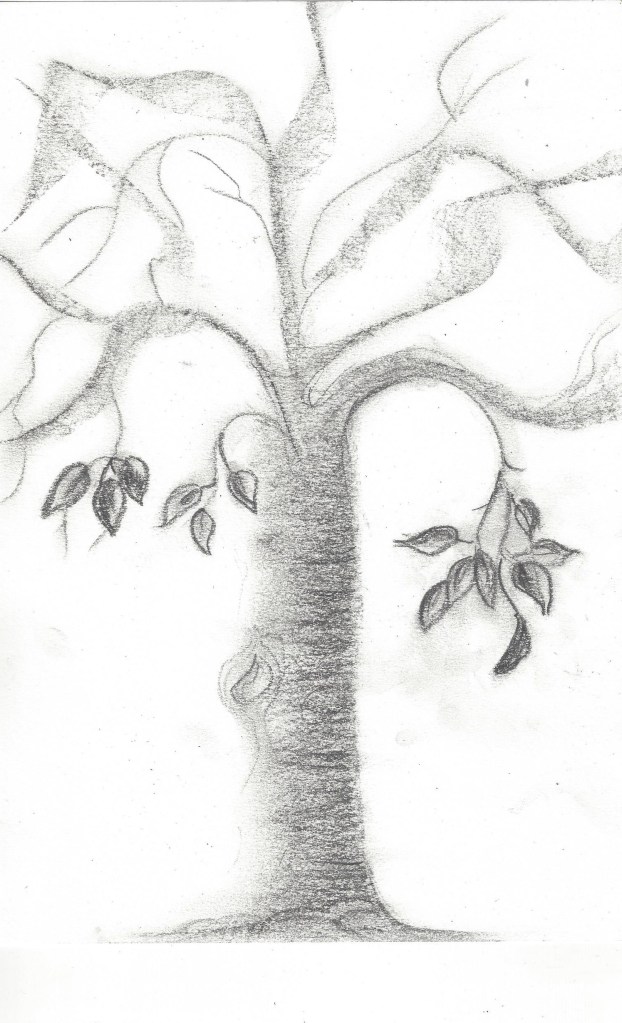
The top right sketch was drawn from memory as an experiment, with charcoal pencil- I am pleased with the texture of the bark and even the abstract look of the branches.

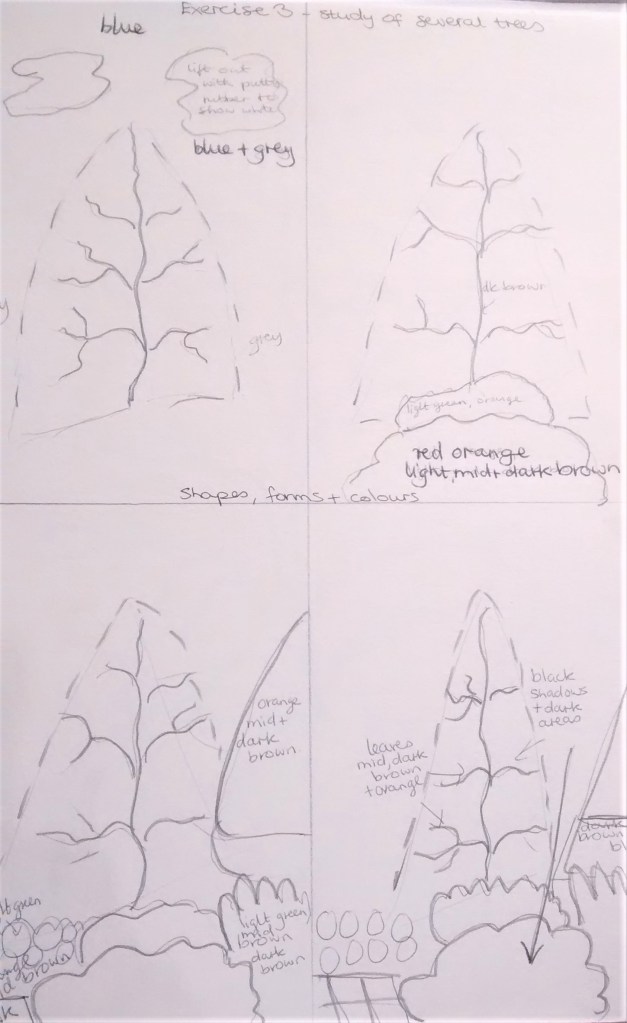
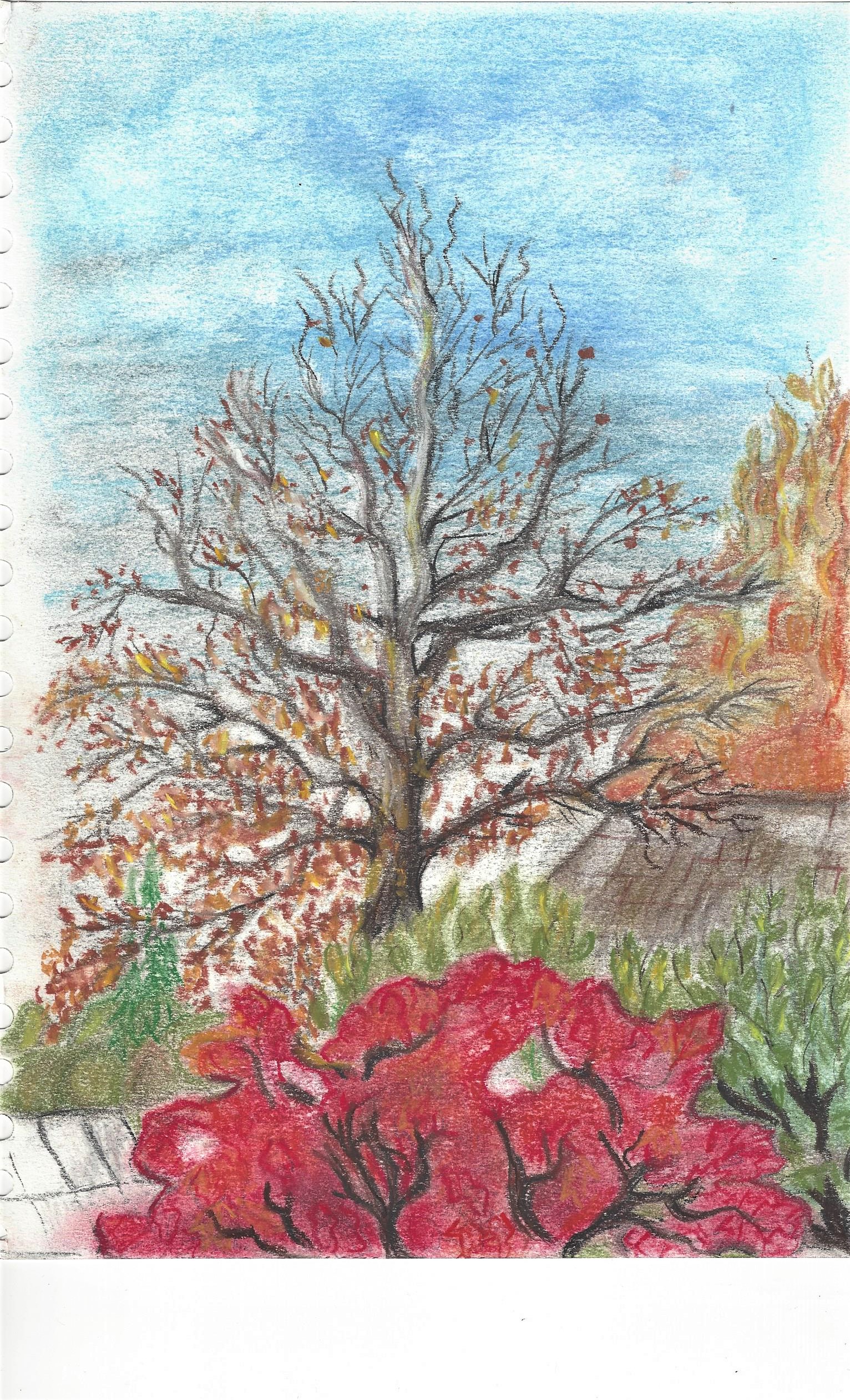
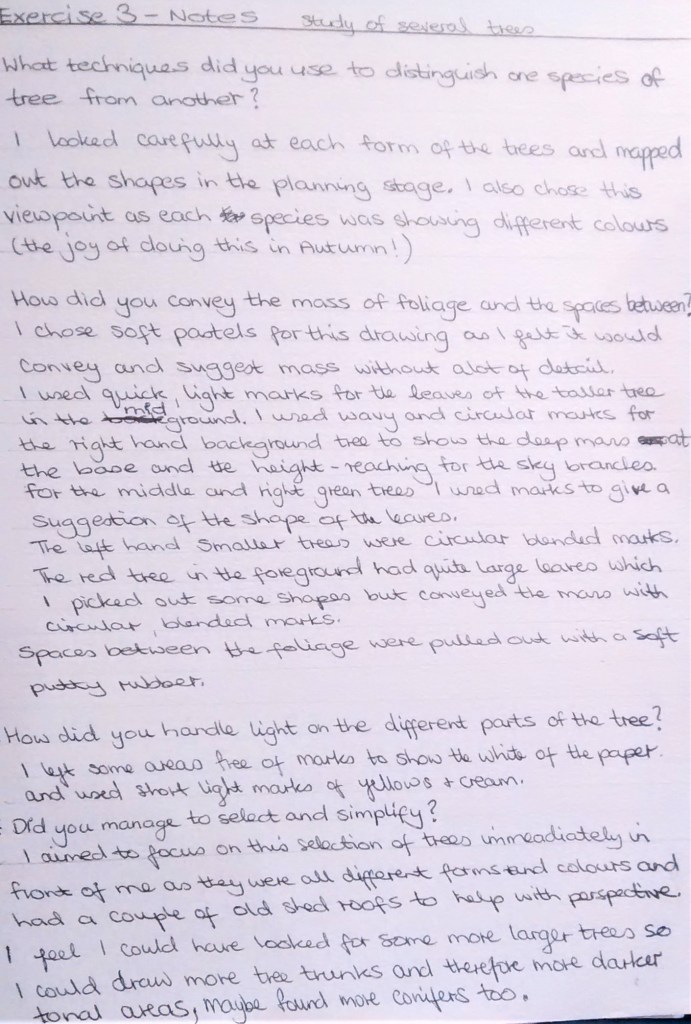
Exercise 3 Study of several trees

Final drawing

Tree experiments –

PROJECT 2 landscape

Research – Artists from different eras who use landscape as their main subject.

Fig.3 The Watermill, 1495-97 (pen & ink, gouache and w/c on paper), Dürer or Duerer, Albrecht (1471-1528) / Bibliotheque Nationale, Paris, France
I like the shapes of the foliage on the tree in the forefront with the light falling on the tips of the branches giving life to the picture, also the dark storm clouds contrasting against the lighter sky below give an intense atmosphere to the scene.
Fig.4 Road in the Alps, 1495 (gouache & w/c on paper), Dürer or Duerer, Albrecht (1471-1528) I like this theatrical atmosphere created by the viewpoint and the colour used. The shapes of the trees are simple but effective in showing the differences between the types of trees. The darker tones used to show the angles and shapes on the rocks put the work into perspective.
Image result for ash wednesday george shaw
Fig.6 Ash Wednesday 2004-2005 George Shaw enamel on board
I feel so happy to have come across this artists works which show urban landscapes and gives us a chance to observe what we may think of as ordinary.

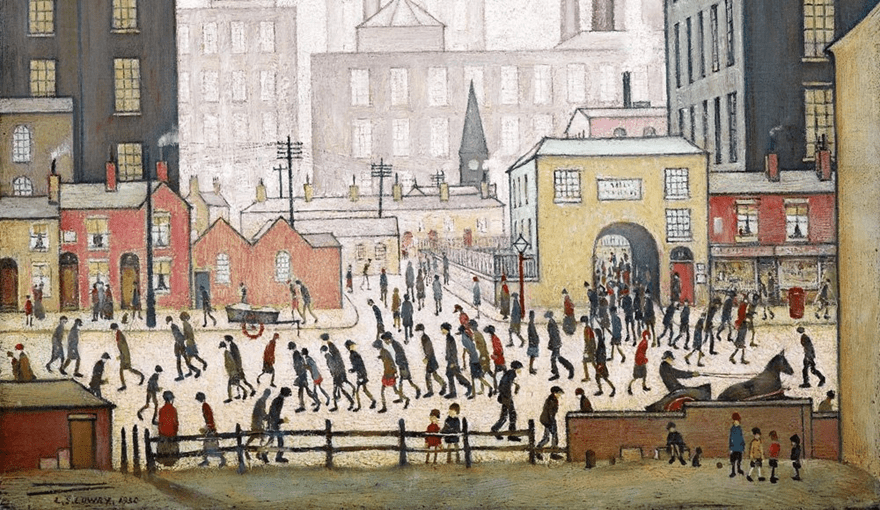
Fig.5 Coming from the mill (1930) I chose to look at this painting by Lowry as it clearly shows – foreground , middle ground and distance. This is something I haven’t been too aware of before until studying this course.

Sarah Woodfine

Fig. 7 Somewhere  2007
pencil on paper in perspex box, 20 x 60 x 20cm Sarah Woodfine
This is the first time I have looked at this artists work and I like the way she has used her drawings in a different way . I wouldn’t have thought of doing this kind of work but it has encouraged me to think ‘ bigger’ about using art to communicate to people. It also reminds me to observe in my drawings how to create 3D by using distance, middle and foreground.

Fig. 8 The Golden Bough (1834) Oil on canvas Turner JMW
Looking at some of the works of Turner I came across this painting and was struck by the glorious light in the sky and the way the tree in the foreground stands out against the light. I like the depth in this picture and the way the background seems to go on and on to another land.
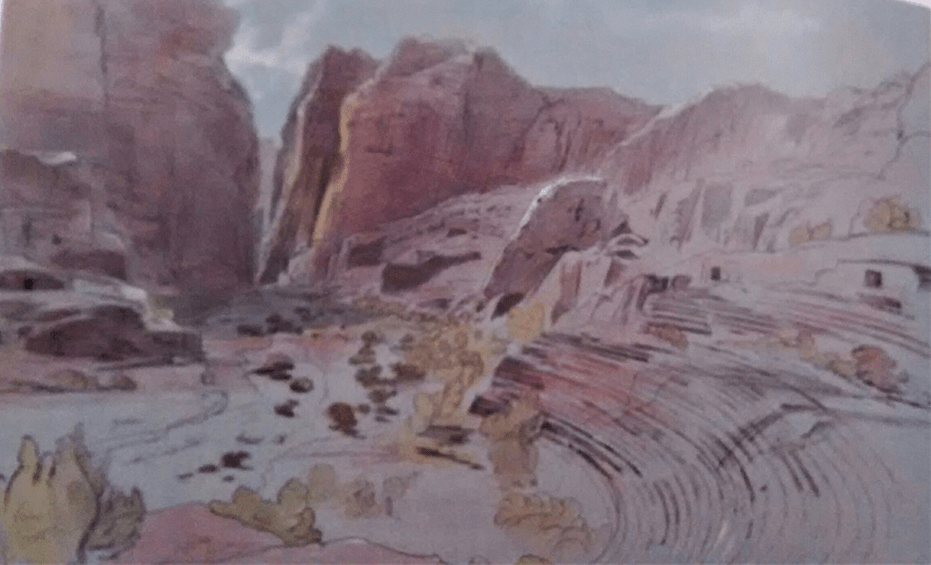
Fig.9 Petra (1858) Pen and brown ink over pencil with watercolour and gouache on blue paper.
‘Edward Lear travelled widely and used pen sketches to record what he saw, at the end of his trips, back in the studio,he applies watercolour washes to the compositions based on colour notes. ( Julian Brooks, 2010, page 85 )
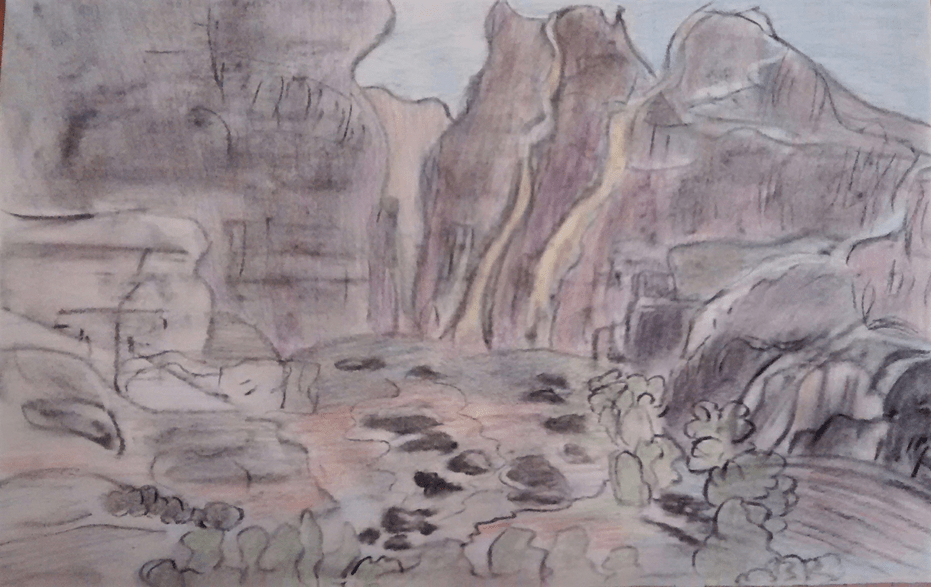
My own version of the above Edward Lear work, which helps me to see how sketches inform the artist when working on a final piece. This quick sketch holds lots of information to guide a future work.

This one below is in black and white which helps me to focus on the tones

https://jennifers.art.blog/2019/11/23/593/ see link for further thoughts

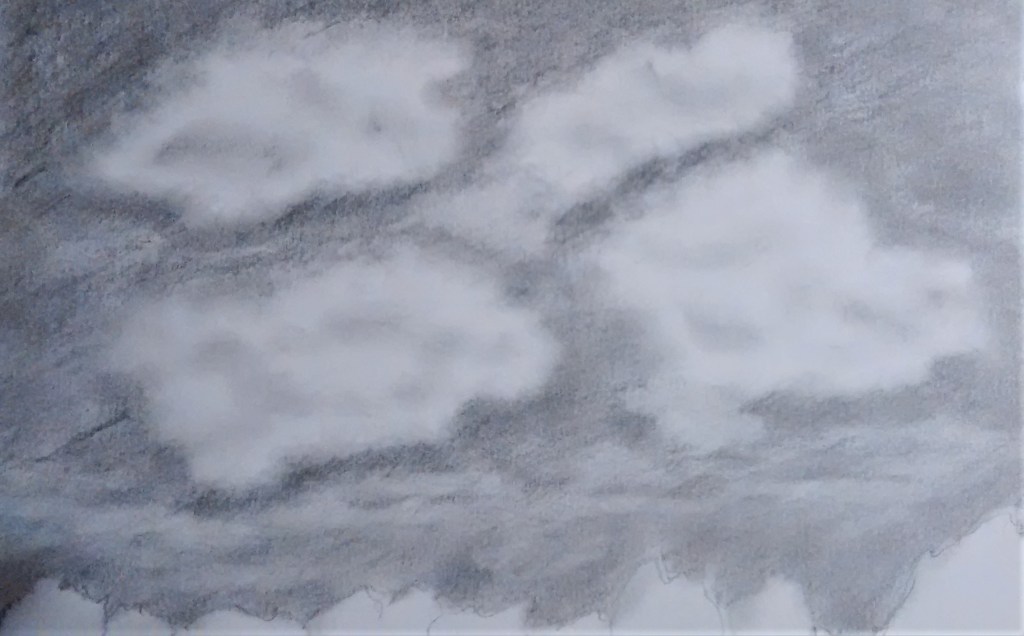
Exercise 1 – Cloud formations and tone

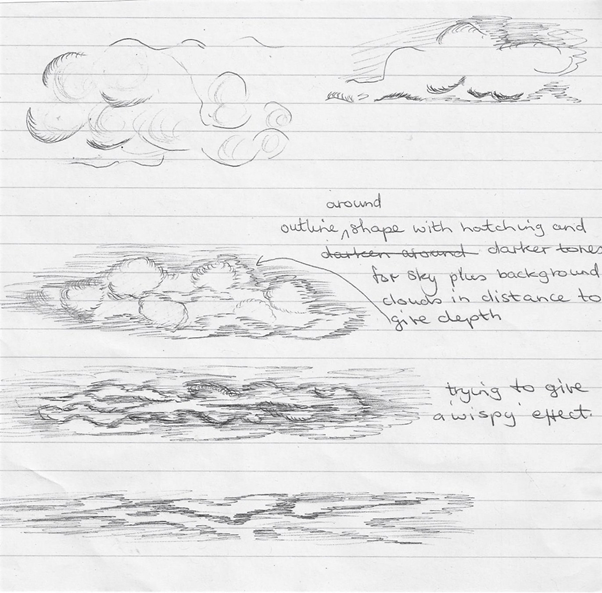
Found this cloud tutorial helpful with some interesting techniques that I’m going to try. N.B Feedback from my tutor for Assignment 1 suggested making a note when I come across a new idea or technique that will inform my future work, so this is my aim as I progress.
This is my version below –
Theses clouds were drawn around 3 pm in early November. The sky was quite overcast, it was dry with a slight breeze. I used a 4B pencil and lightly sketched the shape of the clouds first then hatched in the sky which was darker at the top. I used a blending stump in moving in circles around the shapes of the clouds. I lifted the distant clouds with a putty rubber and tried to depict where the light falls. A paper towel was then used to lift up some of the marks.

RESEARCH POINT http://www.vimeo.com/22299024 I watched this video of Vija Celmins describing one of her exhibitions. I like her approach to drawing as ” re describing ” what we see. I feel I could have this attitude with my cloud drawings and not try to produce an exact copy, particularly as clouds are moving and constantly changing. I take pleasure in the fact that art can be a way of telling a story. I looked at some images that she produced which show a great attention to detail – https://www.tate.org.uk/art/artworks/celmins-sky-p78334 we get the sense of a vast space with no beginning or end.

Cloud experiments from photographs –

Drawn outdoors

A few sketches done on the move with HB pencil and found paper

Exercise 2 – Sketchbook walk

Exercise 3 360` studies

We were asked to choose a landscape where there is an open view in all directions- north, south,east and west. Then to use a viewfinder to help find a focal point and complete the 4 views in 15 minutes each. It was a very cold day and I chose a local park, this exercise enabled me to see the park in a different way and appreciate some beauty in an urban environment. Here are the 4 drawings below:

north
east
west
south

RESEARCH POINT – Some artists I have looked at who have painted in series with the landscape –

As suggested in the exercises I looked at Nicholas Herbert’s work of landscapes and was amazed by the amount of different scenes drawn in the same location. I like the choice of media used ( graphite, colour pencil, soluble crayon, acrylic and pastel ) and will experiment in a similar way in my own work in the future.

l950-web
Fig,10 Clearing below Sharpenhoe 2016
Fig.11 Landscape number 624 1999 – 2000 John Virtue Black Ink and emulsion on canvas
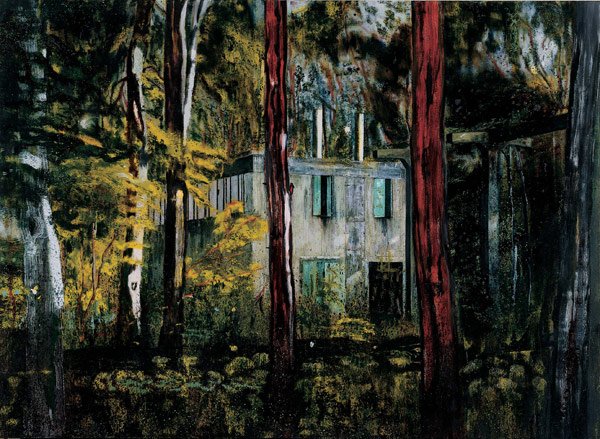
Peter Doig Boiler House 1994 view of a building through the trees and woods
Fig.12 The Boiler House 1993 Oil on canvas Peter Doig
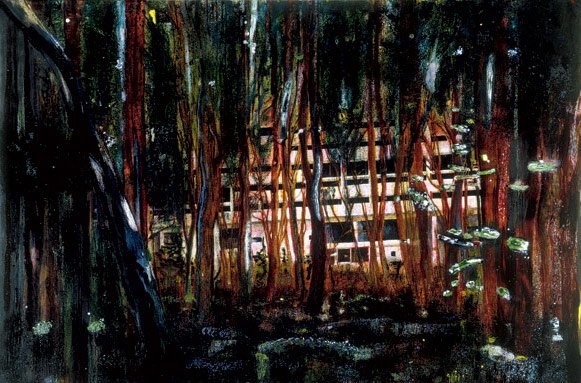
I really like the striking contrast of tones in the pictures above and below, the light draws the viewer in to look beyond the trees.
Peter doing Cabin Essence 1993
Fig.13 Cabin Essence 1993 Oil on canvas Peter Doig

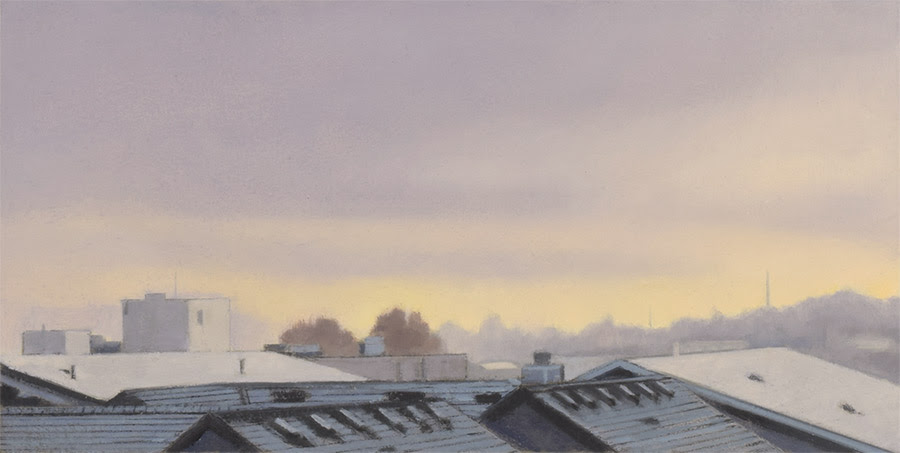
Whilst researching ‘series in landscape’ I came across the artist Mitchell Albala. I contacted him to ask permission to use some of his work titled ‘Rooftops series’ in my learning log. Mitchell got back to me with this quote –

‘ The inspiration for this series was found in my own “backyard” — the view out my studio window. For many years I didn’t consider it a “paintable” view because during daylight hours, all the shapes were an undifferentiated mass of similar values. Then one winter, a light snowfall accentuated the perspective formed by the rooftops. I began painting the scene in the late afternoon or dusk, when this perspective was most apparent, and now those rooftops serve as the foundation of each composition. Each piece reflects a different  moment in time, a different color of light.’ (Albala, 2019) https://mitchalbala.com/rooftops/

PROJECT 3 Composition

Exercise 1 Developing your studies

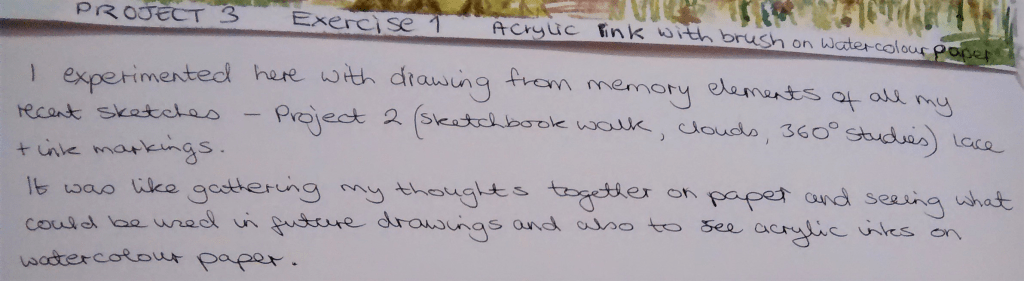
My thoughts on paper

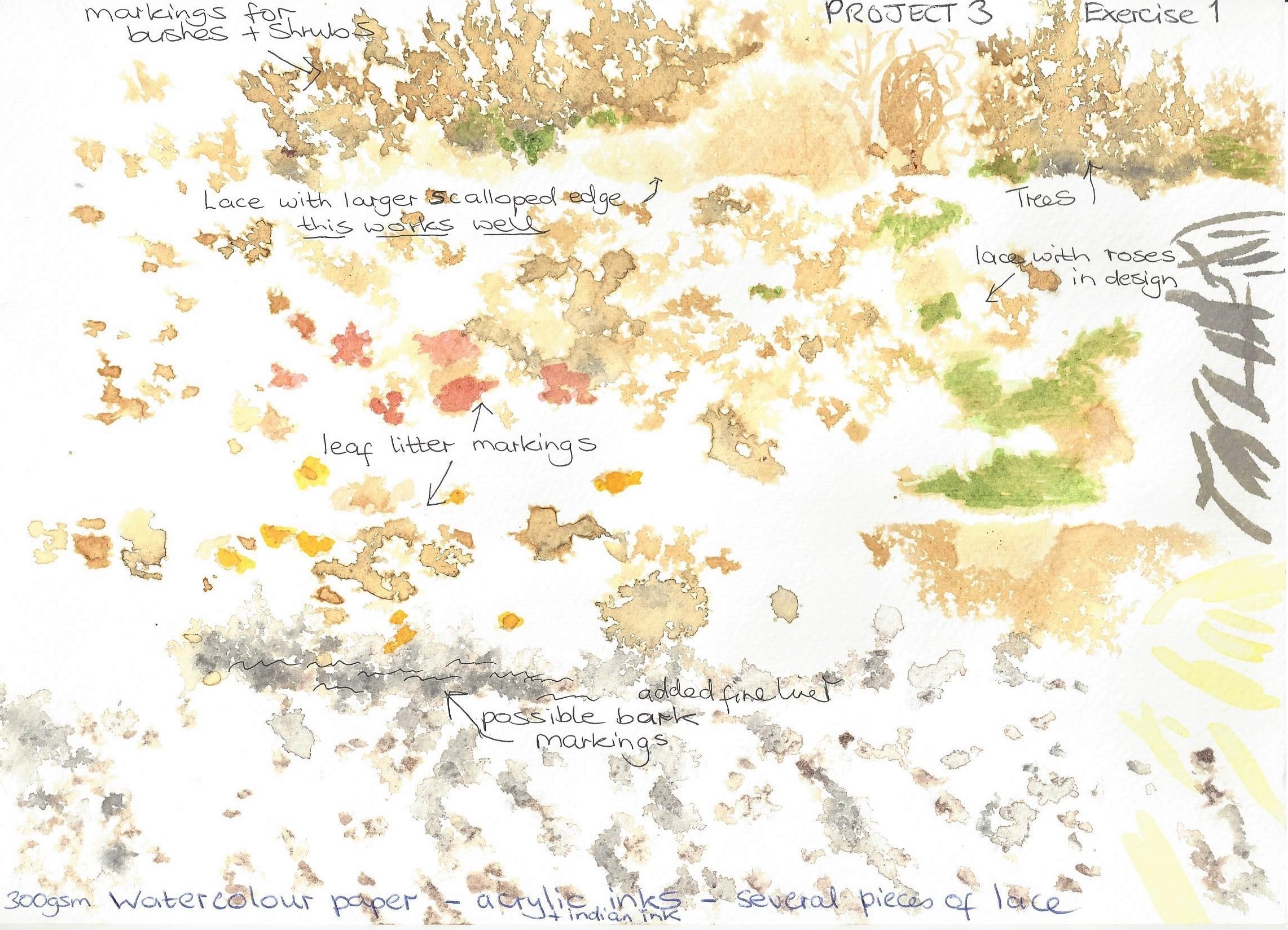
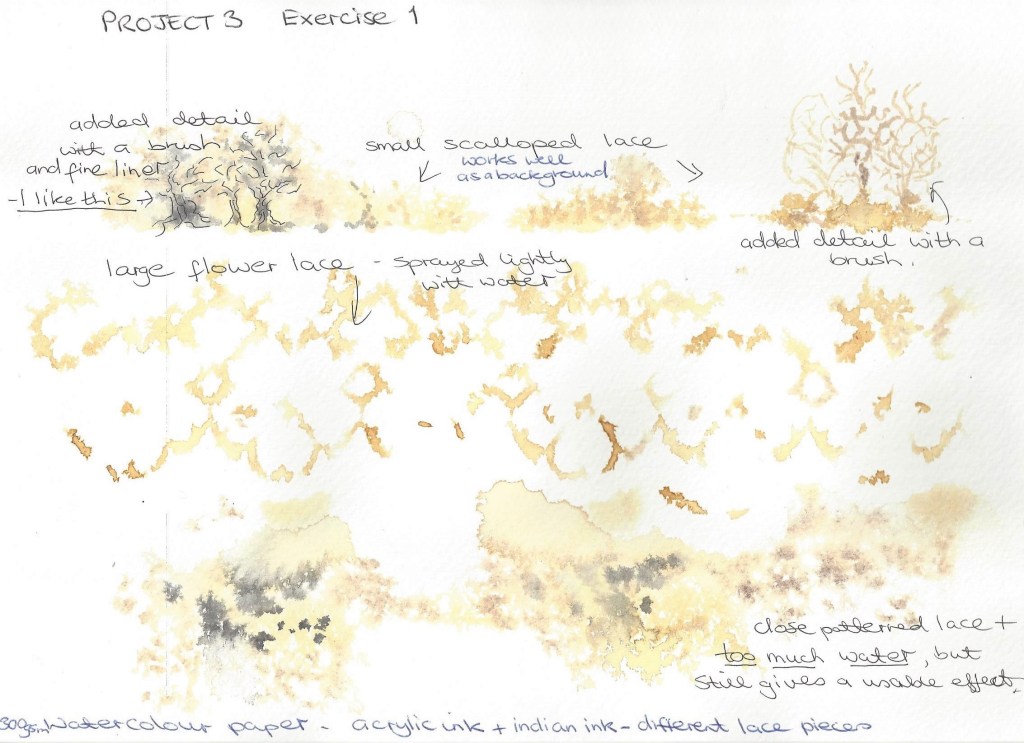
Mark making experiments – I attended a study day in Oxford where Katy Taylor talked about her work and demonstrated a technique used her textile work . Below is a sample of what I did in her workshop which I thoroughly enjoyed and can see how I could incorporate this into my artwork. We place pieces of open lace onto watercolour paper and then sprayed over with water lightly, the lace was then carefully removed and whilst still wet we dropped Indian ink into small areas around the page. I like the effect a lot , it could be used for landscape – trees, plants, paths, sky etc.

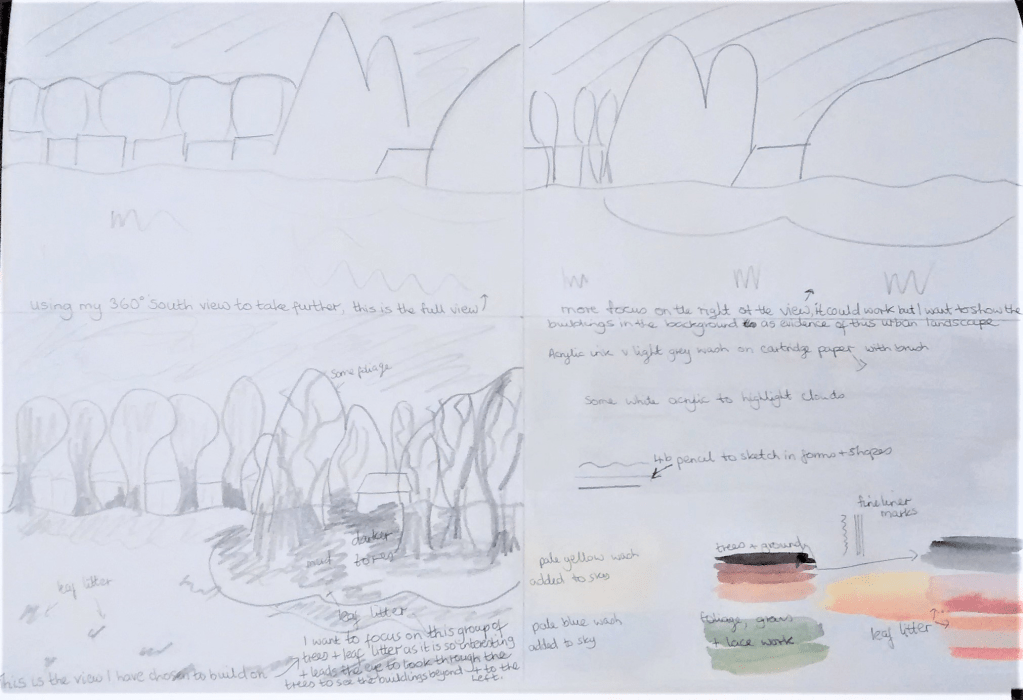
I reviewed some of my preparatory drawings from project 2 and selected from the 360 degree studies a sketch to develop into a further drawing. Below is the planning for this :

Planning for the composition

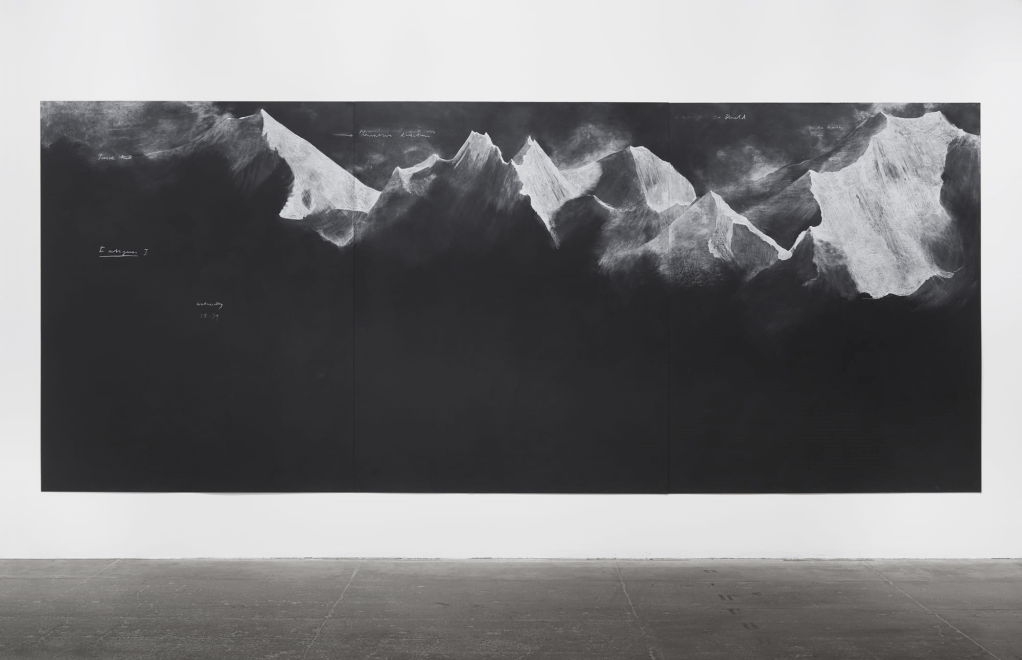
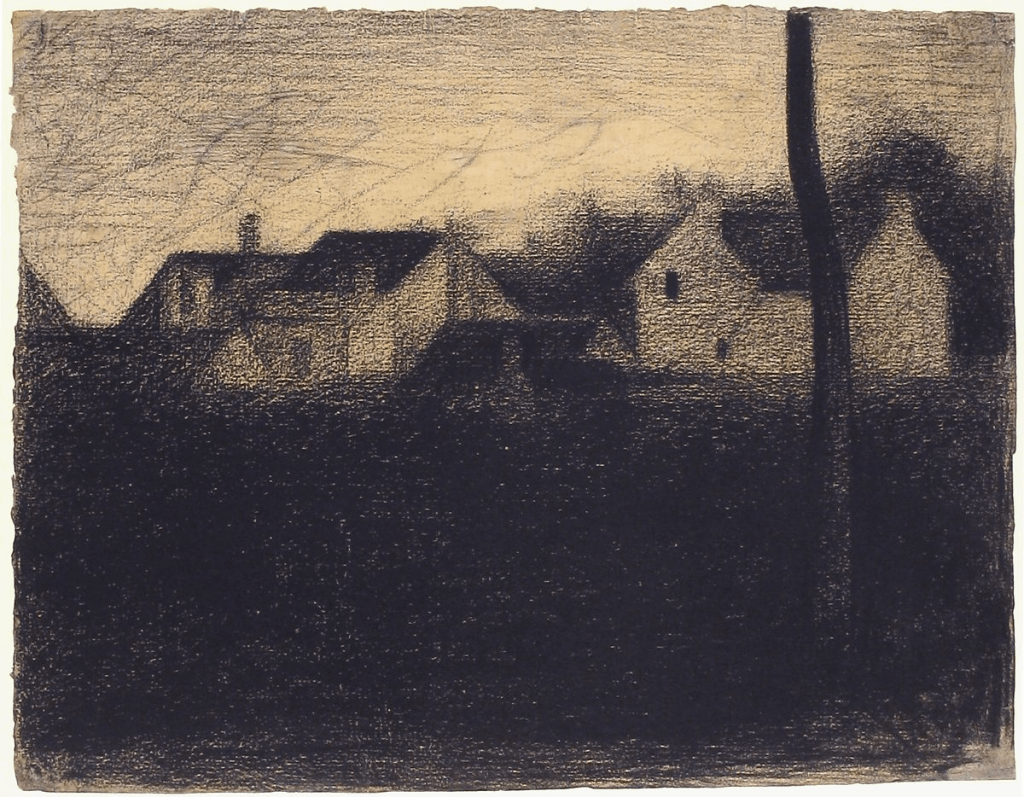
Research pointSimilarities – differences Looking at contemporary artists and who work with landscape and a range of viewpoints and comparing their approaches with those of earlier artists. Tacita Dean has some drawings on blackboard which look very dramatic and atmospheric as also does Seurat’s Landscape with houses below, both use light and dark to contrast and create depth. The most obvious difference between them is the viewpoint, Tacita’s mountains are immense and almost overwhelming. Seurat’s is more focused on what most people see around us.

Fig.18 Fatigues 2012 chalk on blackboard
Fig.19 Landscape with houses 1881-1882

Whilst researching for contemporary landscape artists I came across Adem Potas who is based in Istanbul. This painting is done in watercolour (it does not have a title or date that I can find.) Fig.20 2019

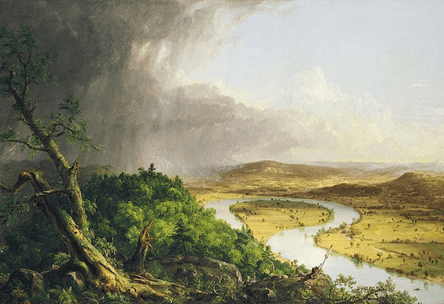
The skies here are particularly dramatic and portray a sense of power and fast changing beauty similar to Thomas Cole’s painting below of the sky after a thunderstorm. Both artists use light and dark contrasts and reflection to take our eye around the paintings. There is also the similar use of aerial perspective – Adem paints the distant clouds on the left in a light tone and smaller shapes, Thomas depicts the distant hills in pale violet with not much detail.

The difference between them is Adem paints in a more impressionist style whilst Thomas paints in a naturalistic way, almost like a photograph of the view. Both these paintings capture the thrilling and striking nature of the sky.

Fig.21 View from Mount Holyoke, Northampton, massachusetts, after a thunderstorm – The oxbow (1836)

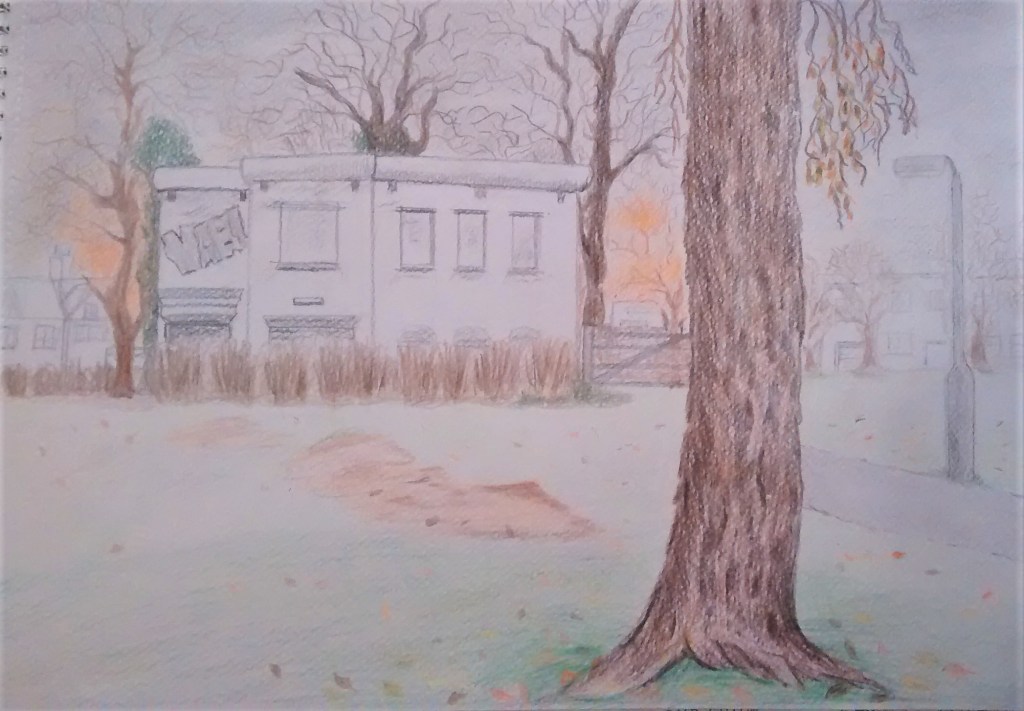
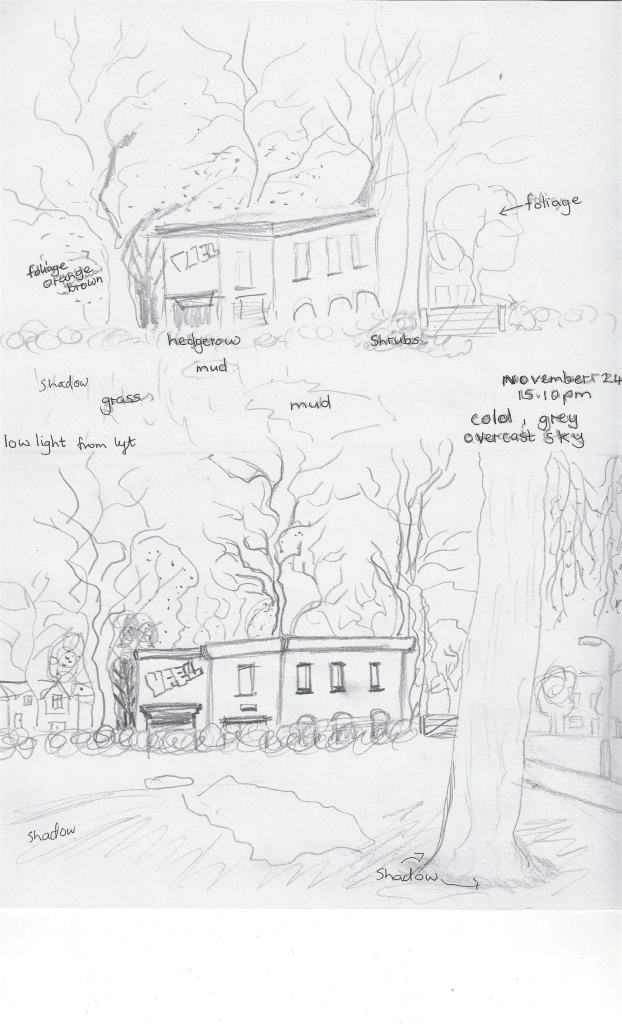
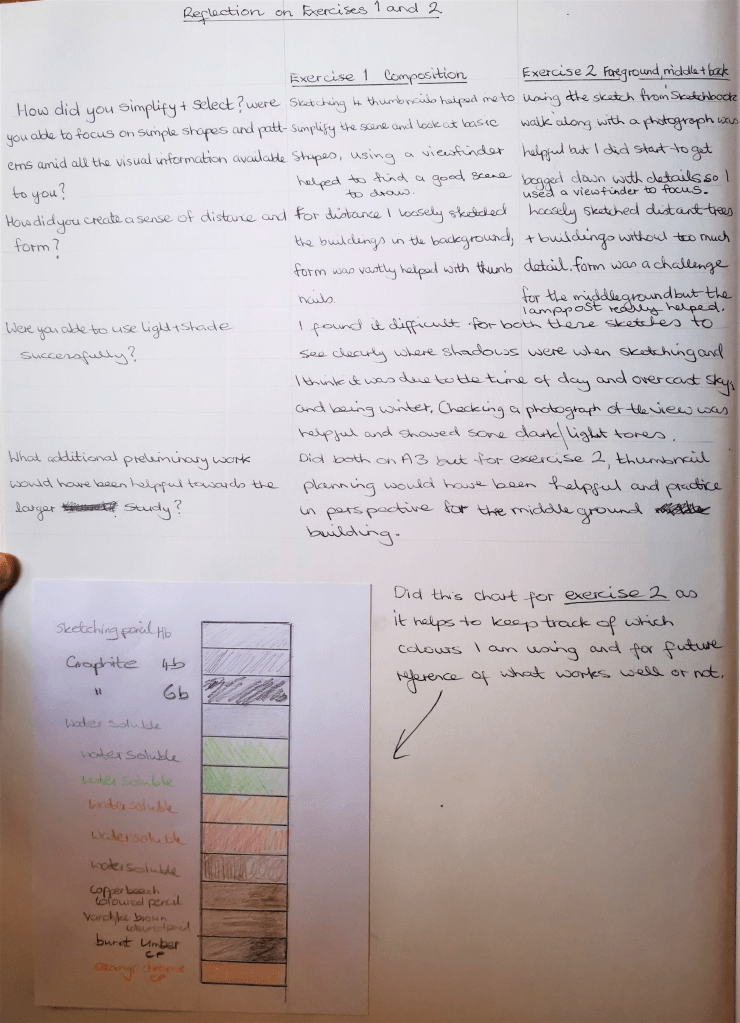
Exercise 2 Foreground, middle ground, background Using the sketches below from sketchbook walk ( project 2 exercise 2 ) I wanted to develop them into a drawing to show Foreground, middle ground and background – see the image on the right. I worked with pencil, graphite, coloured pencils and water soluble pencils on watercolour paper. I used marks from previous experiments for the bark of the foreground tree and leaf litter. Adding detail to the bark helped to show that it was closer and leaf litter was larger in the foreground.

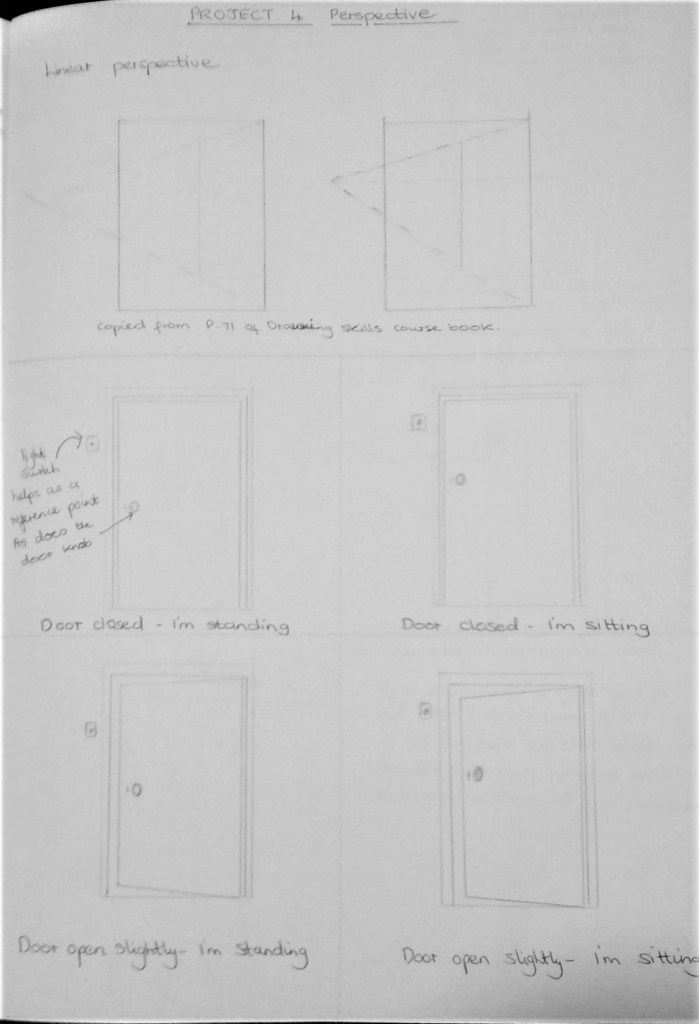
Project 4 – Perspective

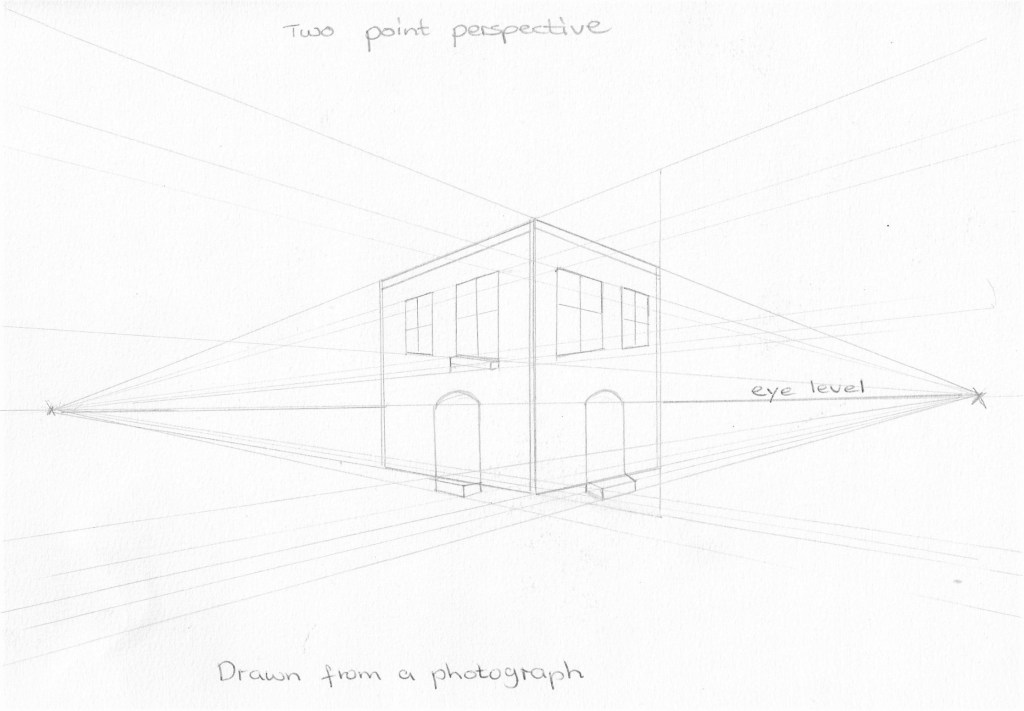
Linear

Exercise 1 Parallel perspective

One point perspective feels more comfortable to me at the moment as I learn to look at other types. I like the dramatic feel of the street as it merges together in the distance.

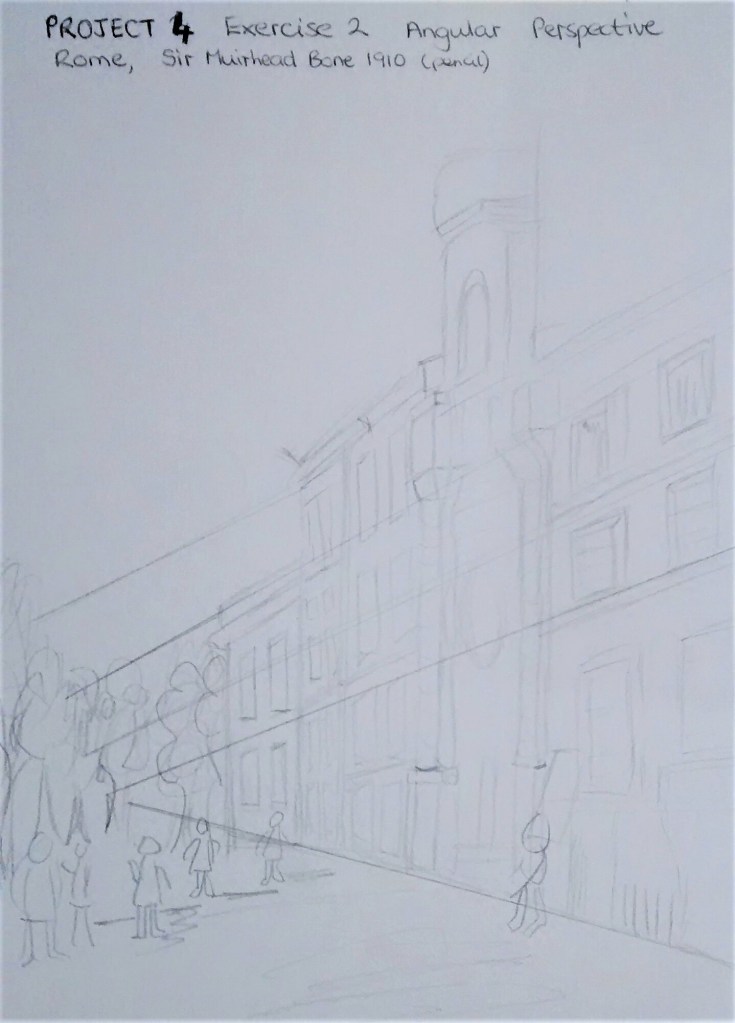
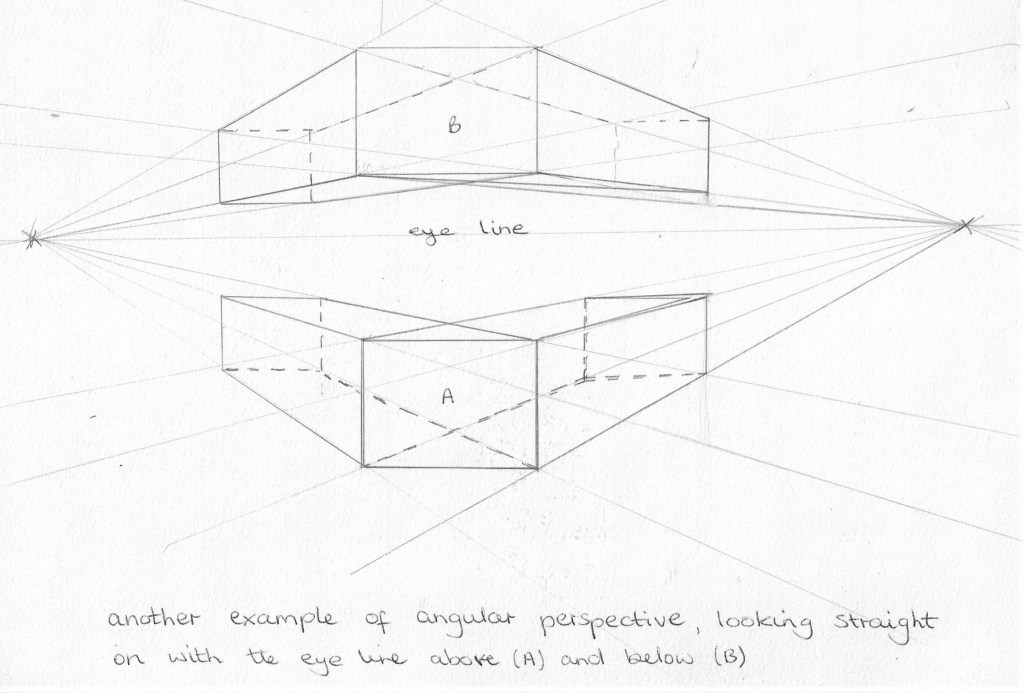
Exercise 2 Angular perspective

For this exercise a pile of books were placed on a table. I was sitting at the table. All the vanishing points are off the paper.
We were asked to copy a simplified version of Sir Muirhead Bone’s – Rome,1910 (pencil) and then to check the accuracy of the drawing by continuing the lines of perspective to the vanishing point. It was noted that this use of perspective will draw the viewers eye along the street. Drawing 1 , Drawing skills p75.
Another example, the more I practice this I’m sure my drawings will improve.

Exercise 3 Aerial or atmospheric perspective

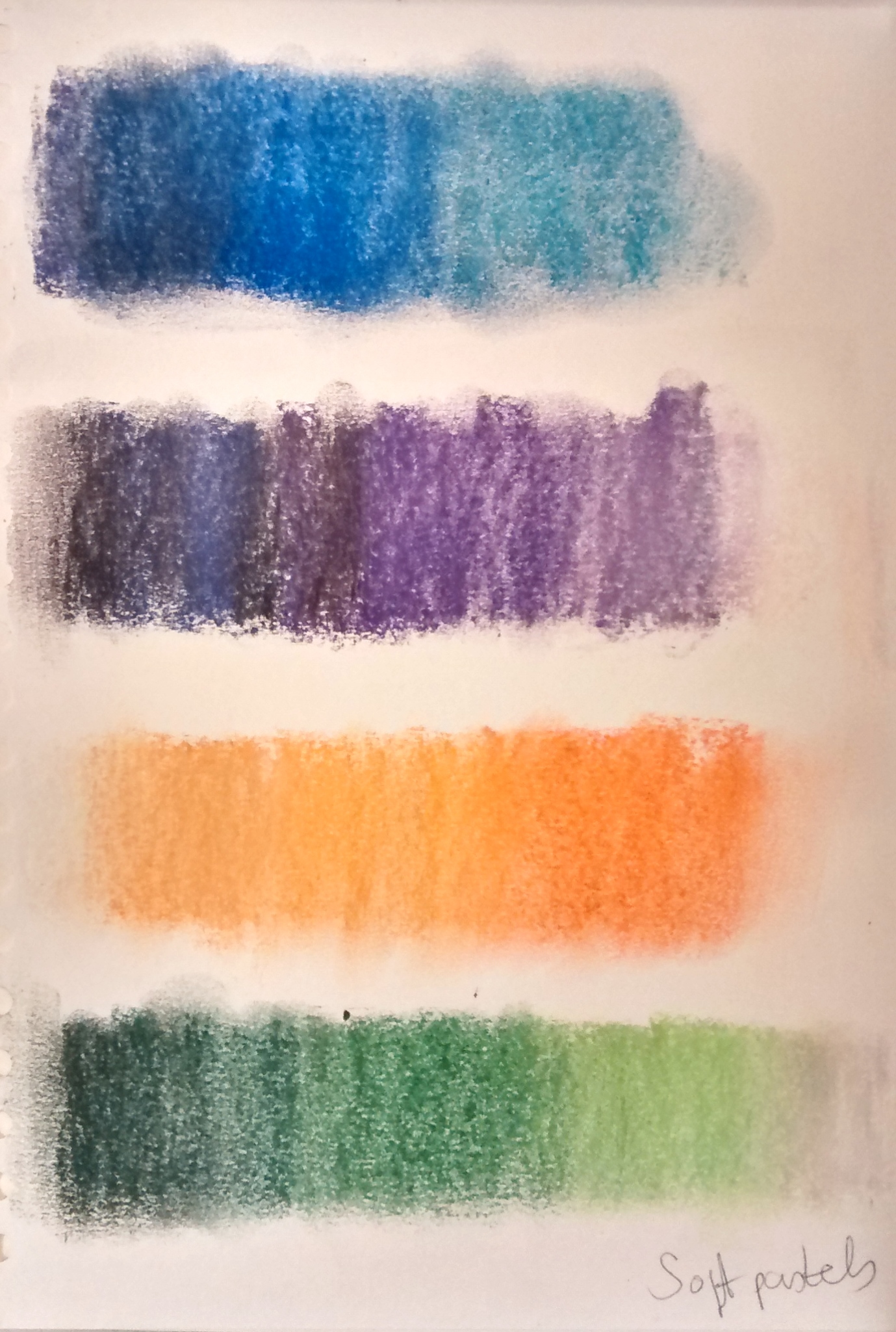
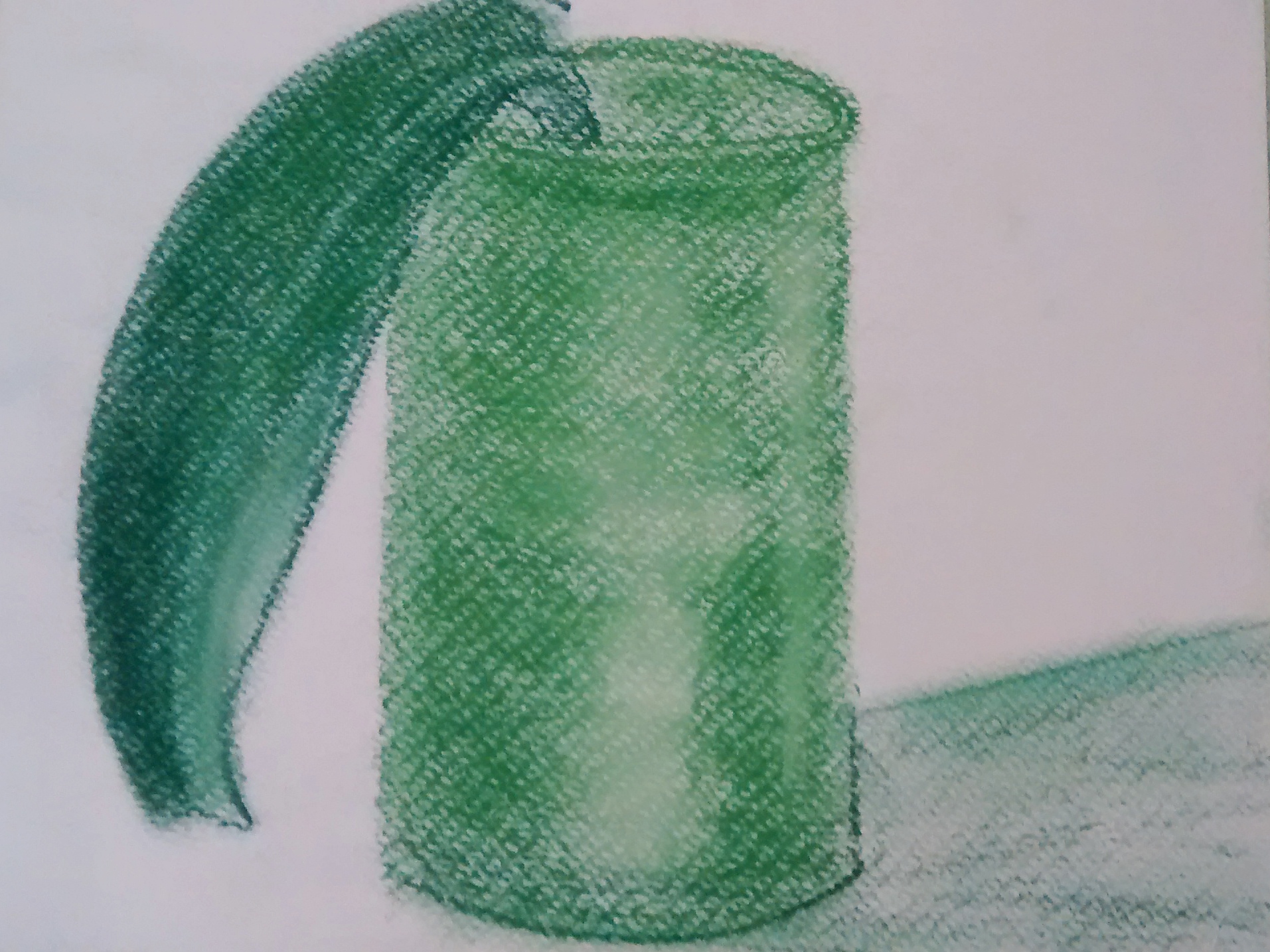
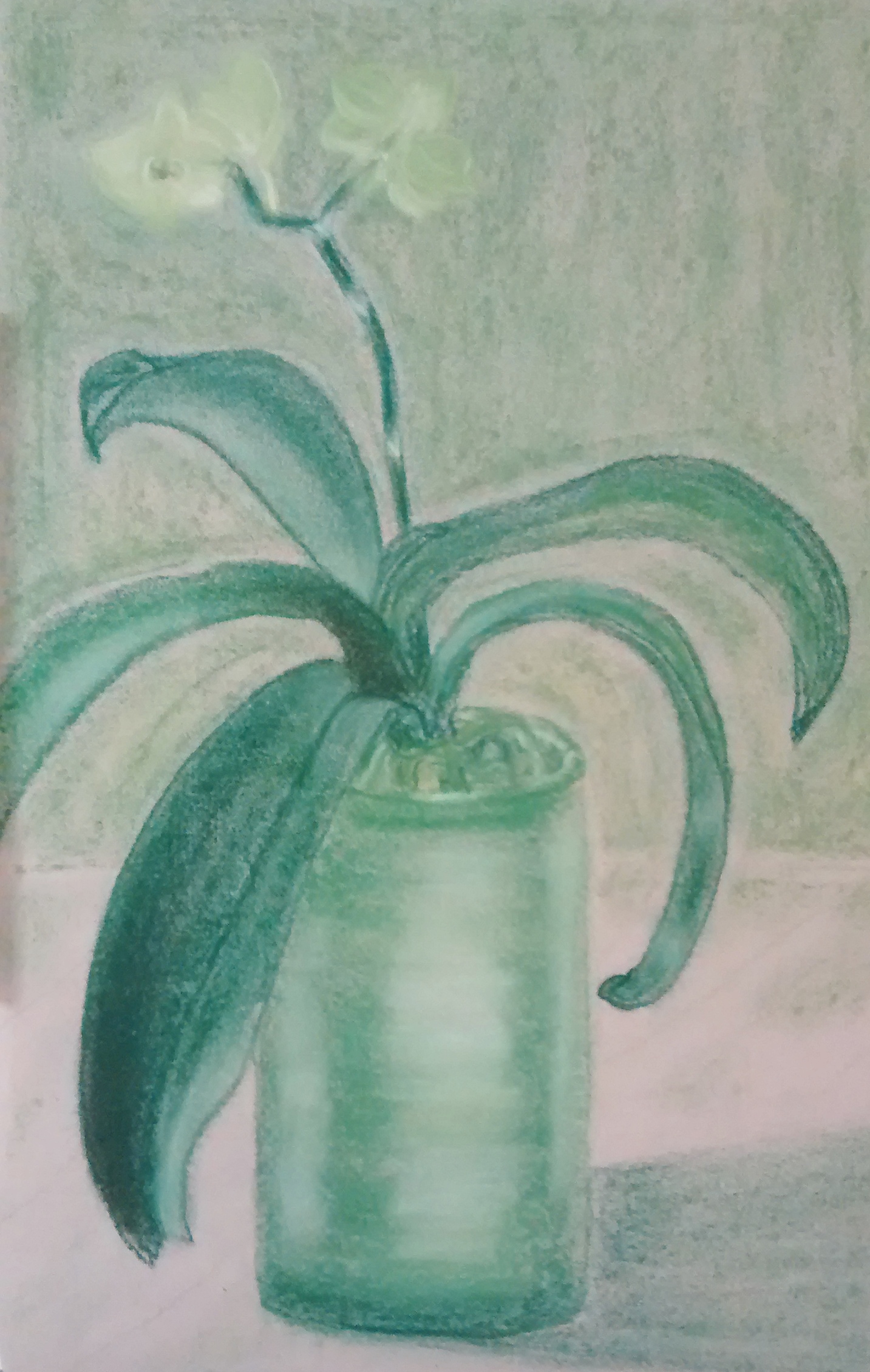
Project 4 exercise 3 Soft pastel on white paper – I worked in monochrome to focus on the gradation of tone- soft pastels work well for this and choosing blue as a colour creates an atmosphere of mystery.
Project 4 exercise 3 – soft pastel on dark blue paper paper – Above drawing and this one are my own version from Artists Drawing techniques pages 106-107 and 256-257 – showing the distant hills in blue/grey and looking misty. Drawing on dark paper meant that I could leave some areas bare as in parts of the two tree trunks on the left and amongst some of the green in the foreground. This method brought these parts forward contrasting against the lighter green and yellow of the middle ground .

Project 5 Townscapes

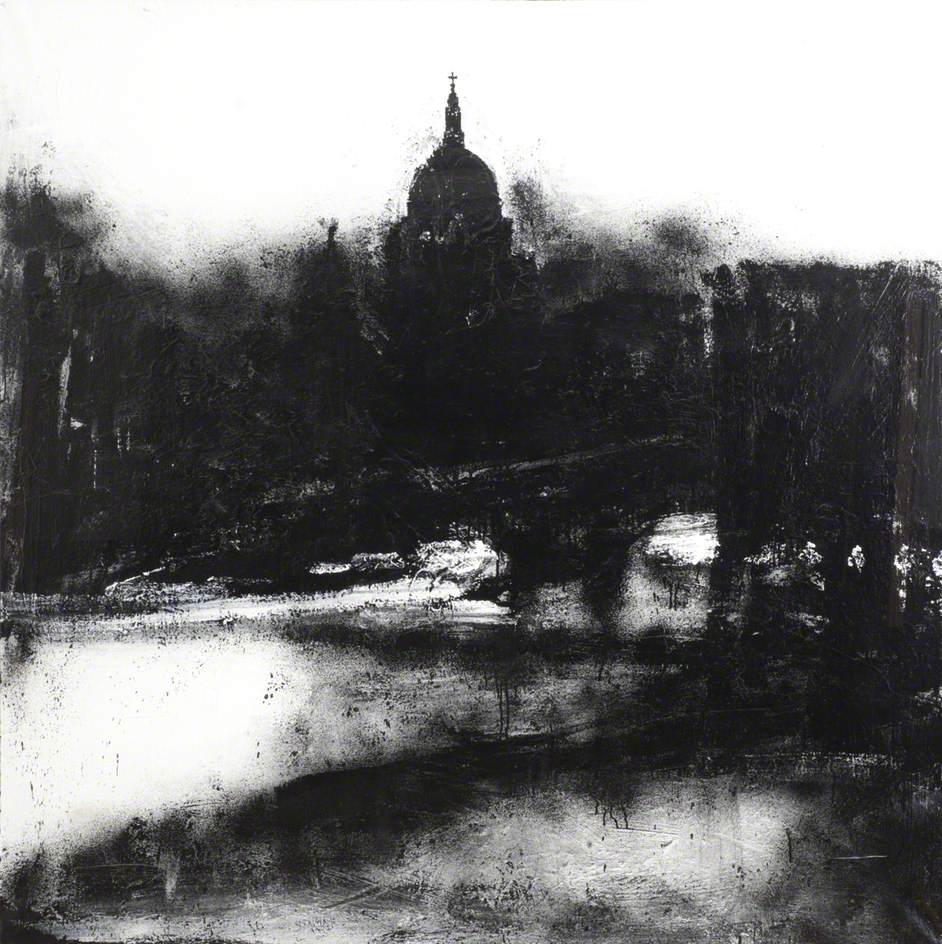
Landscape No. 739
Fig.22 Landscape No.739 Looked again at some landscape paintings by John Virtue and particularly like this ‘Townscape’ work in monochrome. it seems very simple but conveys a lot of drama about the city of London. The artist I find inspiration from for the next project is Mitchell Albala and the rooftops series- see research Project 2 Exercise 3 figures 14,15 and 16.

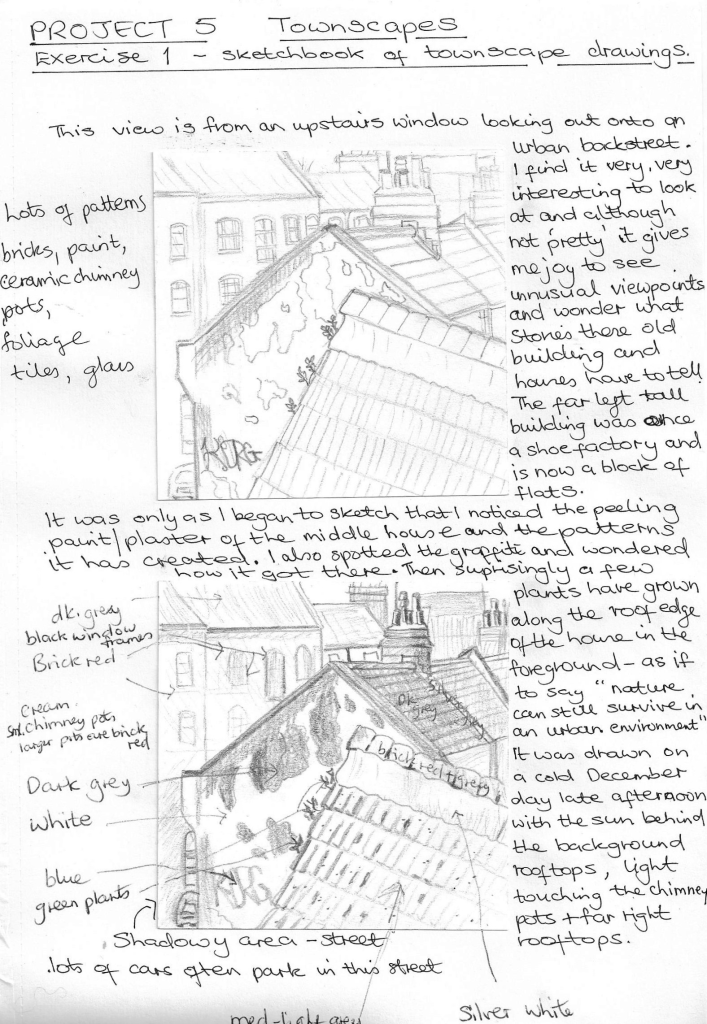
Exercise 1 Sketchbook of townscape drawings

This is a quick drawing of what I think is the most interesting view.

After using a viewfinder I chose what I feel is the most interesting view for the final composition. I gathered all the preliminary sketches and photographs around me. I also looked out at the view again and drew on the window pane in dry wipe pen and traced some of the outlines of the roofs onto the glass to see if it would help me with the perspective. I’m not sure that it helped to then translate that onto paper as I still had to think hard about positioning everything. I drew the main shapes in 3b pencil onto A2 rough brown wrapping paper using thumb and pencil method to measure the lengths and widths, this was helpful. I used a ruler for the straight edges as I don’t feel confident doing a large drawing in freehand. I used soft pastels and conte sticks building up the layers of several colours and then blending with a soft cloth.

I like the colours in this final drawing and I’m quite pleased with the peeling paint patterns. The rough paper wasn’t easy to draw on but it added texture to the brickwork I feel. I found it a challenge to see the perspective correctly , possibly because the buildings are at different angles and the street bends slightly (I decided to omit the furthest chimney pots as the drawing was taking me so long to do – 4 hours plus – )

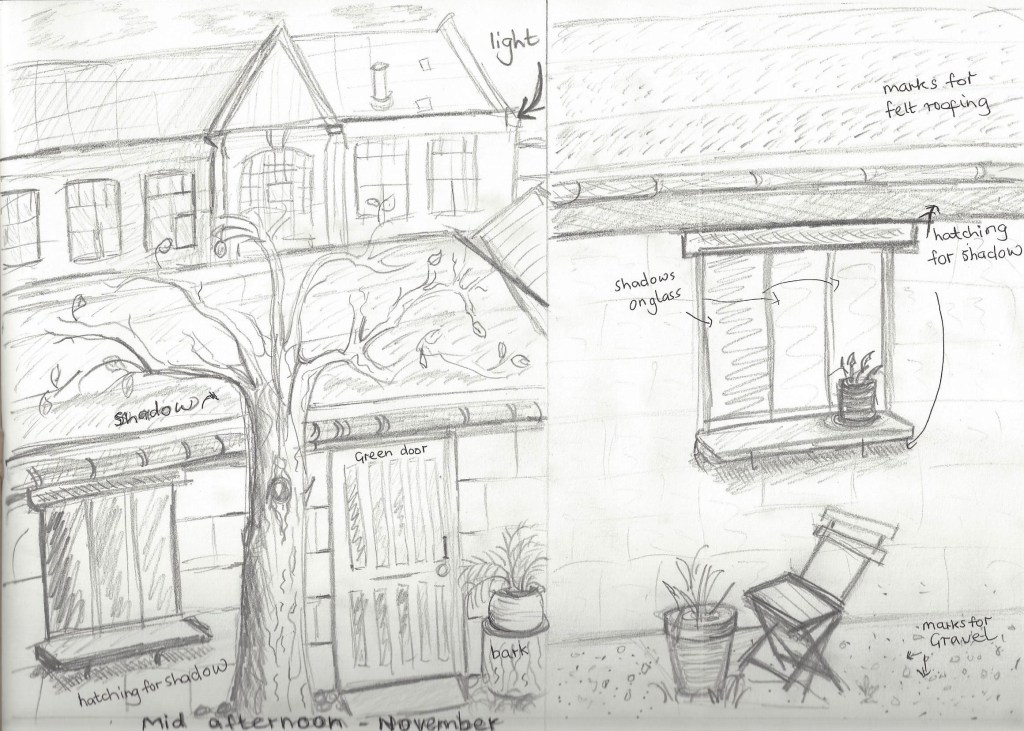
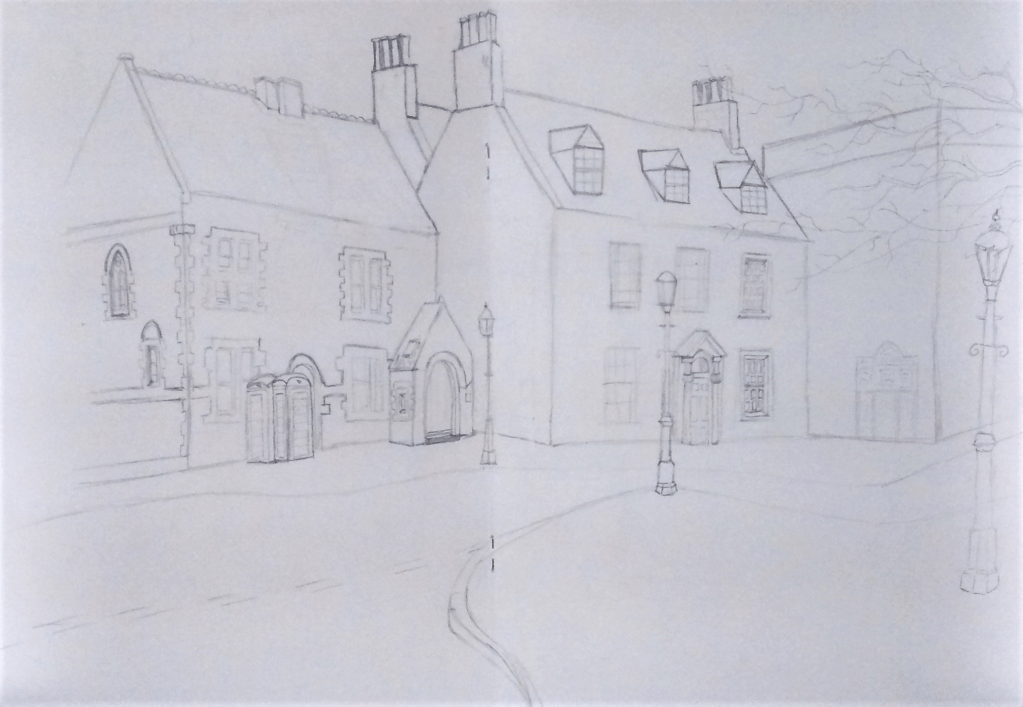
Exercise 2 Study of a townscape using line. We are asked to make a preliminary drawing using two sketchbook pages. I went to the town centre close to where I live and found an interesting view of some old town houses that have been restored. It was a cold day in December so I took photographs to be able to complete the sketch at home. The sun was shining but not very brightly as it was hidden behind the buildings. I often prefer to draw scenes that show plenty of light and shadow. The focal point for me is the smallest lamp-stand so I centred this in the middle of the page. Ideally for me there were three lamp-stands which provided background, middle and foreground. I tried to provide enough detail to give information for the final working which seemed to be taking me a long time so I chose to detail only one or two windows in pencil to inform the later pen and ink drawing. Below is the preliminary sketch –

This is my drawing in progress with some black fineliner pen , I used 0.8 mm for this
This is the finished drawing which I quite like, I used 0.5mm and 0.38 for the finer details, I also added some detail that wasn’t in the preliminary drawing but I observed when looking at a photograph e.g the foreground kerb stones. Getting the angles right on larger subject ( roof, house etc ) is very challenging and I sometimes feel frustrated . I would not have chosen to do a drawing like this before doing this course, so I know the challenge is good.

Exercise 3 A limited palette Using your sketches from the previous exercise, select a drawing to develop in colour. I chose to use conte sticks in 3 colours – grey, black and bistre- these were my middle and darkest values, the paper is the lightest. I also decided to experiment using smooth A2 cartridge paper. I wanted to work quickly and not get bogged down by too much detail consequently I missed out one of the chimney stacks! It was difficult to work with conte sticks to draw detail and also the smooth paper did not ‘hold’ the colour well. When I began the drawing I wasn’t feeling inspired by it at all, as it progressed and started to take shape I felt a little more confident. What I really like are the lamp-stands are their positions in the back,middle and foreground, also the swirling road/pathway. Were you able to create a sense of depth with your limited colour palette? I created some sense of depth by layering the colours to give more hues. I think I rely a lot on the dark tones to show depth and sometimes forget the middle ones. I used layers of grey for the roadway to try to show mid tones and layered it with black for the roofs.

Exercise 4 Statues

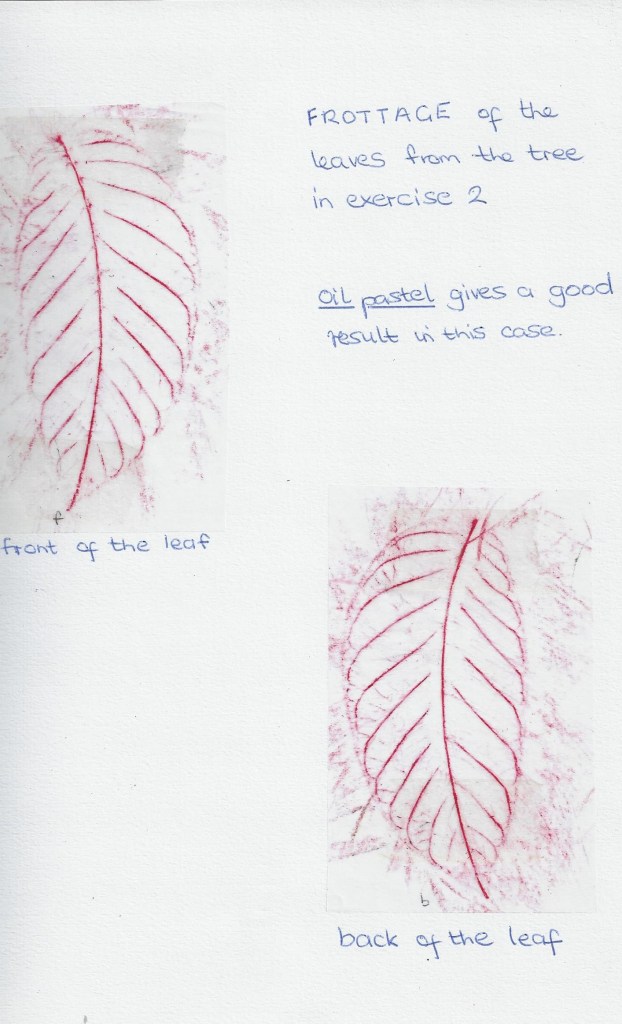
Statue of John Clare – a Northampton poet- This statue was sitting on a bench in an open courtyard. Light was coming from above and I tried to show this on his bald patch. It is made from bronze and I was very interested in the texture which I tried to convey in the frottage above. I sat next to the statue and viewed it side on. I did a quick sketch in Hb pencil then completed it in biro at home.
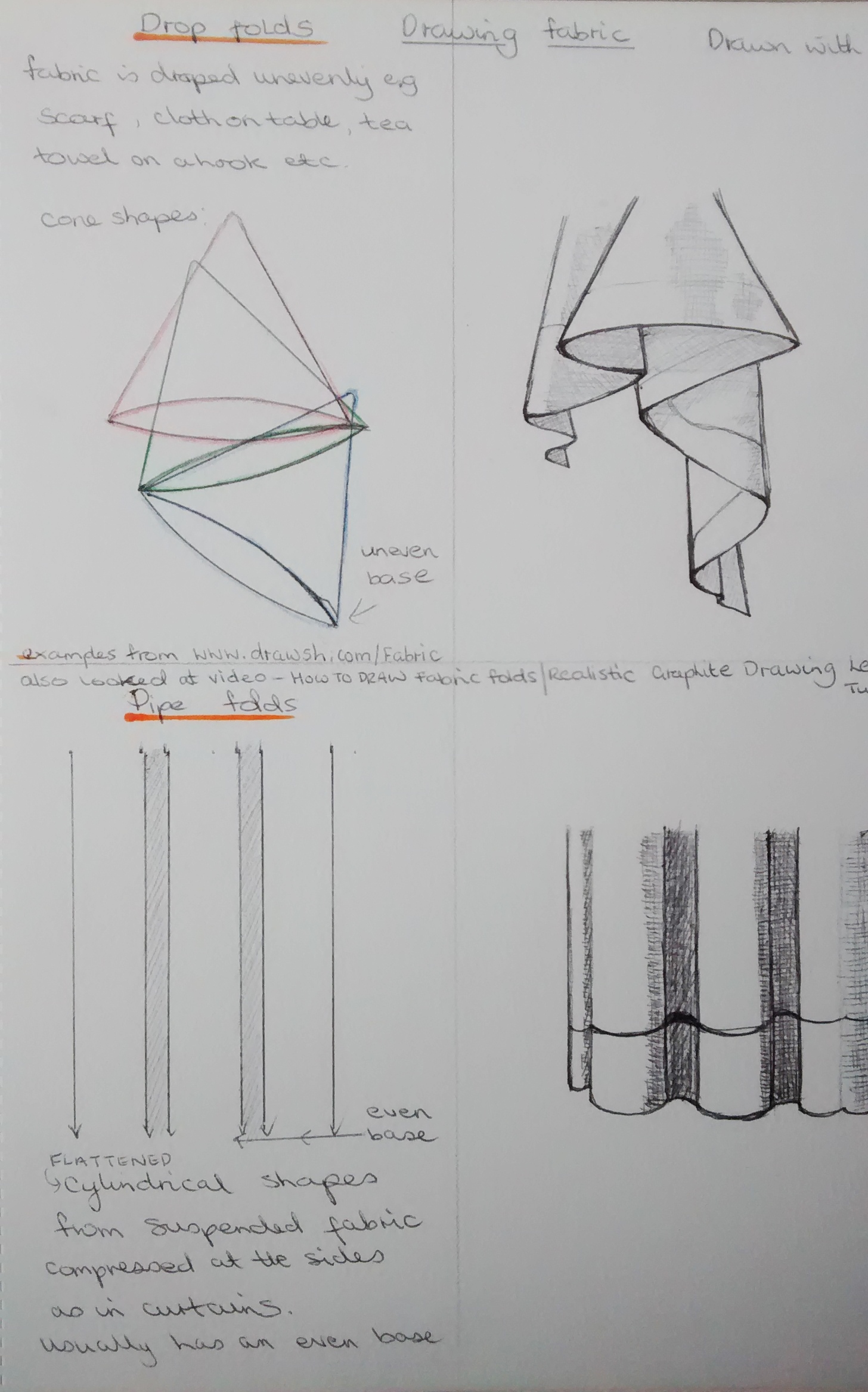
This statue was in the same courtyard as John Clare- above. I stood in front of the statue and sketched quickly in Hb pencil and a few touches at home. I was interested in the folds of fabric and how it is formed and thinking I would like to learn more about drawing fabric.
This statue is in the entrance of an art gallery in Dresden. I drew it from a photograph when I got back home. I wished that I’d had time to sketch it whilst there as it is so interesting and I like the angle (looking up at it) from which I took the photo. Light was coming from the left of the photo. It is quite weathered and the object being held in the statues right hand is broken, this creates interest as we don’t know what the object is as we draw. This is my first time drawing statues and I know my sketching isn’t in proportion always and I miss things out.

List of Illustrations

Figure. 1 Crome J (1812) Three trees [drawing for etching]At: https://www.metmuseum.org/art/collection/search#!?showOnly=openAccess&material=Drawings&offset=60&pageSize=0&perPage=20&searchField=All&sortBy=Relevance (Accessed on 26.10.2019)

Figure.2 Lorrain C (1674) Perseus and the origin of coral [ Pen and brown ink, brush with grey and blue washes, heightened with white on blue paper] At: https://www.google.com/url?sa=i&source=images&cd=&ved=2ahUKEwjFluSr5vjlAhURuRoKHSFbDSwQjRx6BAgBEAQ&url=https%3A%2F%2Fwww.britishmuseum.org%2Fresearch%2Fcollection_online%2Fcollection_object_details%2Fcollection_image_gallery.aspx%3FassetId%3D256605001%26objectId%3D722737%26partId%3D1&psig=AOvVaw2BxKPt_v4k75tWPh9YM2f9&ust=1574339589616341 ( Accessed 20.11.2019)

Figure. 3 Duerer A (1495-97) The Watermill[pen & ink, gouache and w/c on paper]At:Bibliotheque Nationale, Paris, France / Bridgeman Images https://www-bridgemaneducation-com.ucreative.idm.oclc.org/en/asset/198414/summary?context=%7B%22route%22%3A%22assets_search%22%2C%22routeParameters%22%3A%7B%22_format%22%3A%22html%22%2C%22_locale%22%3A%22en%22%2C%22filter_text%22%3A%22albrecht+durer+landscape%22%7D%7D (Accessed 11.2019)

Figure. 4 Dürer A (1495) Road in the Alps [gouache & w/c on paper]At: / Monasterio del Escorial, Madrid, Spain / Bridgeman Images ://www-bridgemaneducation-com.ucreative.idm.oclc.org/en/asset/387385/summary?context=%7B%22route%22%3A%22assets_search%22%2C%22routeParameters%22%3A%7B%22_format%22%3A%22html%22%2C%22_locale%22%3A%22en%22%2C%22filter_text%22%3A%22albrecht+durer+landscape%22%7D%7D (Accessed 11.2019)

Figure.5 Lowry L.S (1930)  Coming from the mill [ Oil on canvas ] At:http://blog.flametreepublishing.com/art-of-fine-gifts/the-developing-style-of-ls-lowry        ( Accessed  20.11.2019 17.10 pm  )      

Figure.6 Shaw G (2004-2005) Ash Wednesday 7.00am At: https://news.yale.edu/2018/10/30/humbrol-hometown-ycba-exhibits-oeuvre-english-painter-george-shaw (Accessed 21.11.2019)

Figure.7 Woodfine S  Somewhere  (2007)
[pencil on paper in perspex box] At: http://www.daniellearnaud.com/exhibitions/exhibition-privateparadise.html (Accessed 21.11.2019)

Figure. 8 Turner JMW (1834) The Golden Bough [ Oil on canvas ] At: [https://www.tate.org.uk/art/artworks/turner-the-golden-bough-n00371 (Accessed 21.11.2019)

Fig.9 Lear E (1858) Petra [ Pen and brown ink over pencil with watercolour and gouache on blue paper.] Master Drawings – Close-up by Julian Brooks Page 85 The British Museum 2010 ISBN 978 0 7141 2673 9

Figure.10 Herbert N (2016) Clearing below Sharpenhoe [ Mixed media: graphite, colour pencil, soluble crayon, acrylic and pastel on white paper ] At: https://nicholasherbert.wordpress.com/2016/10/17/landscape-l950-sharpenhoe-series-clearing-below-sharpenhoe-the-chiltern-hills/ (Accessed 29.11.2019)

Figure. 11 Virtue J (1999-2000) Landscape No 624 [ Black ink and emulsion on canvas ] At: https://www.tate.org.uk/art/artworks/virtue-landscape-no-624-t07915 (Accessed 21.11.2019)

Figure. 12 Doig P (1994) Boiler House [Oil on canvas] At: https://www.tate.org.uk/whats-on/tate-britain/exhibition/peter-doig/peter-doig-explore-exhibition-room-1/peter-doig-0 (Accessed 21.11.2019)

Figure.13 Doig P (1994) Cabin Essence [Oil on canvas] At: https://www.tate.org.uk/whats-on/tate-britain/exhibition/peter-doig/peter-doig-explore-exhibition-room-1/peter-doig-0 (Accessed 21.11.2019)

Figure.14 Albala M (2019) Rooftops 59th Street, Winter Dusk, [ oil on paper ] https://mitchalbala.com/rooftops/ (Accessed 01.12.2019)

Figure.15 Albala M (2019) Rooftops 59th Street, Last Light,  [ oil on paper ] https://mitchalbala.com/rooftops/ (Accessed 01.12.2019)

Figure. 16 Albala M (2019) Rooftops 59th Street, Cobalt Dusk, [ oil on paper ] https://mitchalbala.com/rooftops/ (Accessed 01.12.2019)

Figure .17 Constable J (1821) ‘View on the Stour, near Dedham’ [Oil on canvas] 51 x 73 in (129.4 x 185.3 cm). (Accessed 01.12.2019) Near Dedham’, John Constable, RA (East Bergholt 1776-1837 London), Sketch for ‘View on the Stour, Near Dedham’, Circa 1821-22. [Oil on canvas] 51 x 73 in (129.4 x 185.3 cm). (Accessed 01.12.2019)

Figure 18 Dean T (2012) Fatigues [chalk on blackboard ] Marian goodman Gallery (Accessed 05.01. 2020) https://www.mariangoodman.com/artists/39-tacita-dean/works/28967-tacita-dean-fatigues-2012/

Figure 19 Seurat G (1881 – 1882) Landscape with houses [conte crayon] https://www.metmuseum.org/art/collection/search/337676 (Accessed on 09.01.2020)

Figure 20 Potas A [watercolour] https://mymodernmet.com/contemporary-landscape-painting/(accessed 12.01.2020)

Figure 21 Cole T (1836) View from Mount Holyoke, Northampton, massachusetts, after a thunderstorm – The oxbow [oil on canvas] https://mymodernmet.com/contemporary-landscape-painting/ (accessed 12.01.2020)

Figure 22 Virtue J(2005) landscape No.739 [shellac, black ink and white paint] https://artuk.org/discover/artworks/landscape-no-739-219454 (accessed 12.01.2020)

Bibliography –

Georgina Palffy – senior editor Artists drawing techniques Dorling Kindersley limited 2017 ISBN -0-2412-5598-8 Pages 106-107, 256-257

Julian Brooks Master Drawings – Close-up by The British Museum 2010 ISBN 978 0 7141 2673 9

Part 2 Intimacy

Project 1 COMPOSITION

Research

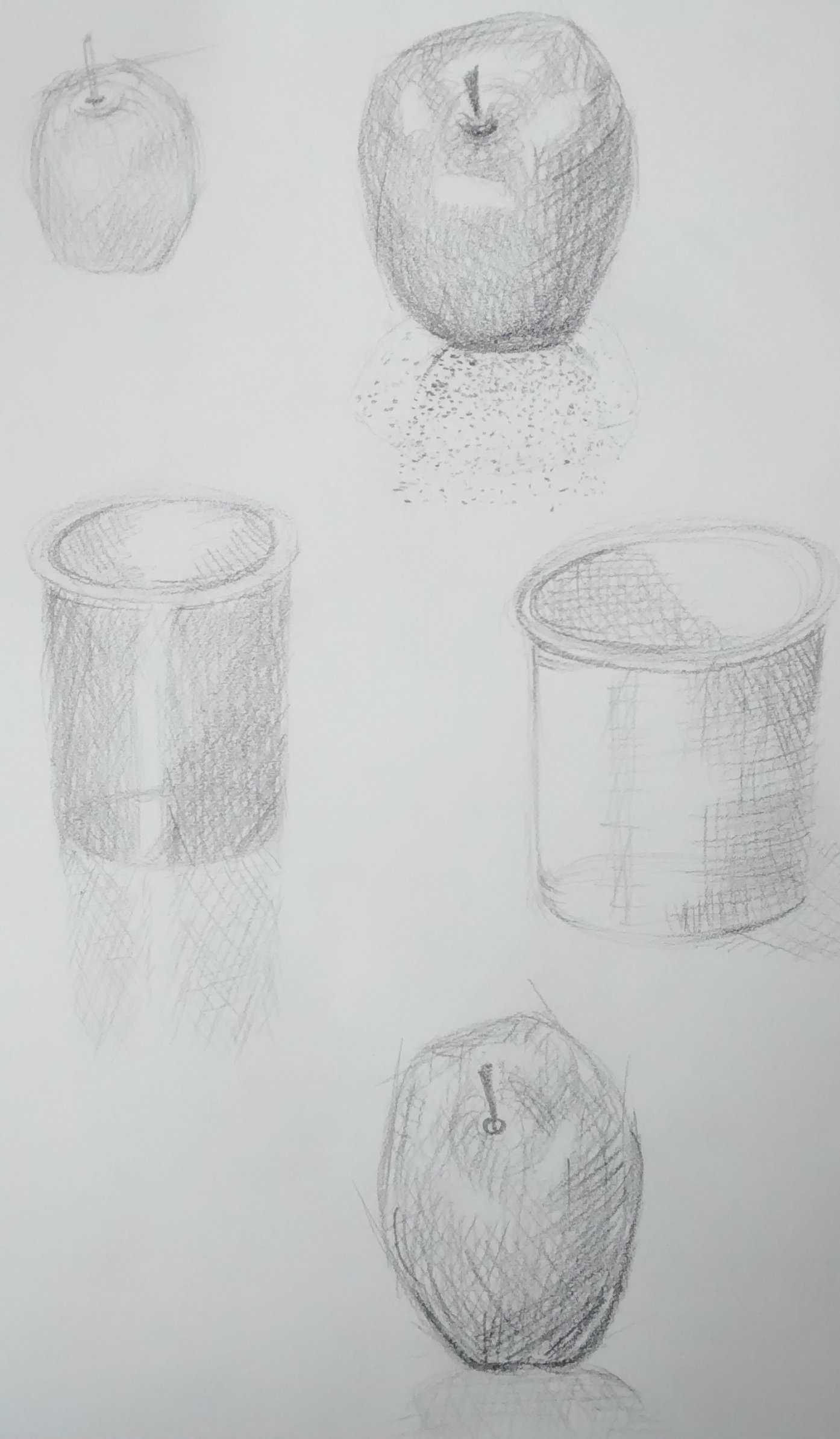
Project 2 Detailed observation of natural objects

Project 3 Exercise 1 Still life using line

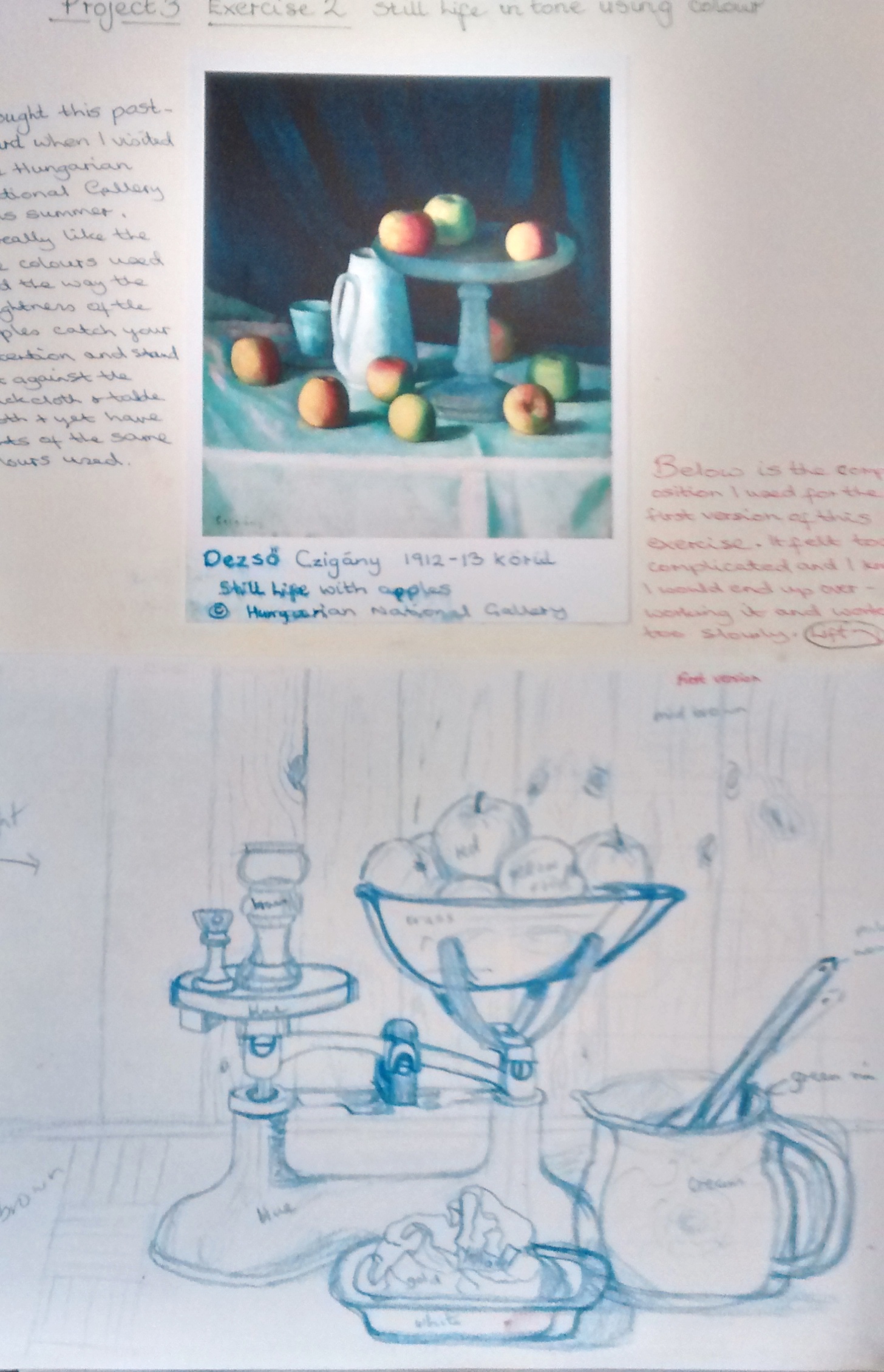
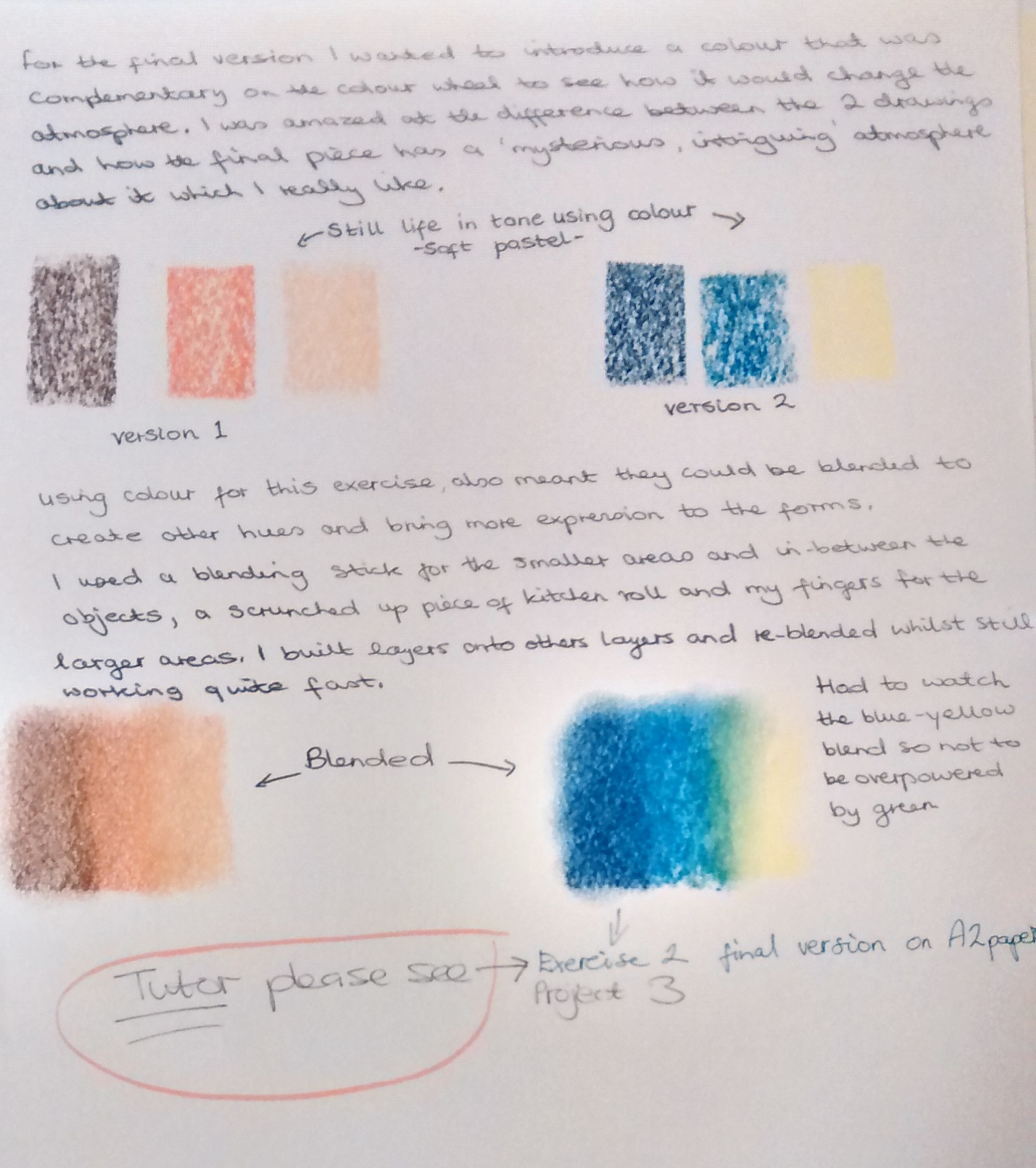
Project 3 exercise 2 Still life in tone using colour

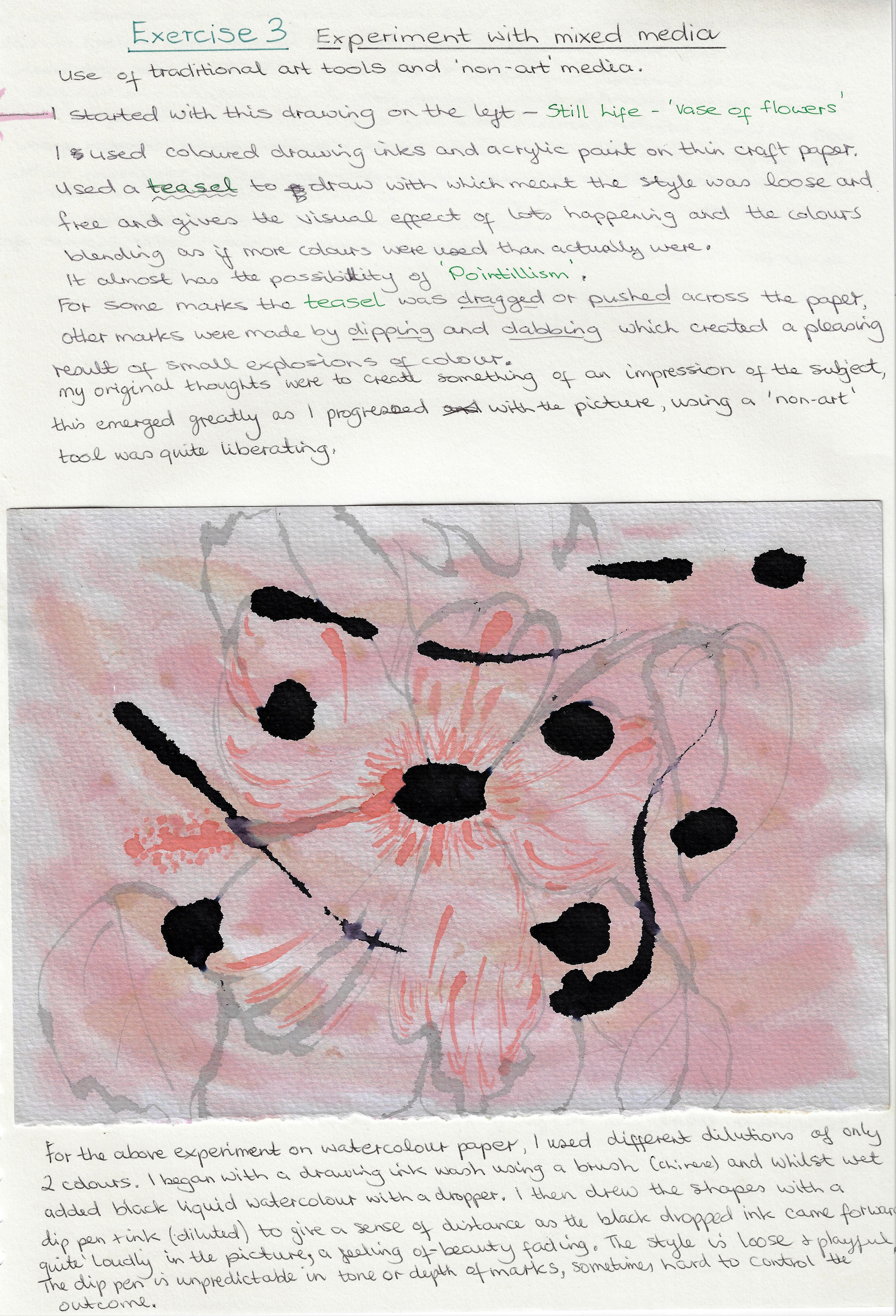
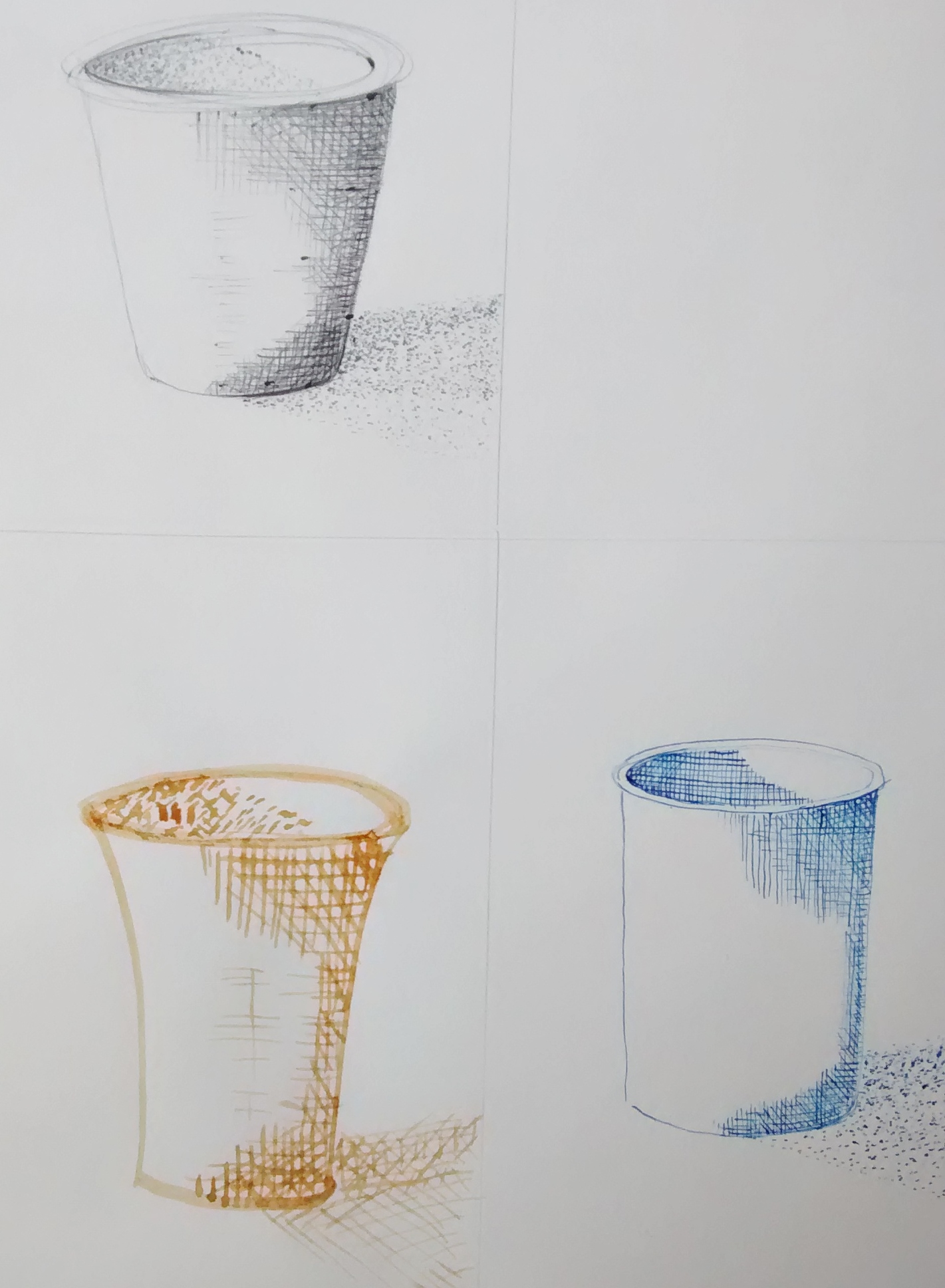
Exercise 3 Experiment with mixed media

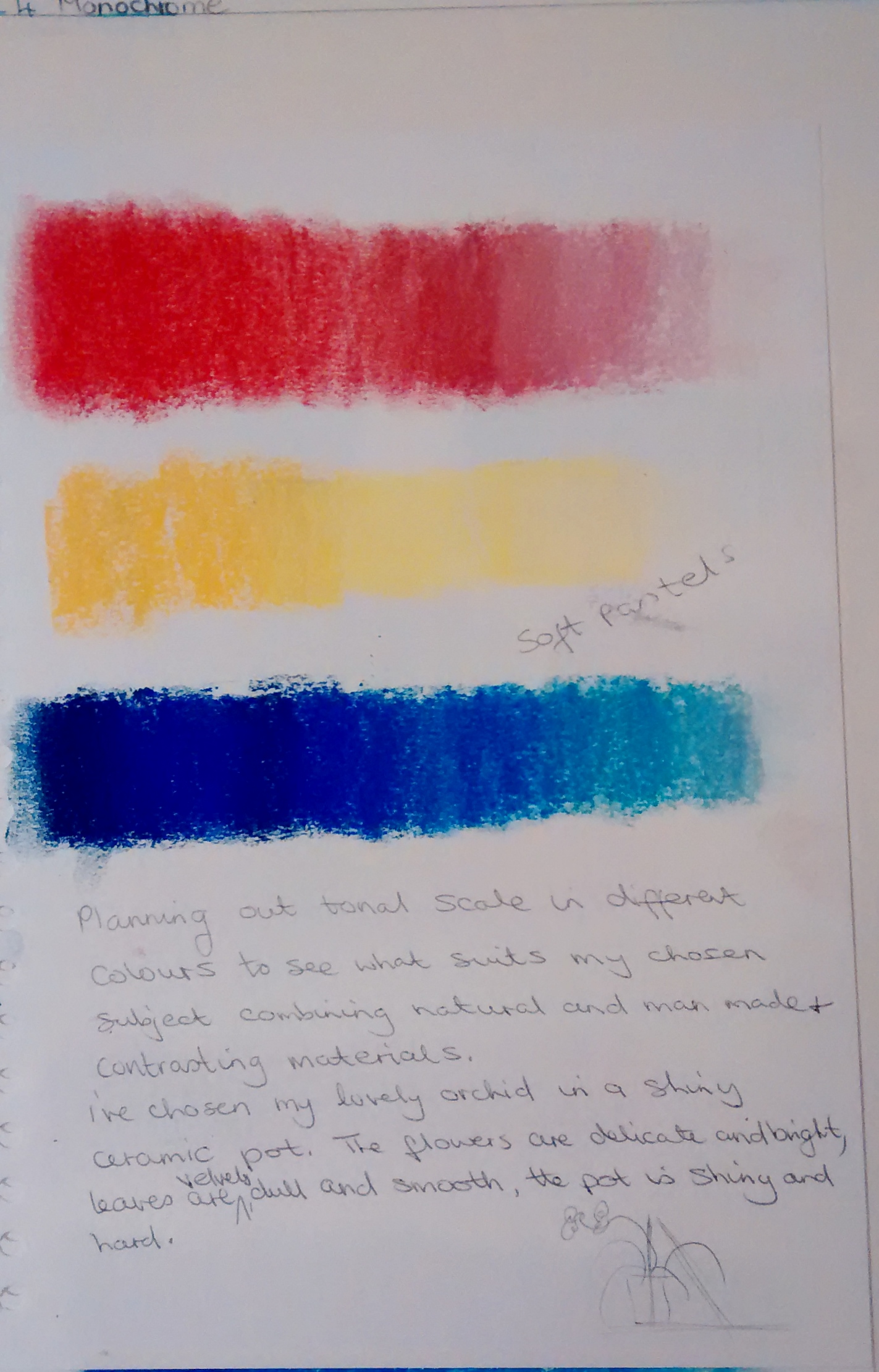
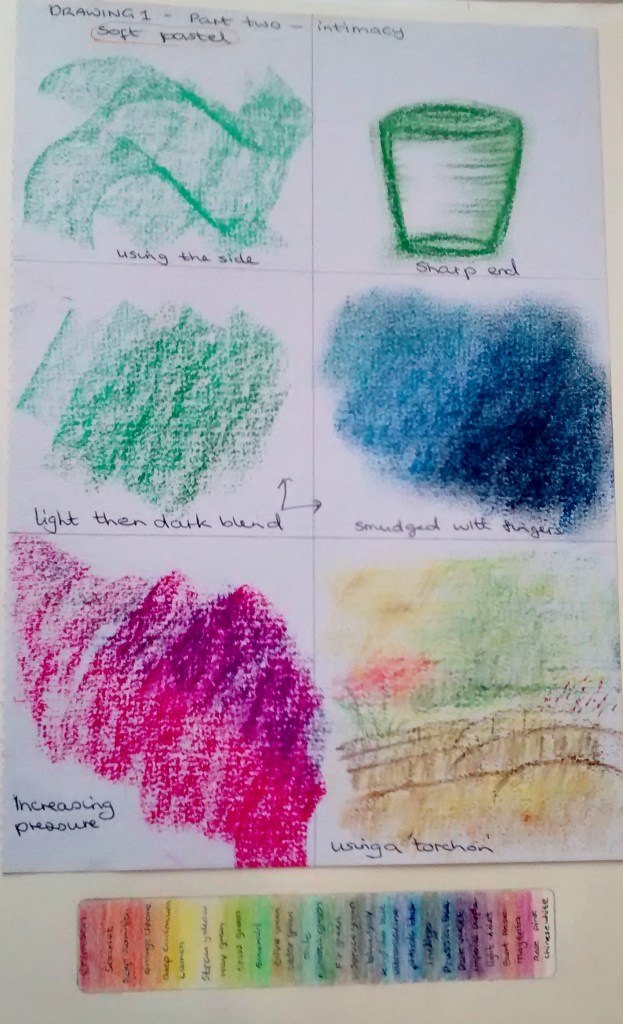
Exercise 4 Monochrome

Project 4 At home

Exercise 1 Quick sketches around the house – see black A3 sketch book

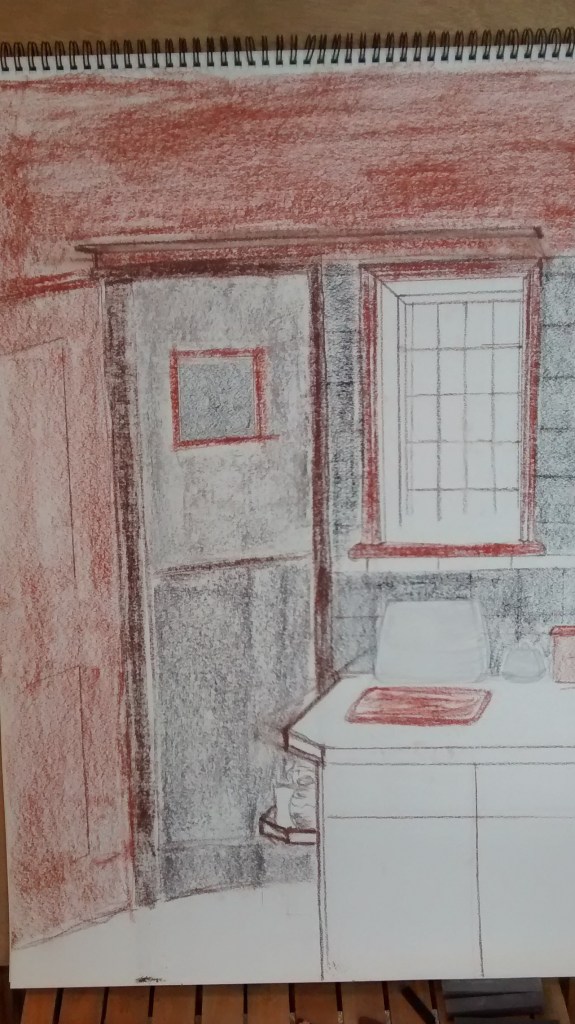
Exercise 2 Composition – an interior

Exercise 3 Material differences – See also A2 piece for Finished drawing

Research – domestic interiors

List of illustrations

Fig.1. Flowers in a porcelain vase Ambrosius Bosschaert  1609 oil on panel  https://www.the-athenaeum.org/art/list.php?m=a&s=tu&aid=5839  12.07.2019 23.12pm

Fig.2. Still life with the drinking horn of the Saint Sebastian archers’ Guild, lobster and glasses. Willem Kalf 1653 Oil on canvas 86.4cm x 102.2 cm https://www.nationalgallery.org.uk/paintings/image-download-terms-of-use-?img=n-6444-00-000015-wz-pyr.tif&invno=NG6444  09.07.19 14.49pm

Fig.3. Still life with water jug Paul Cezanne 1892-93 Oil on canvas unfinished

www.tateonlinegallery.org.uk   12.08.2019 14.04pm

Fig.4. Still Life with a bunch of grapes   Georges Braque 1912

https://widewalls.ch/still-life-artists/henri-matisse/  09.07.2019 14.56pm

Fig.5. Flowers  1901 Pablo Picasso Oil on canvas

https://www.tate.org.uk/about-us/collection  12.08.2019 16.04pm

Fig.6. Still life with chair caning  Pablo Picasso 1912 Oil, pasted oil cloth and paper with rope surround

In . Cooper , P. (1995)  Cubism , Phaidon Press  p. 14-15

Fig.7. Morning coffee ritual  Zlatko Music 2015 Acrylic on canvas

https://fineartamerica.com/featured/morning-coffee-ritual-music.html  13.08/2019 14.26pm

Fig.8. Watercolour Hidetoshi Mito, watercolour on Japanese paper,

http://mitografico.wixsite.com7mito  12.08.2019 14.50pm

Fig.9. Pancakes with blueberries  2019 Mary Ellen Johnson , Oil on panel

http://maryellenjohnson.net/pages/portfolio/big%20food%20gallery/index.htm

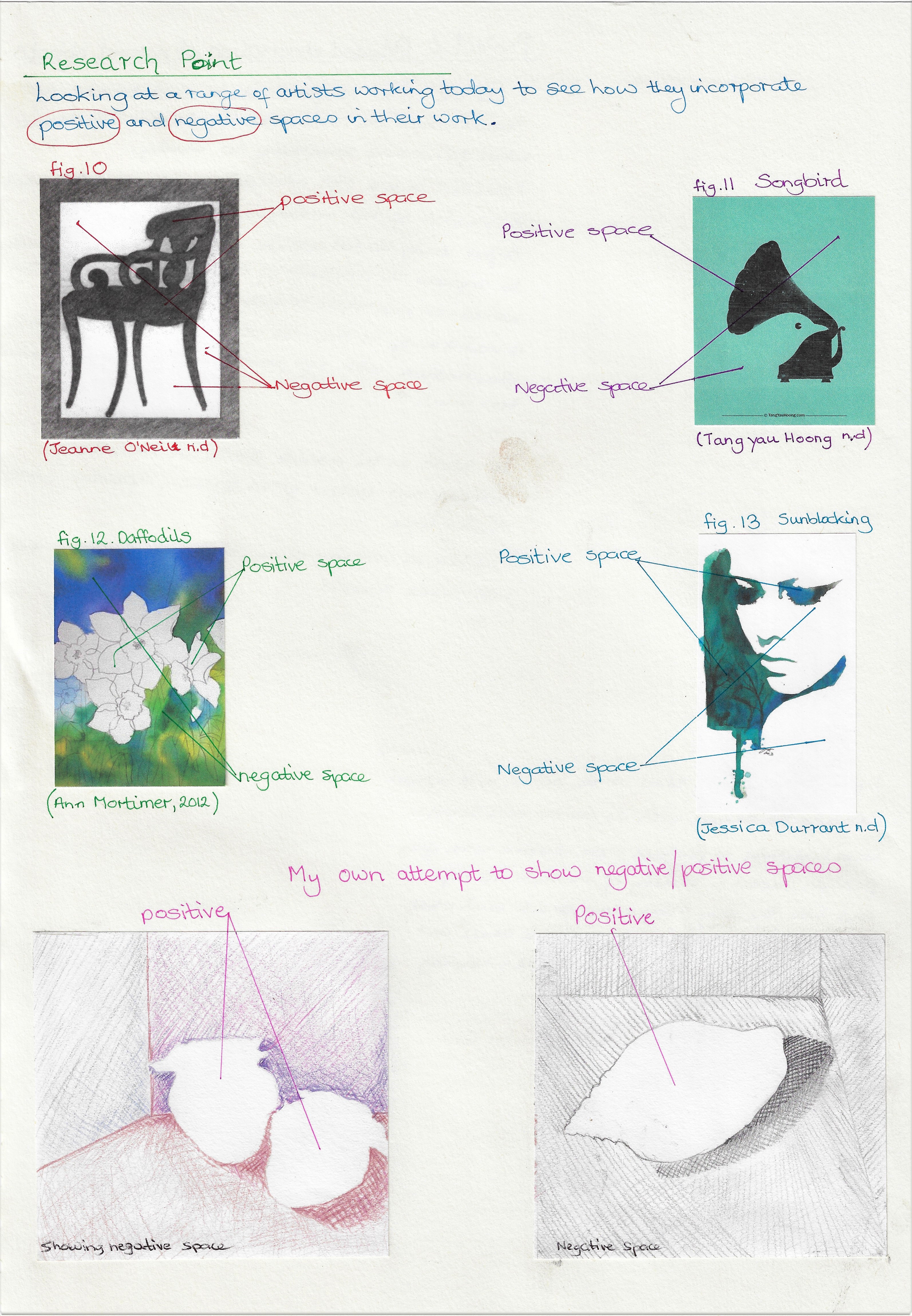
Fig.10. n.d. Jeanne O’Neil 

https://i2.wp.com/lh5.googleusercontent.com/-UmEzWEbvE/VHCu5DIMIZI/AAAAAAAAMNo/RvWH50yiioc/s720/Pic%2520-%25200133.png?resize=561%2C720&ssl=1 18.05pm 14.08.2019

Fig.11. Songbird n.d. http://tangyauhoong.com/portfolio/the-art-of-negative-space/  14.08.2019 17.50pm

Fig.12. Daffodils , Ann Mortimer  n.d. http://annswatercolourstudio.blogspot.be/2012/01/negative-painting-with-daffodil-leaves.html  14.08.2019 17.53 pm

Fig.13. Sunblocking  Jessica Durrant n.d. http://etsy.com/listing/120065911/print-from-original-watercolour-and-pen?gasearchtype=all&gaviewtype-gallery&ref=srgallery3

14.08.2019 20.01 pm

Fig.14. Interior 1913 Pierre Bonnard , Oil on canvas  In – Rizzi,J  (2019) Pierre Bonnard Tate

Fig.15. & 16  Inkwash on paper  Steven Reddy  .n.d.

http://stevenreddy.com/works/?nav=y&startrec=61  27.09.2019 12.11pm

Fig.17. Interior 2 1964 Richard Hamilton

https://www.wikiart.org/en/richard-hamilton/interior-ii-1964

Fig.18. Interior David Hockney 1993 Lithograph on paper

https://www.tate.org.uk 27.09.2019 11.15am

Fig.19. Large Interior David Hockney 1988 Oil, ink on cut and pasted paper on canvas

https://www.tate.org.uk  27.09.2019 11.25am

Bibliography

Anon (2005) Vitamin D New perspective in Drawing Phaidon

Cooper, P. (1995) Cubism Phaidon9780714832500

Hardwicke, K and Sims, N. (2017) Artists drawing techniques London. Dorling Kindersley LTD

Hosegood,B (n.d.) Still Life SA Rotovision ISBN 2-88046-477-3

Jerome, B Drawing lesson on Cubism YouTube [Accessed: 17.07.2019]

Malpas, J (1997) Realism Tate Gallery

Millet, L (2002) Little book of Matisse France, Flammarion ISBN 2-0801-0885 9

Nguyen,D (2015) Drawing Techniques and Tips [online]. Available from: rapidfireart.com [Accessed: 05.07.2019]

Rizzi , J (2019) Pierre Bonnard Tate Gallery

Reference

www.artyfactory.com.uk   n.k.

www.boundless.com/art-history/textbooks/boundless-art-history-textbook/the-baroque  10.07.2019 11.30pm

Critics review of Richard Hamilton [radio programme]

https://www.bbc.co.uk/sounds/play/b03v9p0v

 11.00am 27.09.2019

https://www.metmuseum.org/art/collection/search/485302  09.04am 27.09.2019

Assignment 1

Tutor – Please see coursework 1, Exhibitions and books, and Notes, for related content supporting this assignment.

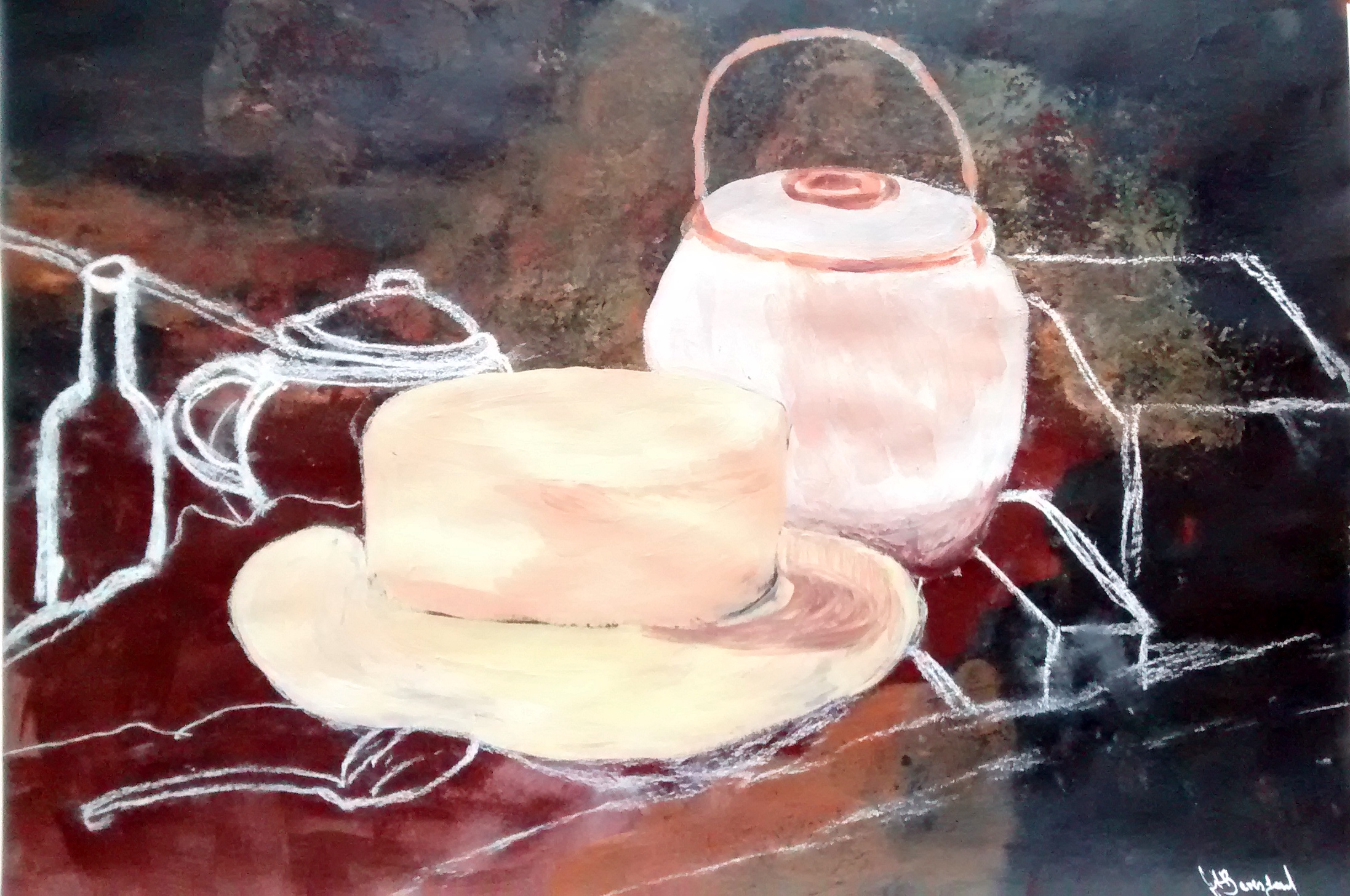
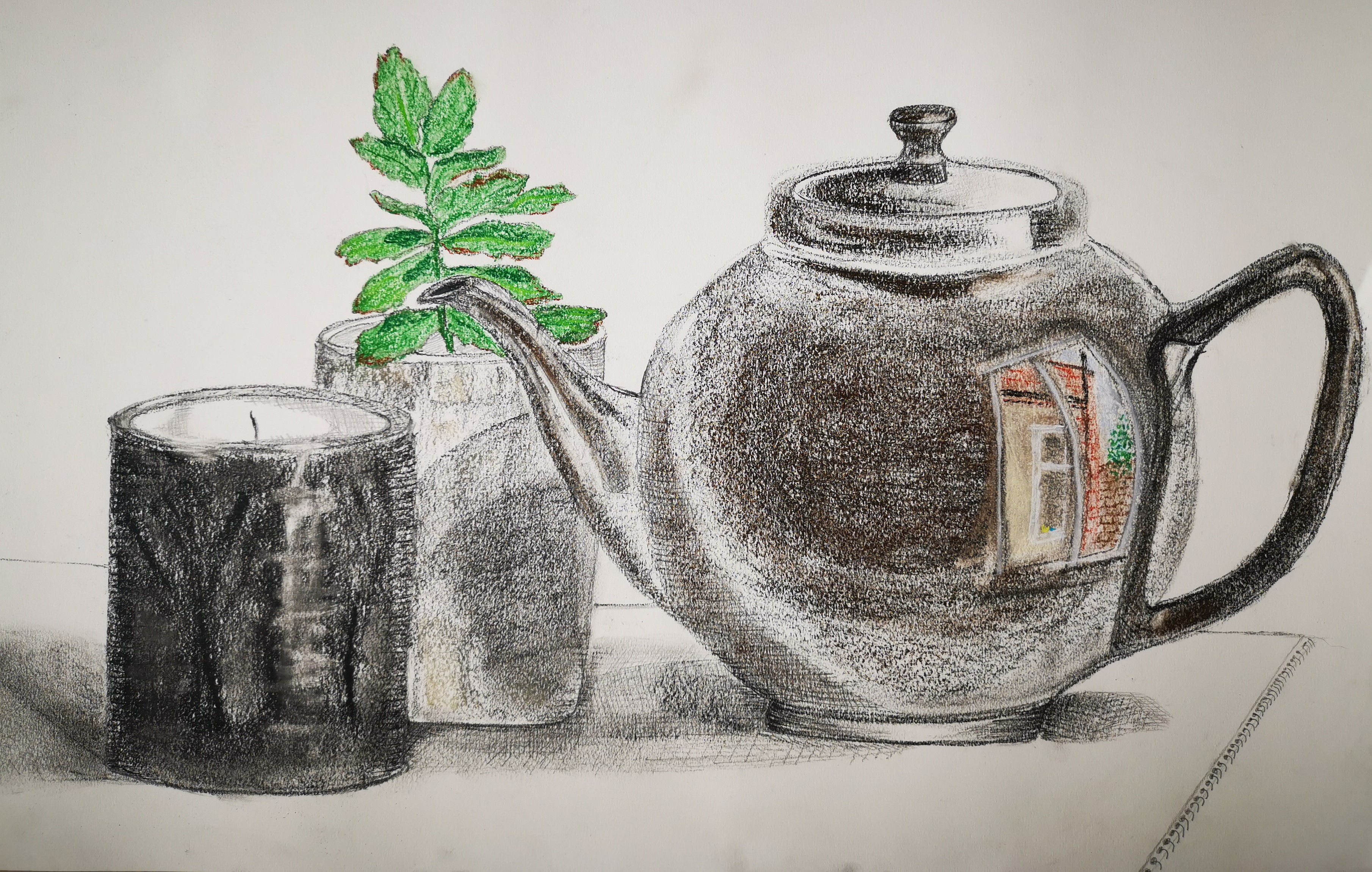
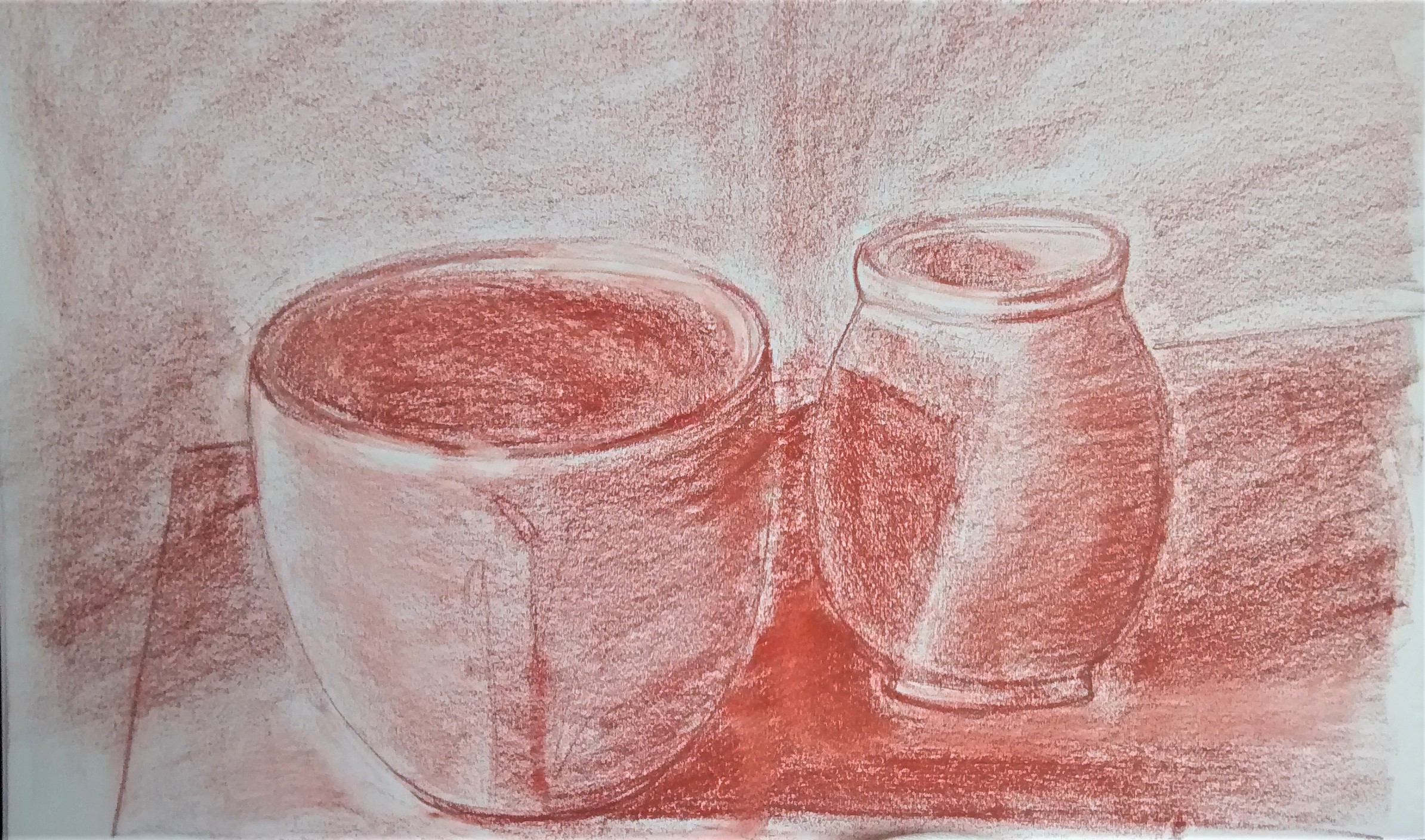
Before beginning this assignment I arranged a free weekend without interruptions and gathered all my previous coursework and sketchbooks together for reference. I chose a few objects that triggered a feeling of well-being and sense of thoughtfulness by friends and family. The objects seem ordinary to the viewer but have a particular value to the owner (me) as they were all gifts given by loved ones. I set them up by a window to access the natural light, it was a sunny day and this created interesting reflections particularly in the teapot. I chose willow charcoal which I’ve never used until starting this course and I am delighting in the boldness of the marks. Some touches of chalk pastel and graphite pencil were added towards then finish. I like the combination of broad, sweeping strokes and soft edges.

I feel that the teapot reflection went well in the end as I persisted in focusing on what was reflected in the smooth , glossy, curved surface. I was reluctant at first to even attempt to depict this reflection as I felt it was too challenging, then my adult daughter came in the room and said ” I think you should do it Mum”. I actually felt fascinated by this reflection and curious to look further into it. When I first placed the objects by the window I hadn’t even noticed the delightful other reflection of another window.

Because of the exploration involved in looking at shadows and reflection, I needed to focus and give attention to detail- particularly the way the objects are in relation to each other. The objects were resting on a pad of paper which I use in the watercolour class I attend each week ( a very happy place! ) so I wanted to suggest the edges of the pad without too much detail as a surface to bring the objects together.

I don’t think the candle went too well as is possibly too dark. I wanted to utilise the frottage experiment onto the surface, so rubbed I dried leaves, but with the charcoal it perhaps wasn’t the right medium. the candle looks too flat to me and the ellipse could be done better.

The plant leaves are coloured brightly to bring a feeling of hope as it is growing well and surviving amongst the man made objects.

Reflections

. During this assignment I have used a range of materials and some for the first time. My techniques are developing and need to be practised more thoroughly. Observation is rising with each exercise. Visual awareness needs to be increased as sometimes I miss things. I need to be more confident in design and composition.

. The content needs to be more varied. My application of knowledge is somewhat limited particularly in organising my log/blog and coursework using WordPress. Discernment and conceptualisation of thoughts and ideas are emerging with each exercise but I have felt I’m only at the tip of the iceberg.

.I have begun to express creativity in a small way and experimenting with different papers and materials is helping to see what it means to develop a personal voice. I need to use my imagination much more and not feel bound by what I feel safe with.

. Research and critical thinking have been limited and I want to progress in these areas and reflect far more on their value in art. I often look at the art of others but neglect to reflect on what is being said.

Feedback for Assignment 1

Formative feedback Student name Jennifer Berresford Student number 522488
Course/Unit
Drawing 1 Assignment number 1
Type of tutorial written Overall Comments Altogether this is a very good start to the course. You show a good ability in using a range of media and in depicting form accurately. In your assignment piece you also show a playfulness and inventiveness in your approach to drawing a composition.

As you move forwards, continue to integrate the knowledge from different exercises into larger drawings in order to help you to develop them and to work creatively whilst also accurately.

Allow yourself to experiment freely with materials and compositions, using your skecthbook development and also your artist research to help to inform the different possibilities in ways of working with drawing.

Feedback on assignment

Assignment 1 asked you to choose an interesting and personal selection of objects to make an A1 or A2 drawing from. You were asked to consider the light source, tone, surface and reflection; using a range of monochrome materials and expressive mark
making to give form and feeling to your composition You were then asked to reflect on the process.

You’re assignment piece does well to bring together the techniques from the exercises earlier in this piece to reveal a good understanding of using drawing to accurately represent form and to use tone to give a sense of shadow and light.

The pops of colour in the leaves and the inventive use of a coloured reflection in the teapot feel bold and work well.

As you move forwards, continue to look for ways to be playful and inventive in your assignment work.

In addition, continue to use your assignmnet pieces as a way to combine the various techniques learnt during the course.

You mention that these objects are meaningful to you – As you move forwards, try to consider how different drawing styles can help to convey these meanings, whether through giving dark and heavy tones, light and sensitive or fluid and expressive.

While your composition does work well, it would be good to see you using your sketchbook to plan your composition and to experiment a little more with materials or marks before you move onto the final drawing. This kind of preliminary experimentation is a great way to broaden your ideas and to make sure that you are able to work confidently once you embark on your final piece.

Sketchbooks / exercises: In Project 1, exercises focus on gesture and expression, encouraging your to explore a range of drawing materials in an experimental way.

Warmup Exercise: Temporary Drawings

Exercise 1: Experimenting with expressive lines and marks

Your drawings show a lovely range of mark making skills here and its great to see you incorporating a range of materials in order to explore this. The way that you reflect on how the marks can communicate emotion is good. As you move forwards, try to bring this fluid,
varied and expressive style of drawing to your work in order to help to tell a story or to give feeling to your images.

Explore how expressive marks can be used in combination with sensitive and accurate drawing in order to create and interesting contrast in your drawings and to give focus and narrative to them.

Exercise 2: Experimenting with texture

Again, you show a good ability to explore texture through frottage, controlled drawing and expressive marks. As you move forwards continue to consider the texture of different surfaces and to think about which method would work best to communicate this. The avocado skin texture is certainlyt interesting.

When you pick up on these things that feel particularly successful, or when you learn a new technique it might be worth writing them down in a list. You can then refer to this kind of list when working on assignments in order to give inspiration into ways that you could work.

In Project 2, the focus is on build obersvational and technical skills, learning how to give form to objects form through drawing with tone, shadow, reflection and texture.

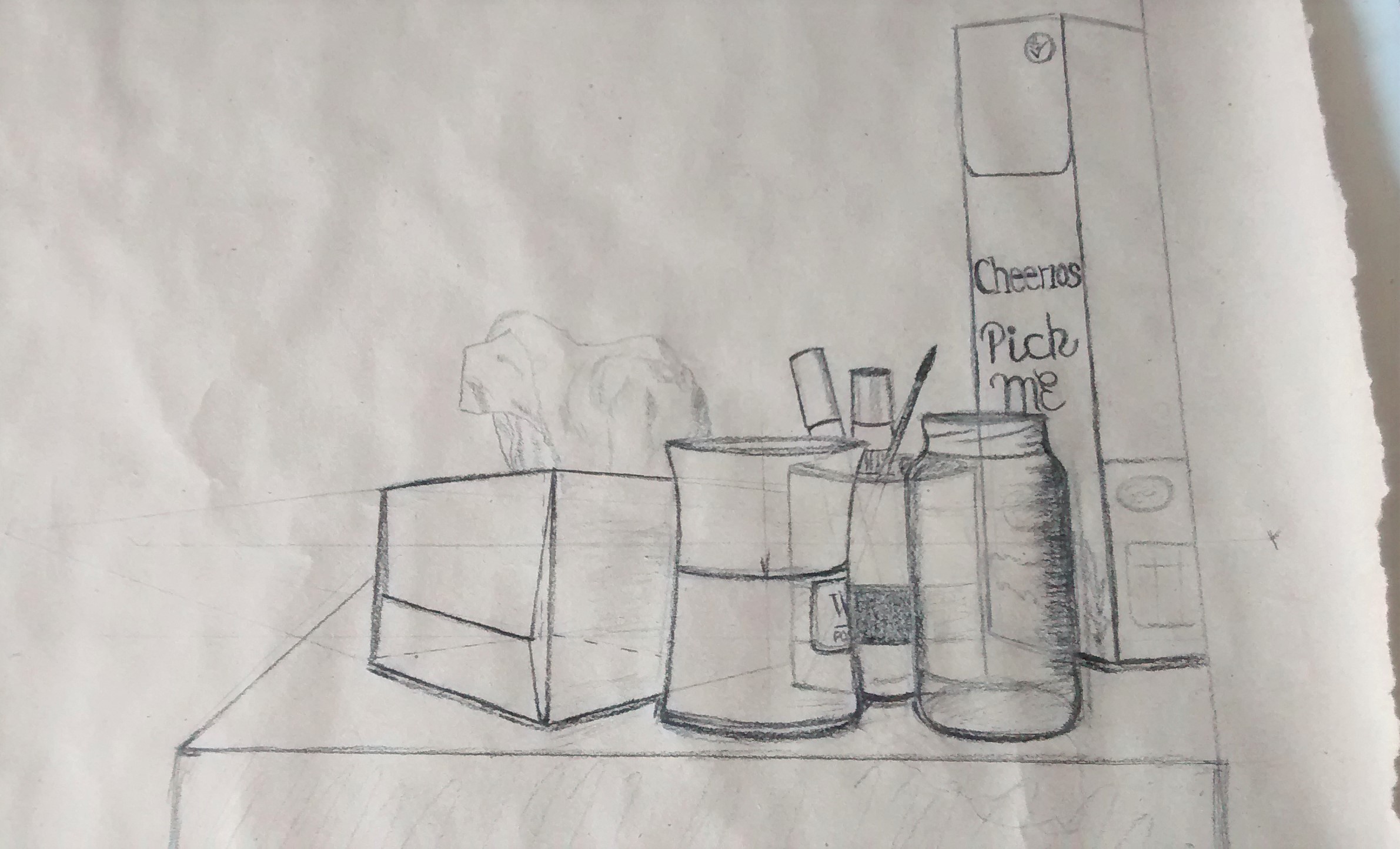
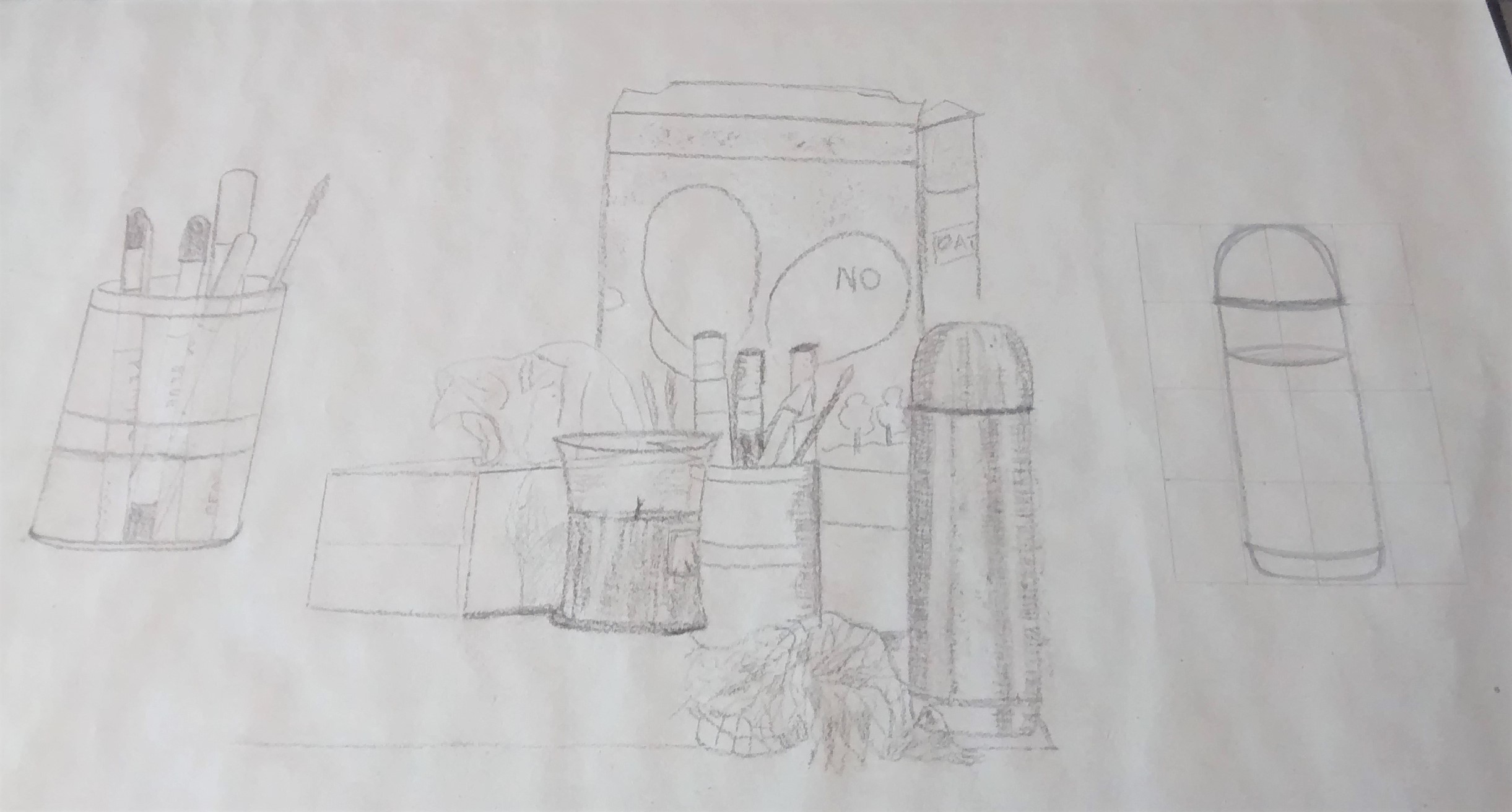
Exercise 1: Drawing Groups of Objects: This exercise asks you select a group of objects with varying 3D forms to make an A2 or A1 sized drawing using monochrome materials. It asks you to accurately give form to the objects by considering light, form, materials and the relationships between objects.

In this exercise you do well to challenge yourself. The range of drawings here give a sense that you are really figuring out how to accurately draw form here and through the process of making these sketches, thinking and looking closely, you have produced some accurate drawings that feel well balanced.

Do continue to take on exercises that feel challenging by breaking them down and making multiple attempts as you have done here.

As you begin to make more complex compositions in your assignment works and further in the course it can often be useful to begin the process by using this technique to lightly sketch things out. If you start from an accurate position you are likely to find the rest of the drawing quite fluid.

Exercise 2: Observing Shadow using blocks of Tone: This exercise asks you to draw a group of objects, creating a strong light source with a lamp and drawing in a range of monochrome tones to give form to them.

You show a good ability to use blocks of tone to create a sense of light and shadow here. If you are using a rough / powdery materials such as charcoal, you might find that increasing the scale of the drawing will help you to gain more crispness and contrast, giving the material more space to move.

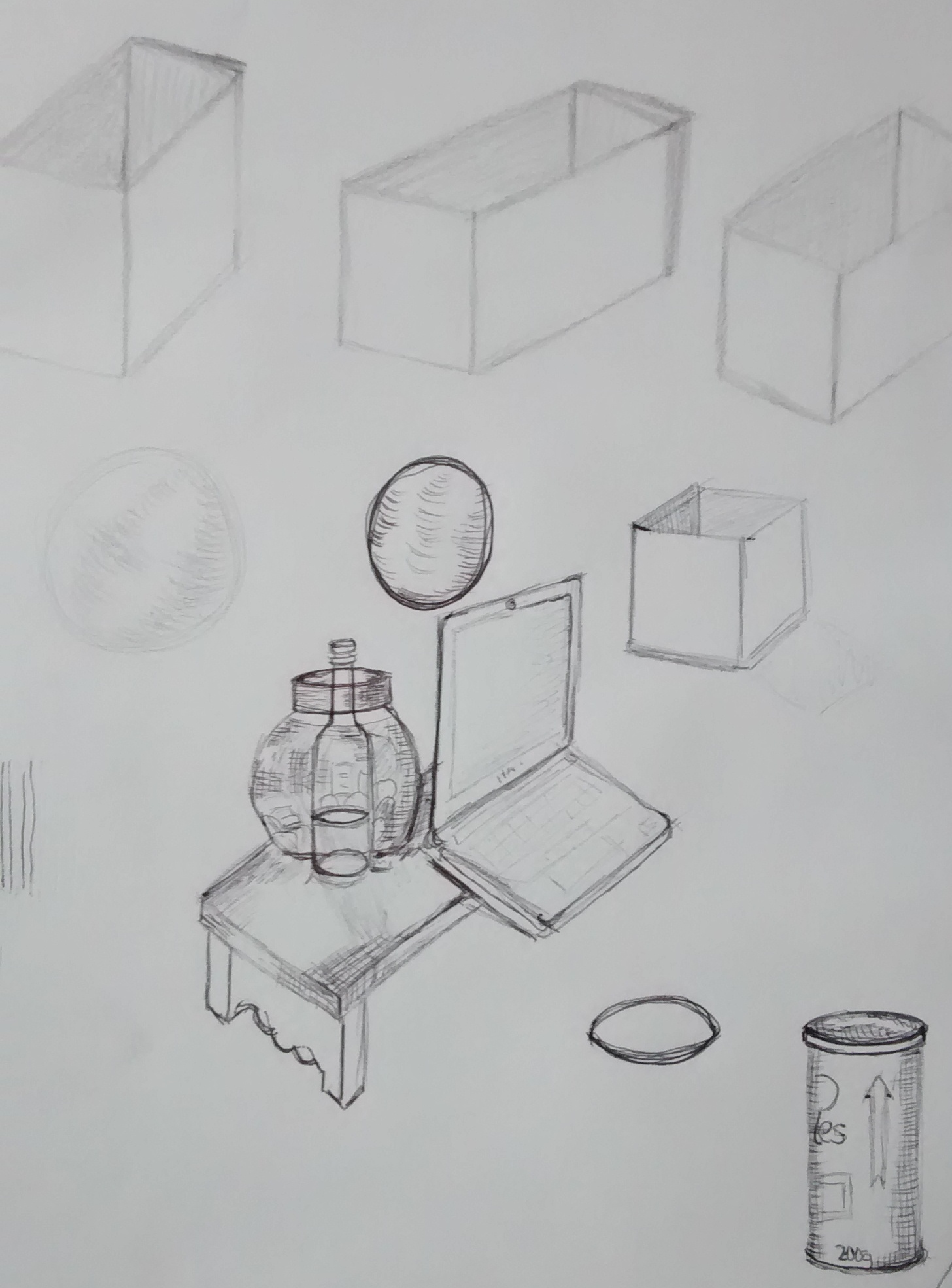
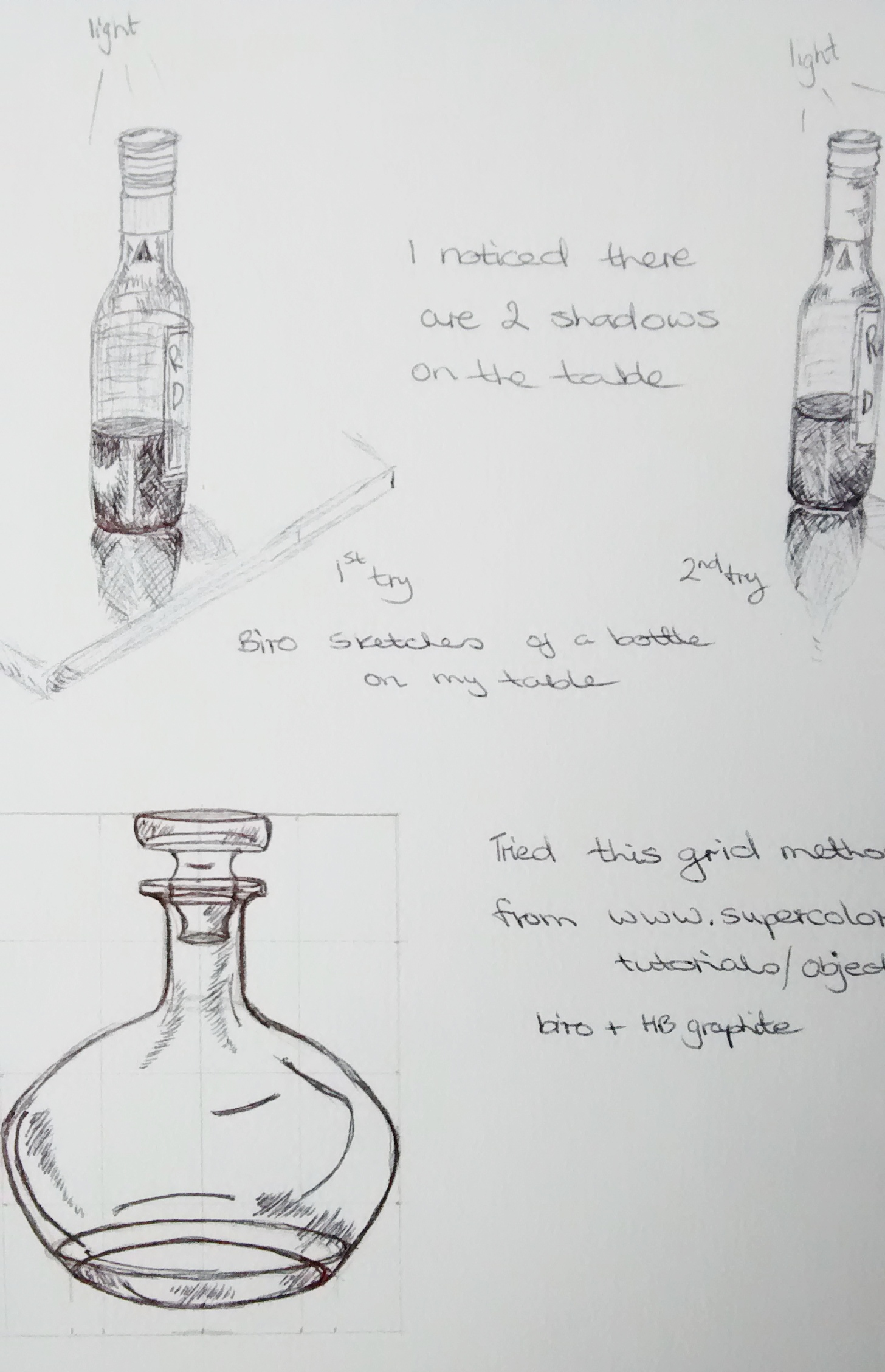
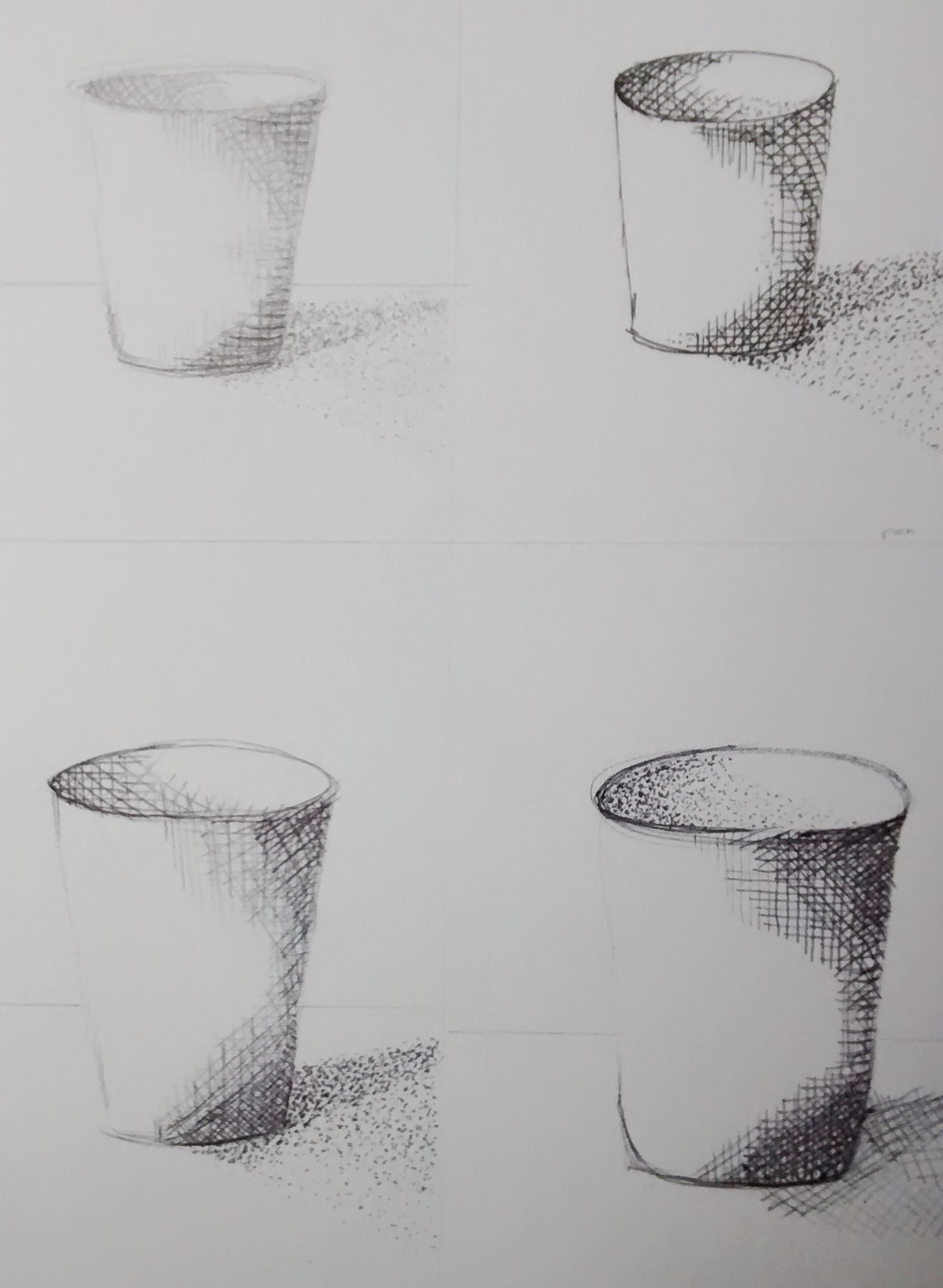
Exercise 3: Creating shadow using lines and marks: This exercise asks you to choose four objects to experiment with using a range of mark making; stipples, lines, hatches, to give form to the objects.

You show a good ability to use different lines and marks in order to give a sense of form here and your objects are also draw accurately. Your hatching and line work using pen shows a nice level of detail and sensitivity. It could be interesting to explore combining this with the expressive style of marks found in the ‘emotion’ excercise.

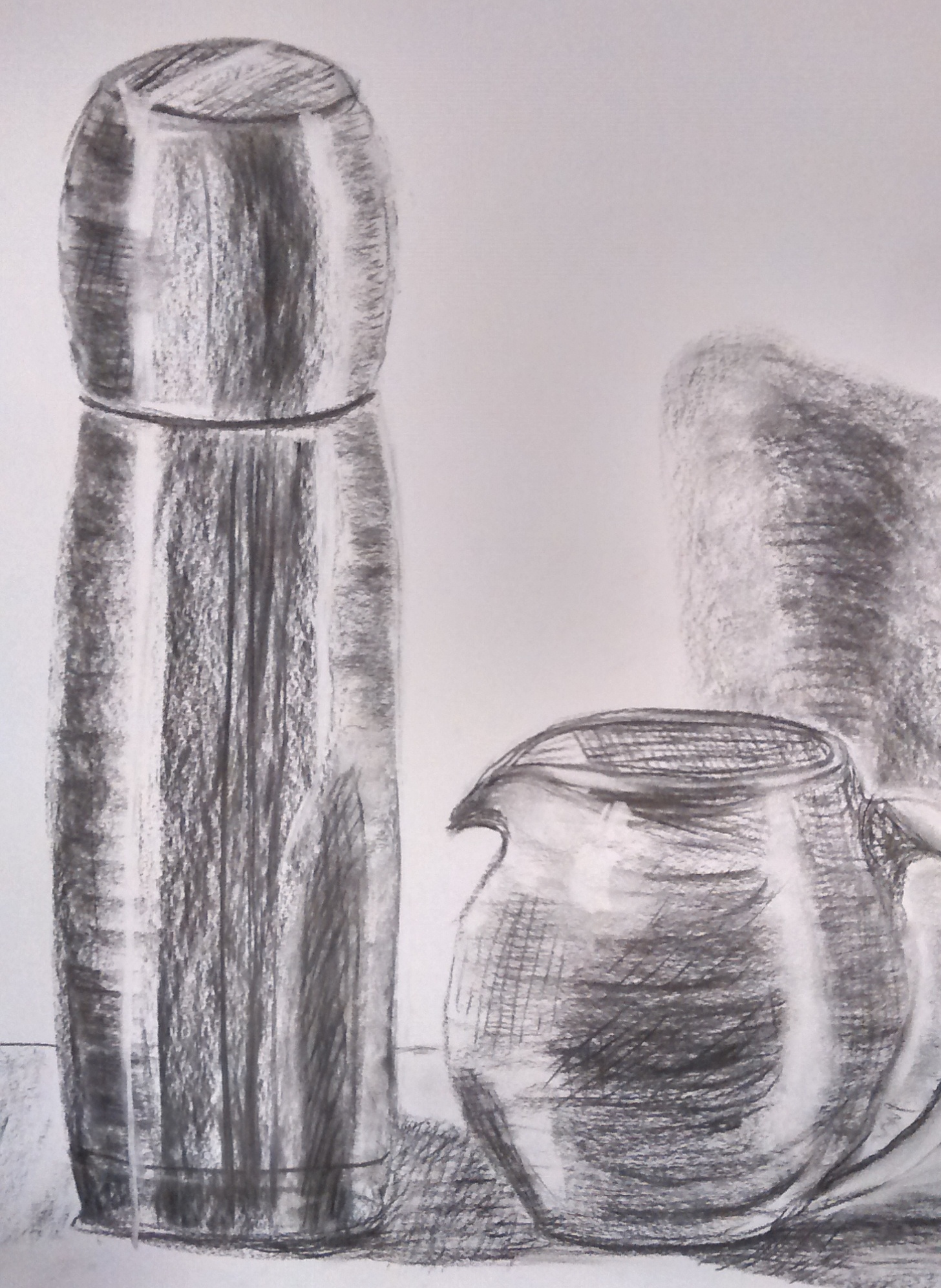
Exercise 4: Shadows and reflected Light: Choosing two objects with reflective surfaces, work at A1 or A2 with charcoal, conte and a putty rubber to draw the forms, drawing deep shadows and lifting out highlights paying close attention to the form and tone of reflections and shadows.

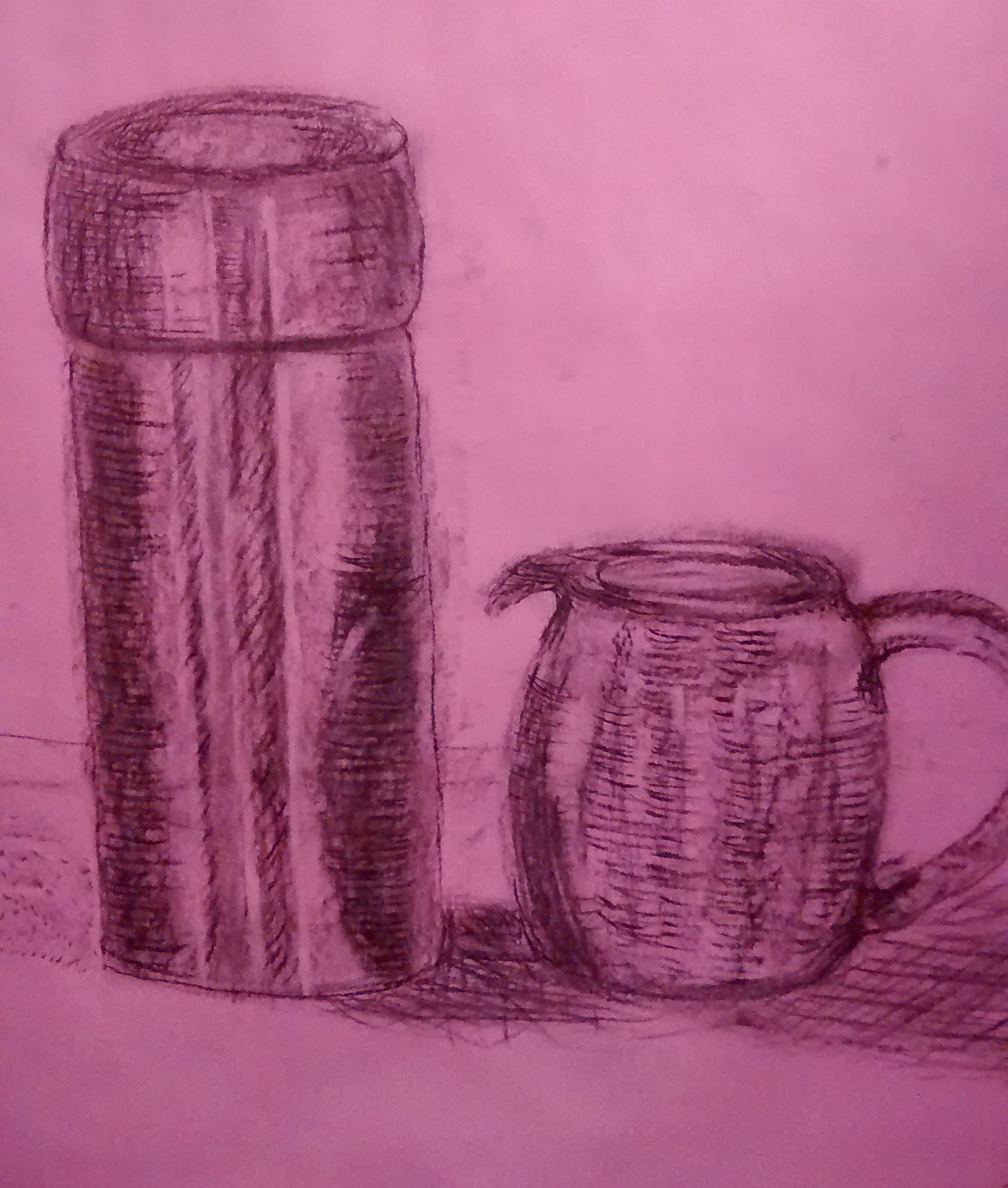
These drawings show that you have an awareness of the way that highlights and shadows can help to give form to an object. In your drawing on pink it might have been usefull to use a white in order to bring out these highlights a little more. Explore beggining these charcoal drawings with a pencil framework, following the exercise on shape and form earlier in this part of the course. This may help to give you a more accurate and stable framework and allow for you to then experiment a little more with the technique in the exercise (e.g. light and reflection)

Research

Study Two Trees by Odilon Redon, considering composition, tone, mark making and atmosphere. Use this and other artworks to analyse and discuss the use and impact of tone.

Your notes on the artworks of Odilon Redon show an understanding of the way that controlled use of tone can be used to add to a specific atmosphere or to tell a story. Also consider the way tone can help to guide the way that a viewer looks at the work. For instance in Redon’s ‘Trees’ The Darkness between the two trunks leads the viewers eye into the artwork

Suggested reading/ looking:

Anselm Kiefer Alter Und: inventive approaches to composition and still life.

Georges-Pierre Seurat – Stone Breaker: Approaches to using hatching to create tone

Jenny Saville: In the Realm of Others: Using charcoal on a large scale in both controlled and expressive ways.

Strengths
Ability to represent form through drawing
Use of a range of expressive and sensitive marks
Inventive approach to compositions Reflection on your learning process

Areas for development Use of sketchbook to develop final ideas. Fine analysis of artworks in your research Exploring reflection and shadow
Drawing at larger scales

Reflection on feedback Looking at my tutors suggestions on areas for development I will try to apply these recommendations in future work.

I have a growing understanding of all of the areas and particularly Use of sketchbook to develop final ideas has helped me throughout Assignment 2 – to plan and also to use as knowledge/reference for a final piece. I want to do this in a greater way as I am now seeing the value of this skill much more.

Fine analysis of artworks in your research I will use my reading time to look at how others analyse artworks and read reviews of exhibitions.

Exploring reflection and shadow

I need to be more aware and observant when working and also when outside to take note of how reflection and shadow are present.

Drawing at larger scales

Definitely an area where I don’t feel confident, I just have to do this !

Tutor name Natasha Russell Date 17/07/19 Next assignment due

Part 1 Form and Gesture

Part One – Form and Gesture

Project 1 – Feeling and expression

Exercise 1 – Experimenting with expressive lines and marks

Notes

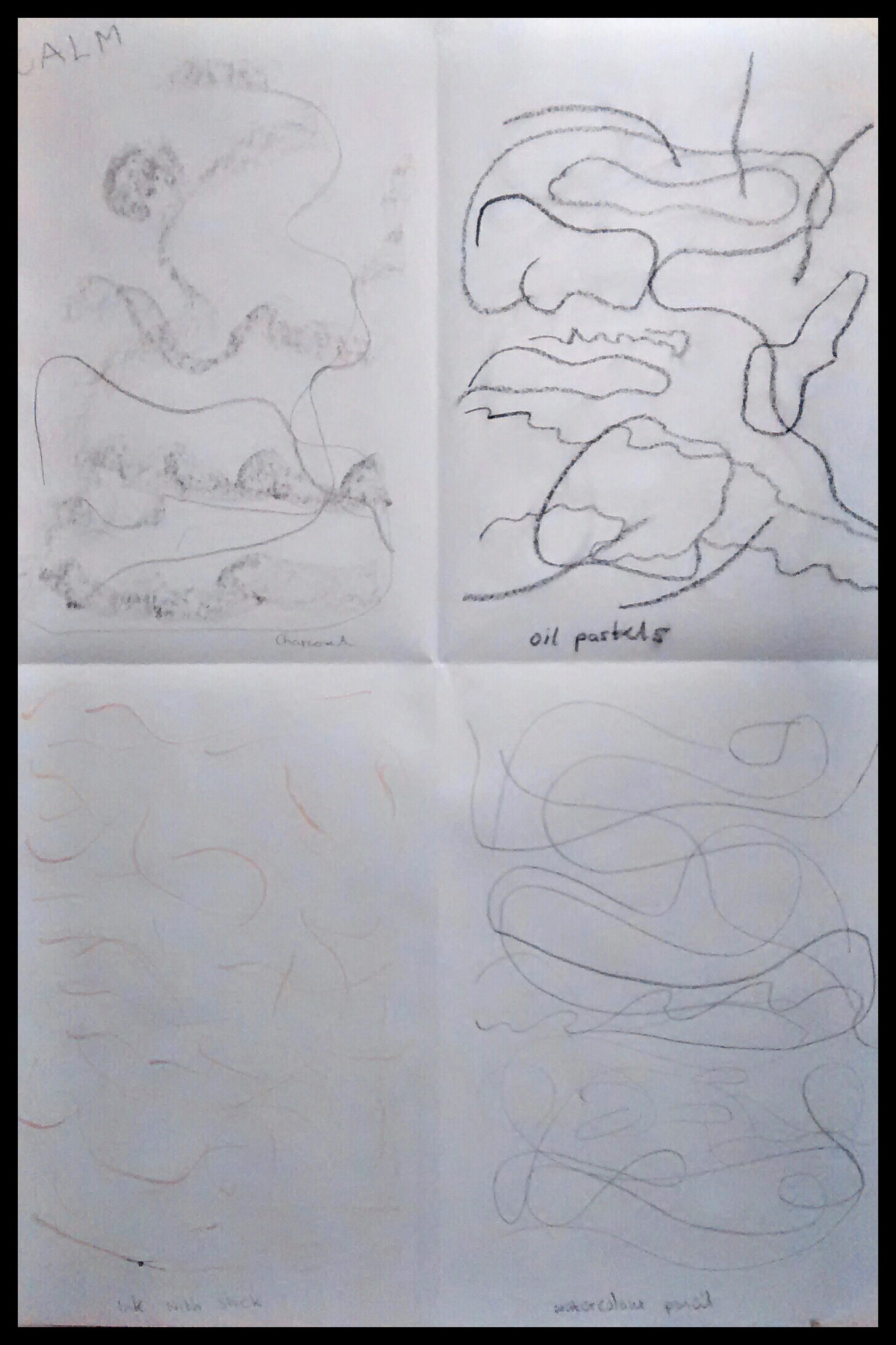
Calm – Happy to be drawing on paper without the pressure of producing a picture. Thoughts came to mind whilst drawing across the page, remembering stepping stones across a stream in Dovedale, the clear sparking water not too deep and the feeling of security as the stones already in place, take me across to the other side. I enjoy the moments and find my shapes and strokes are mostly soft curves, wavy lines with not too much pressure on the paper.

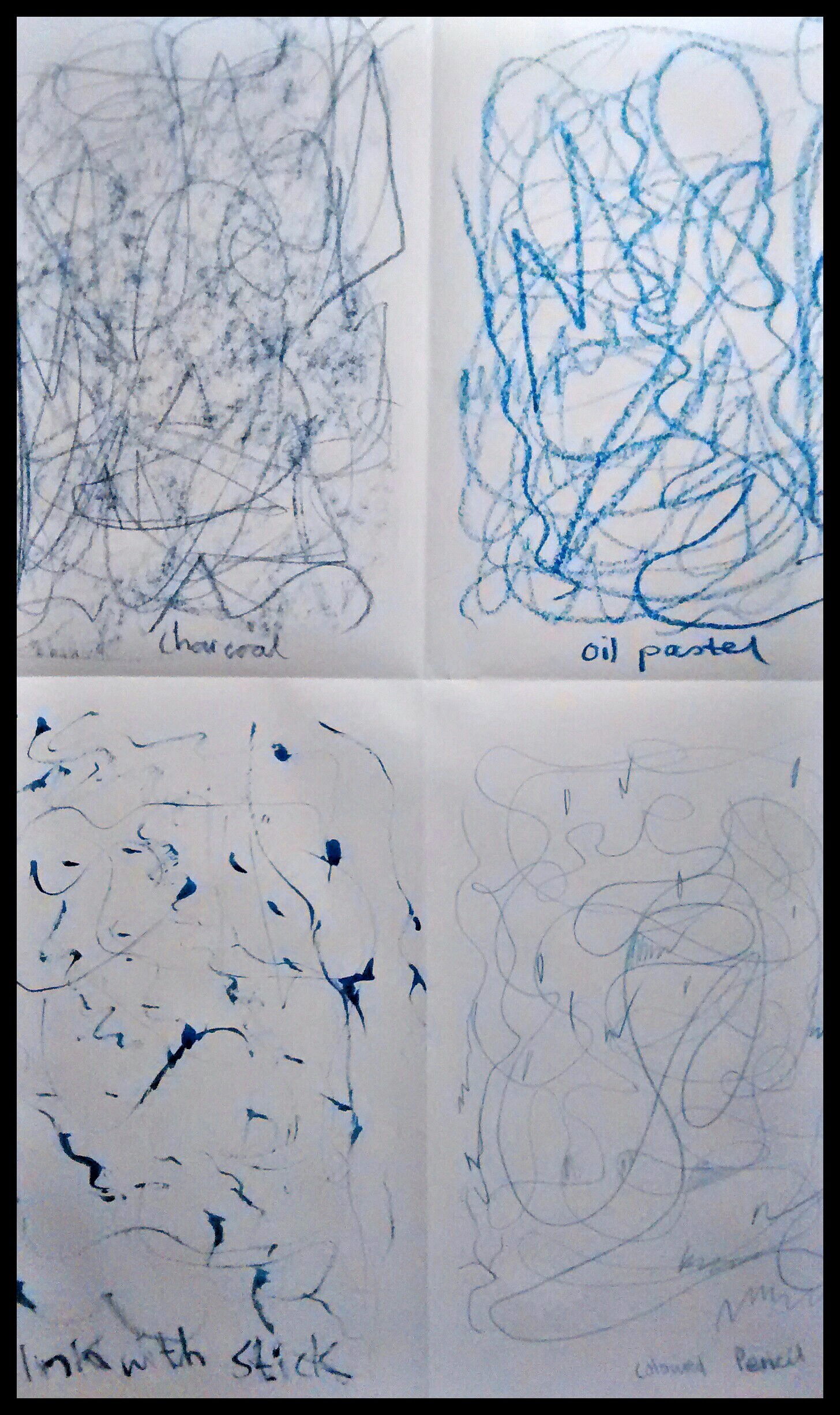
Joy – Great time drawing unbroken curves and swirls feeling like I was dancing on the paper with lilting movements. Enjoyed doing some splodges of ink with a stick. Liked the effects with charcoal drawn holding it on its side.

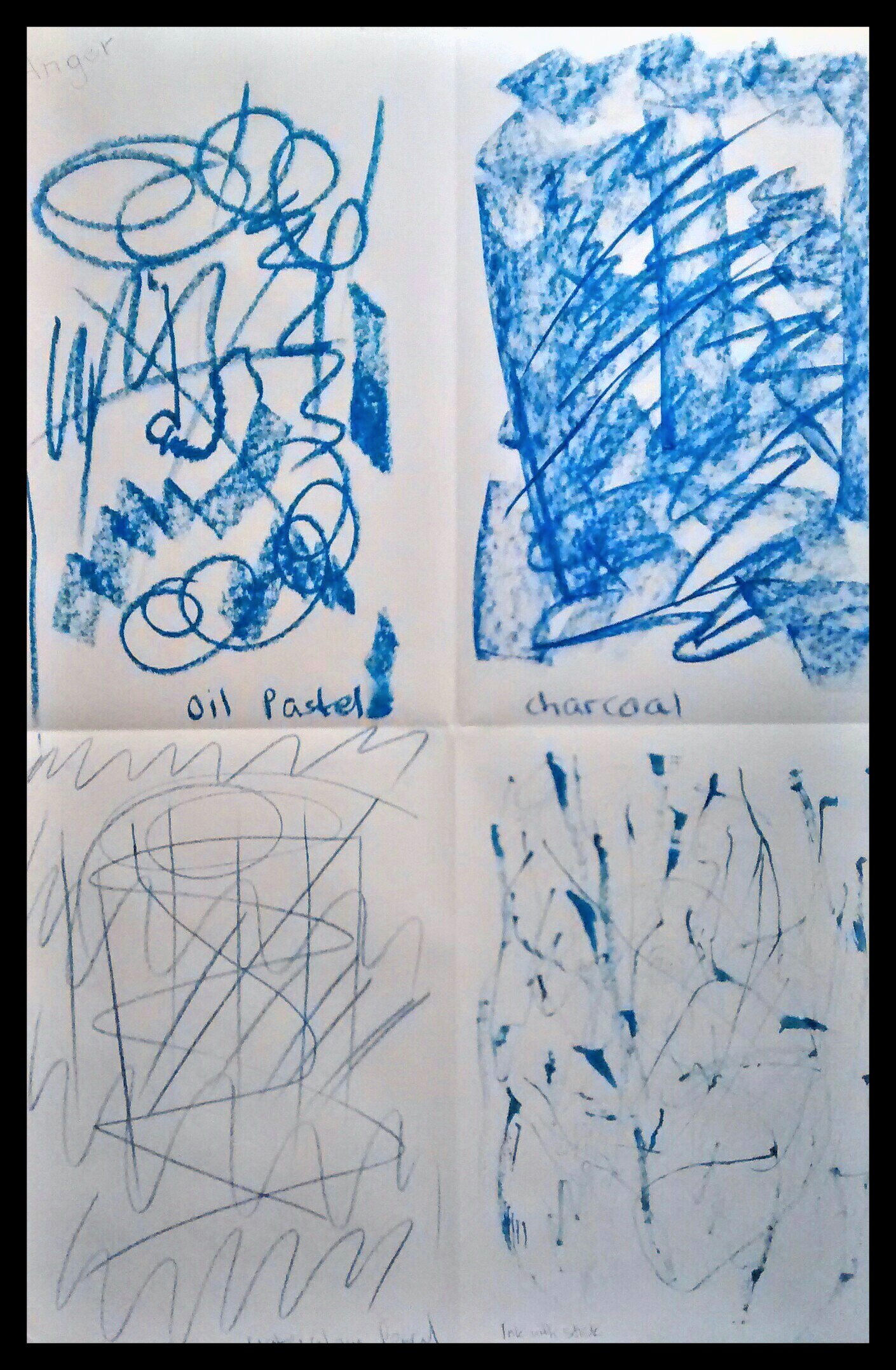
Anger – I didn’t want to do this one at first as I was afraid of the emotion. Once I started putting marks on paper it was easy to continue. Most of the drawings were lines and shapes with hard edges. Also the markings were darker as I applied them with more energy and pressure to the paper to release the angry feelings.

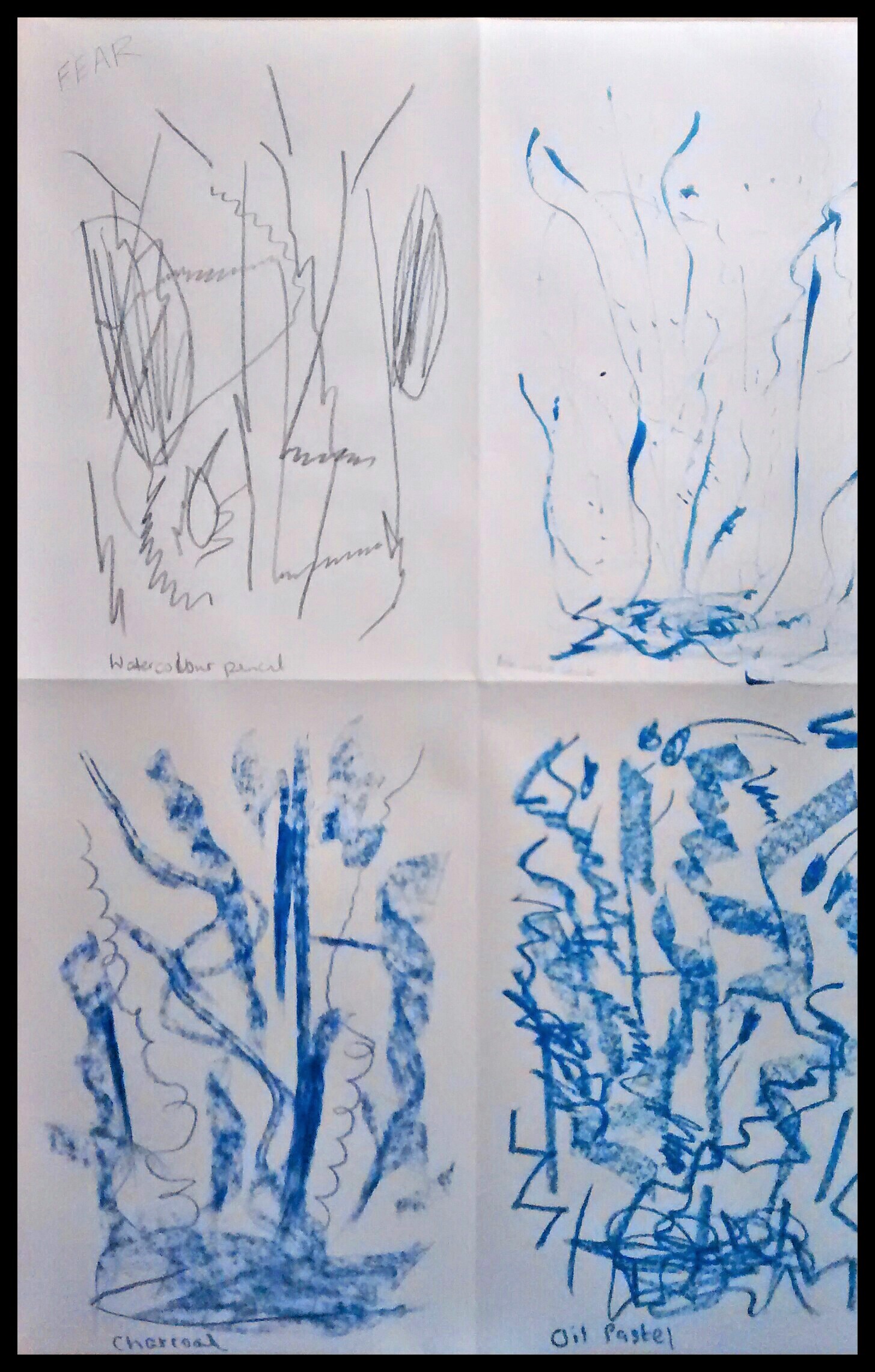
Fear – With this drawing I noticed most of the shapes and markings started at the top of the page and went downwards, often beginning with light strokes and increasing in intensity as I imagined a sinking feeling e.g. before a flight or public speaking. I also felt the fear of seeing a bat flying at night or going into a dark basement without a light.

Exercise 2 Experimenting with texture

Notes

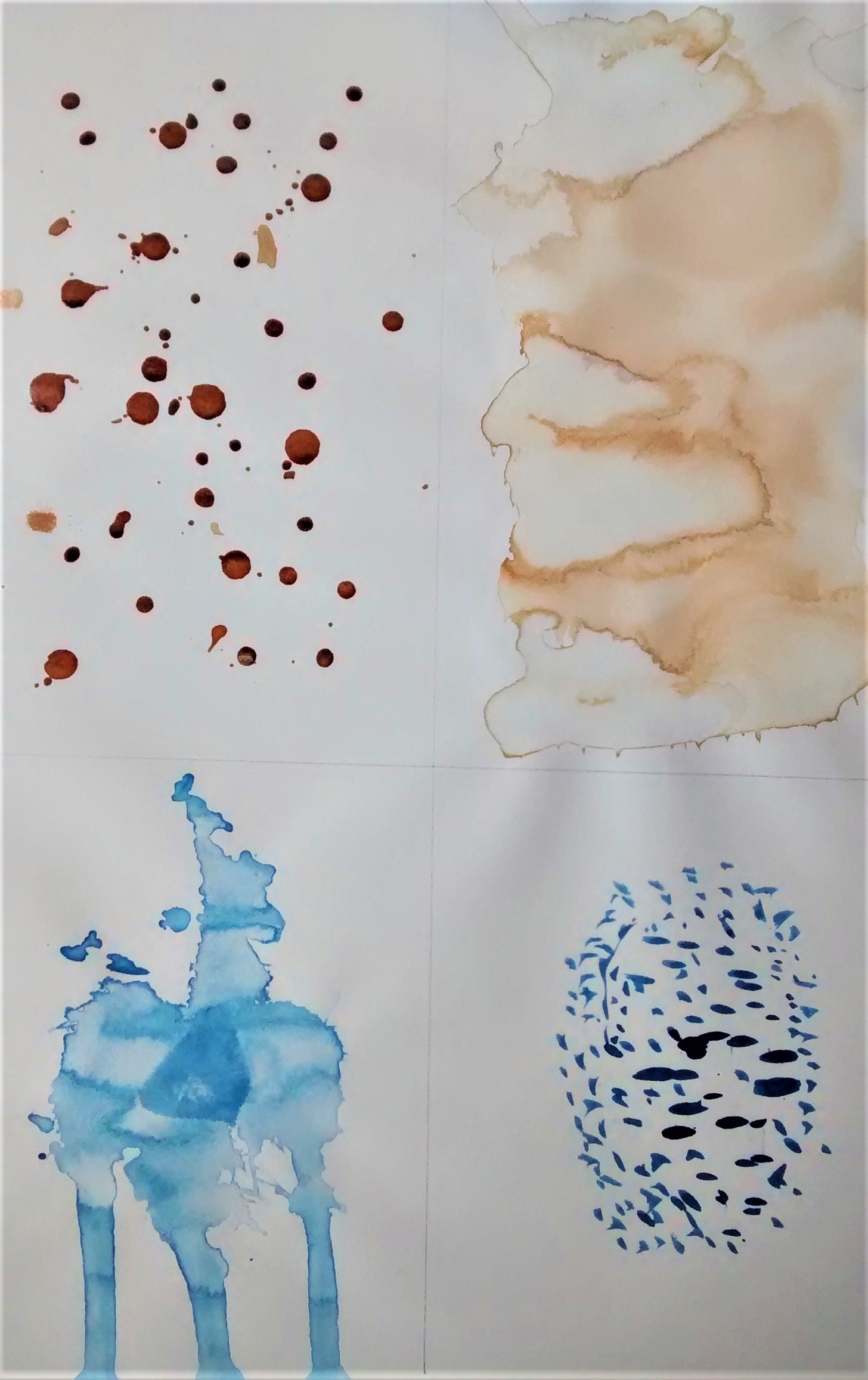
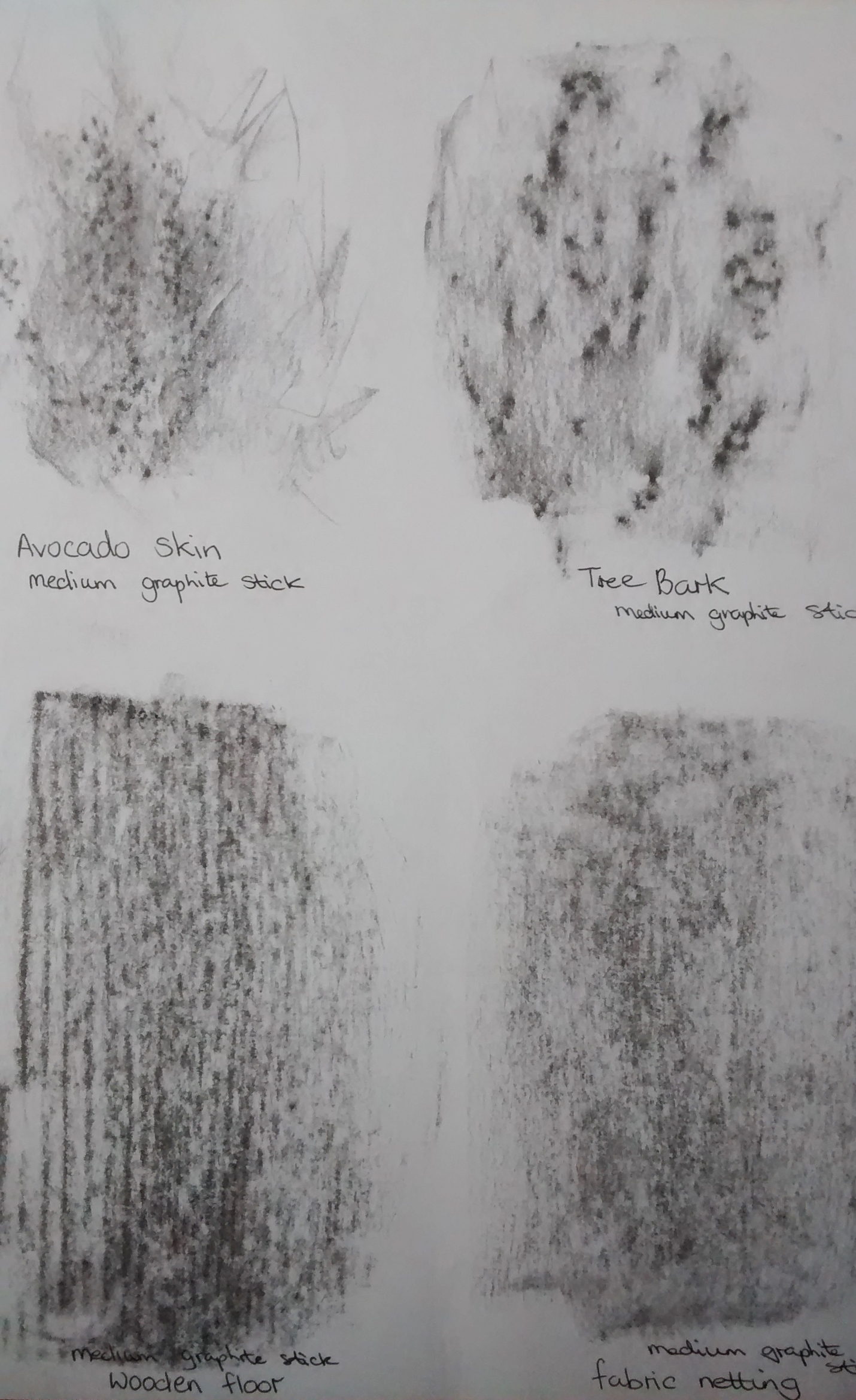
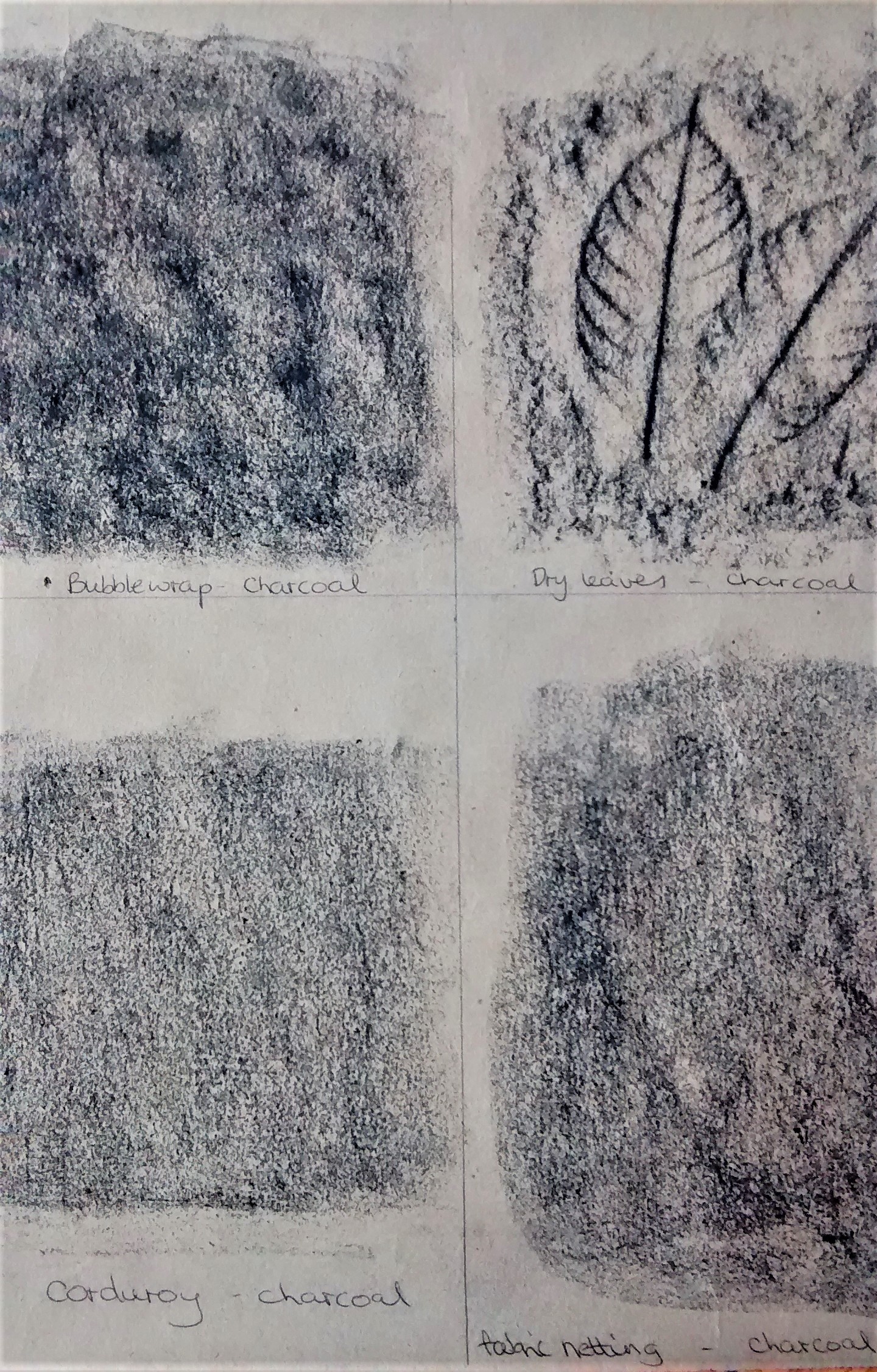
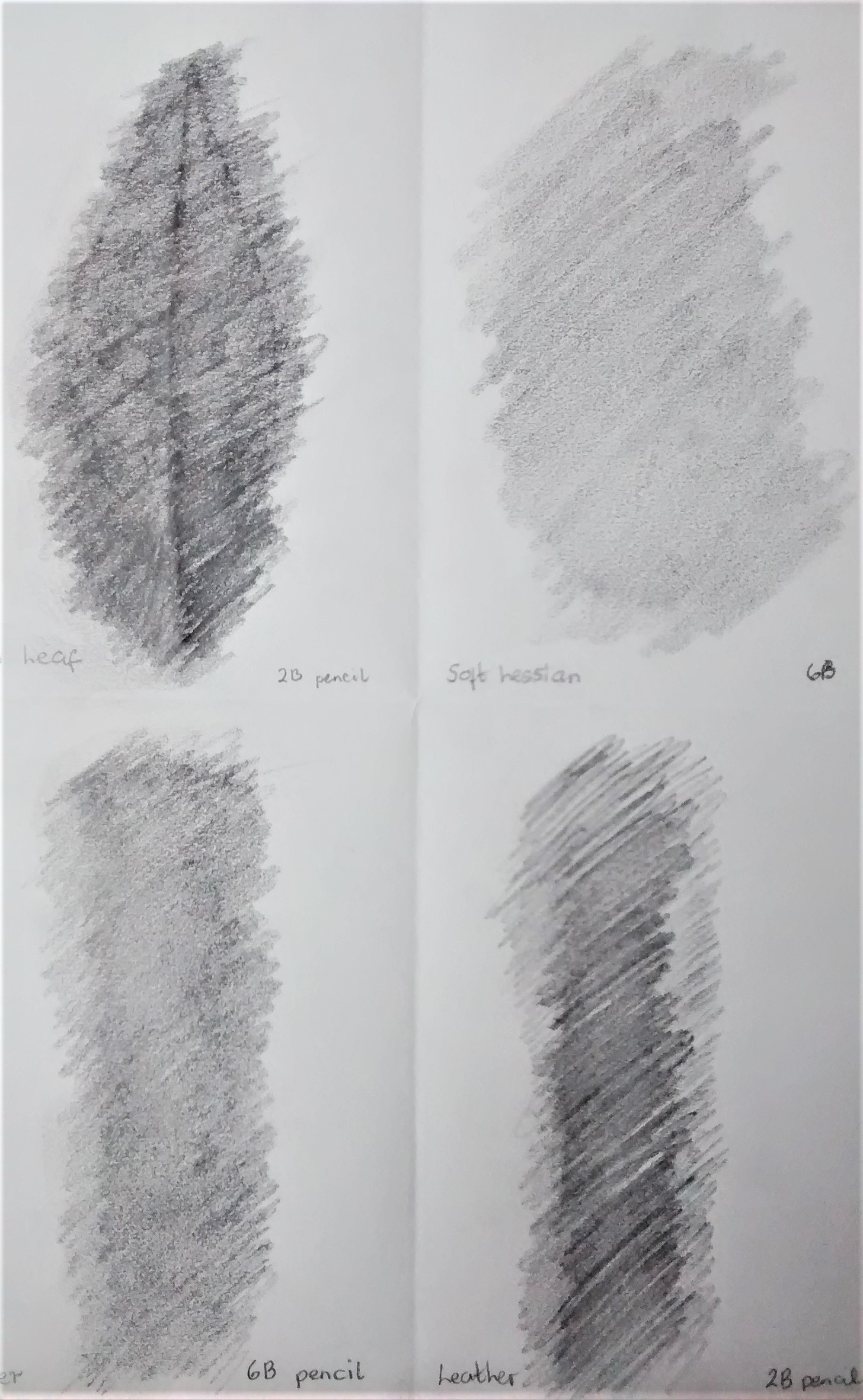
This was a very enjoyable exercise and I will try to describe some of the textures shown in the images above. I used a range of drawing tools – pencil 2B+6B, graphite stick, graphite pencil,chalk pastel, charcoal, drawing ink and writing ink.

Top left – Drops of drawing ink had a shiny surface when dry which felt smooth and crisp. The blue streaks were a stick dipped in ink which was difficult to control and so was more interesting.
Top middle – my favourite of all these experiments was the avocado with its wonderful waxy,rough textured skin which made an exciting frottage that would look stunning when incorporated into a drawing.

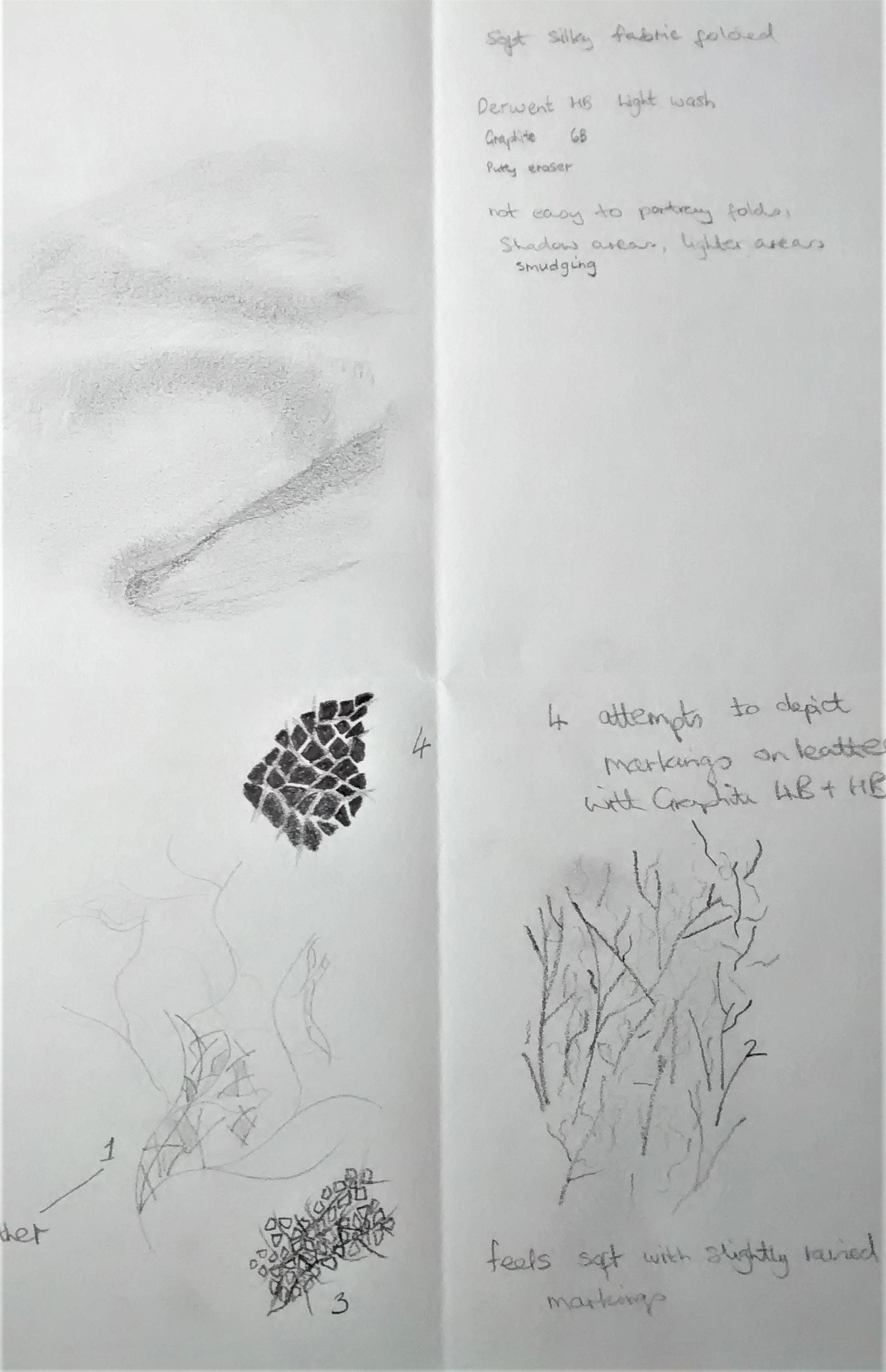
The image on the right shows my attempt to draw soft,silky fabric with graphite and a putty eraser plus some smudging. it wasn’t easy to portray the folds and I will need more practice at doing this. I also tried to depict markings on leather with graphite 4B, this was a challenge as there are so many marks and lines involved.

Project 2 Basic shapes and fundamental form


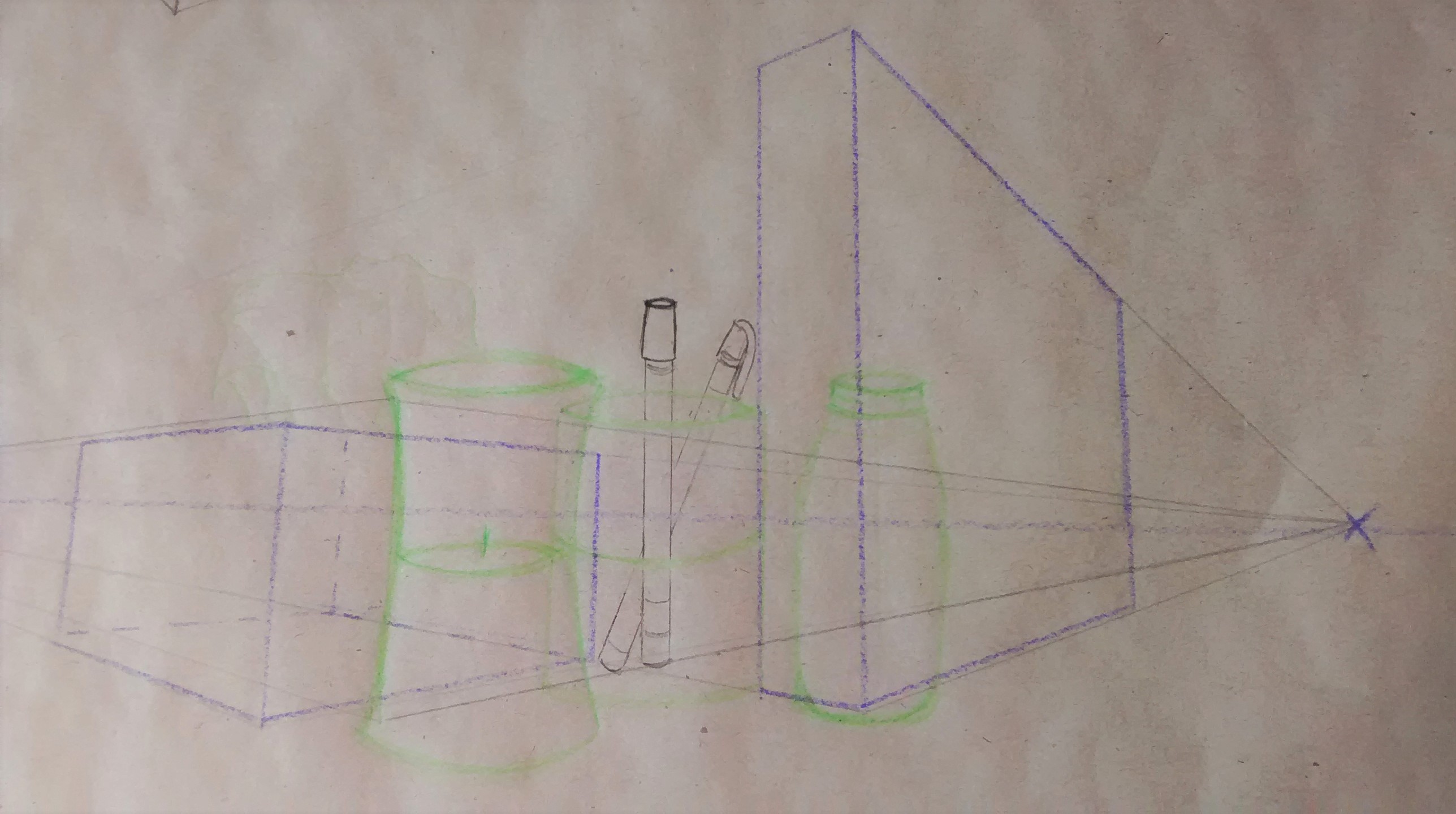
Exercise 1 – Groups of objects

Notes

I found this exercise quite difficult to begin with and wasn’t sure whether start drawing the objects at the back first or ones at the front. I read several books and watched videos about perspective and how to make objects look 3 dimensional – http://www.drawsh.com/fabric + How to draw fabric folds tutorial- youtube

The top left exercise was drawn in biro which I really liked and felt I could control the movement and detail.

The bottom right was the final drawing for exercise 1, I chose objects that were familiar and had a selection of shapes. I used brown paper and a charcoal pencil. We were asked to imagine seeing through the forms to the space inside , this helped me to focus closely on the drawing and try to connect the objects to each other.

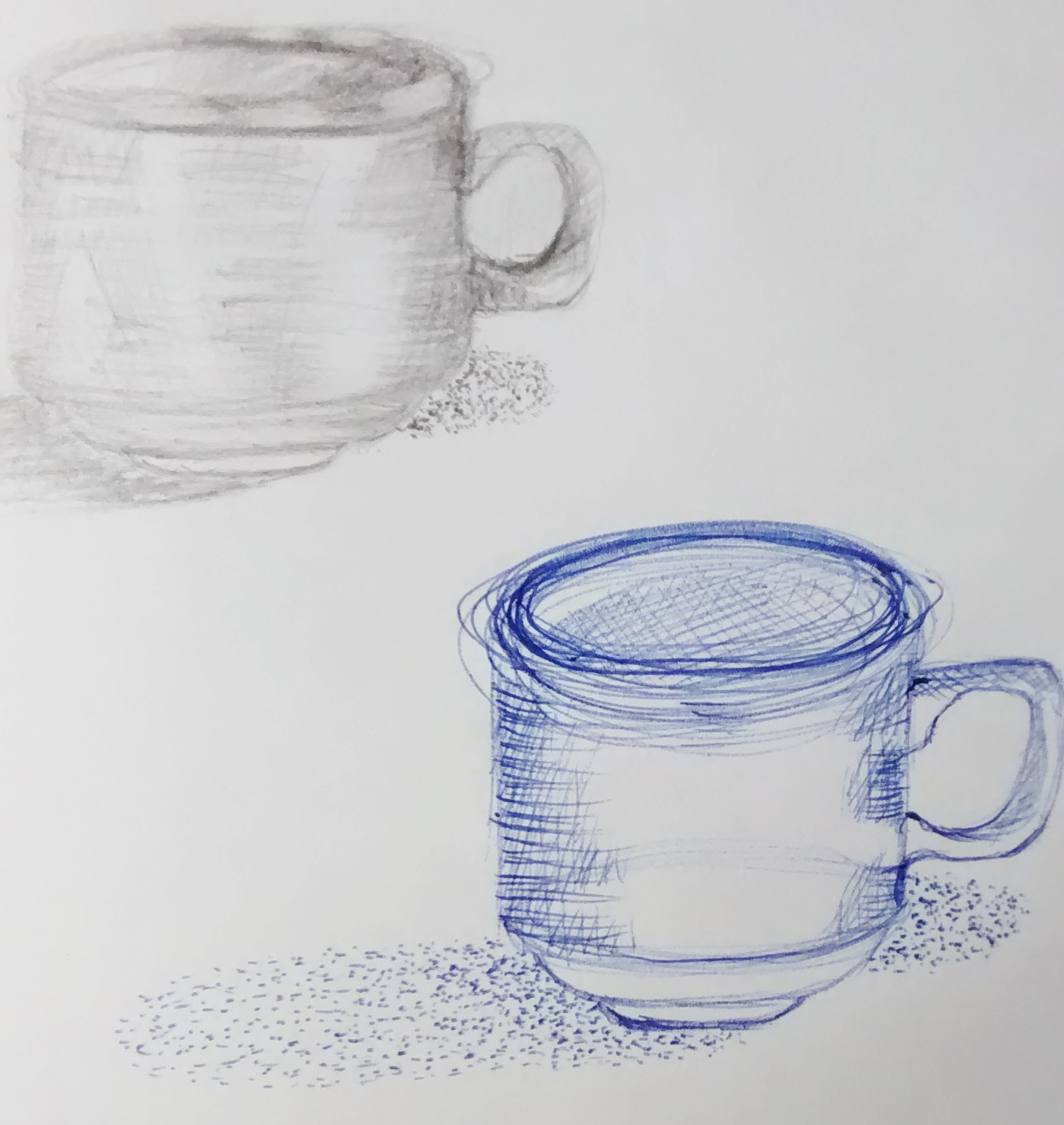
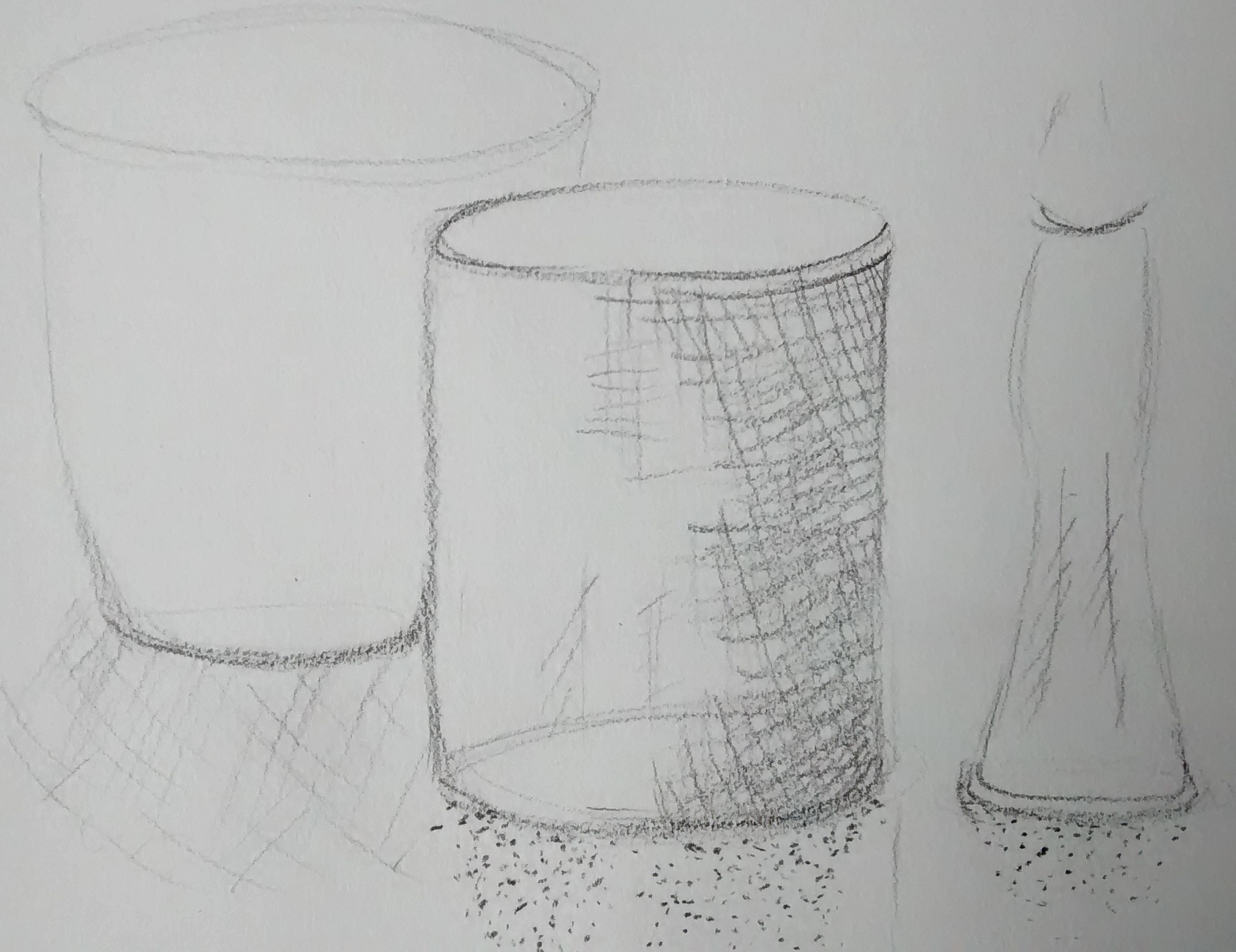
Exercise 2 Observing shadow using blocks of tone

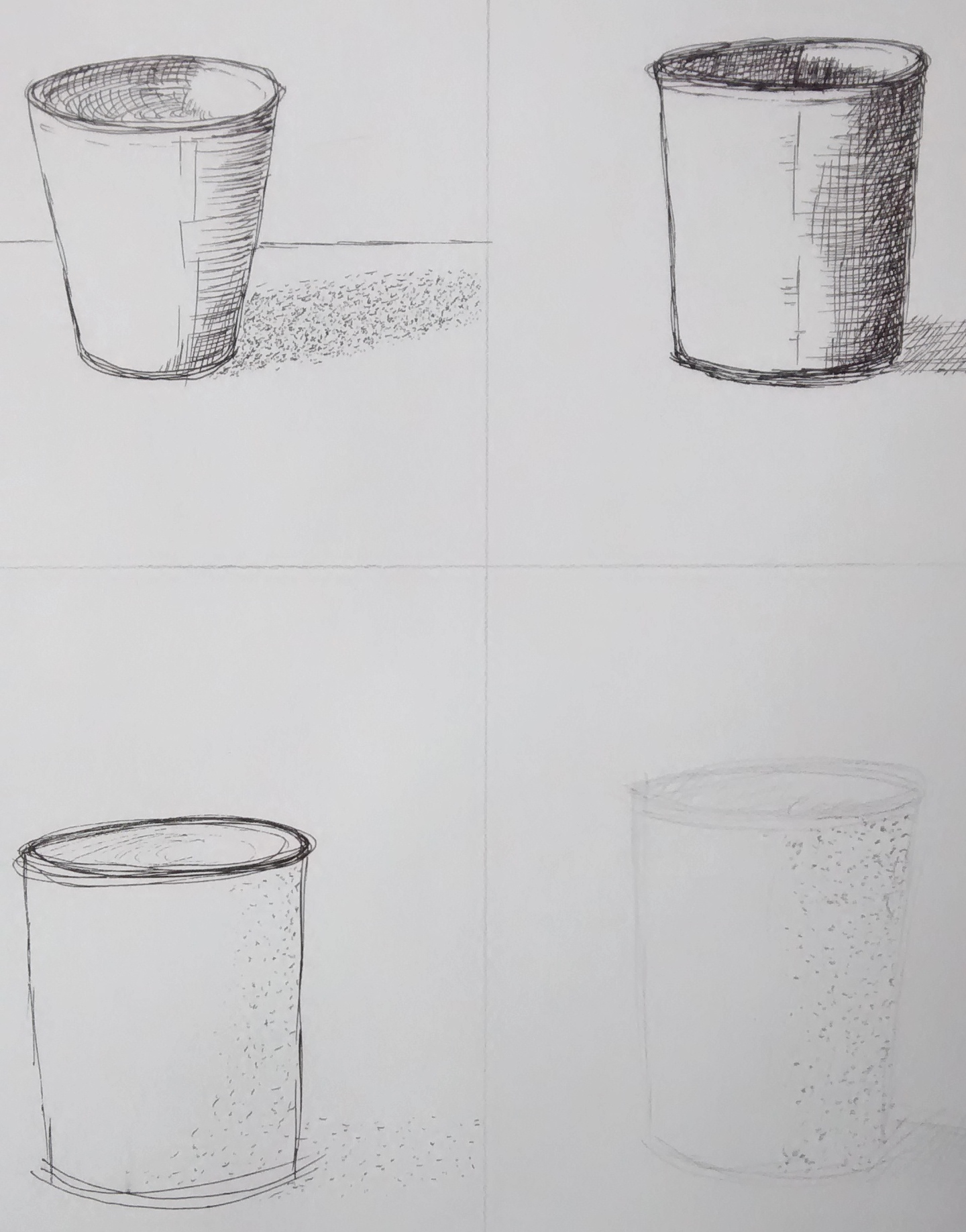
Exercise 3 Creating shadow using lines and marks

Notes for exercises 2 and 3


Research

Looking at the work of Odilon Redon ( Bertrand – Jean ) a French artist born in Bordeaux in 1840 ( https://www.wikiart.org/en/odilon-redon ) until he was in his fifties he worked almost exclusively in black and white—in lithographs and charcoal drawings. ( A Dictionary of Modern and Contemporary Art Ian Chilvers + John Glaves – Smith (3 ed.) )

‘His pastel drawings have been linked to the writing of Poe, Baudelaire and Mallarme, all connected conceptually to Surrealism…’ ( Betty Edwards,1999:243 )

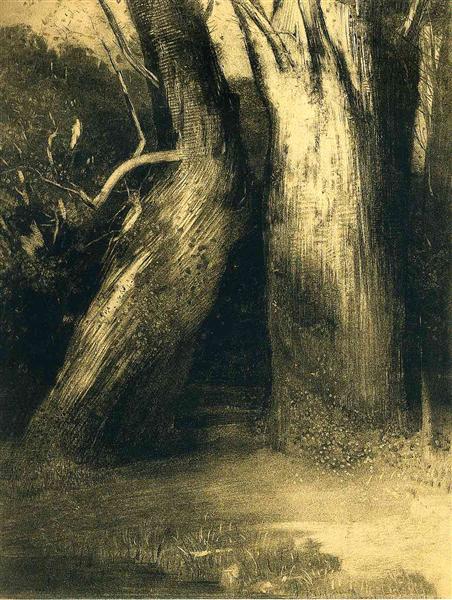
Below is a work that Redon created which shows a lot of expression of dark and light using charcoal, and the picture opens the viewers mind to ask – ”what atmosphere is being depicted here?” The tone of an artwork is important in giving feeling and depth, also in telling a story and creating an atmosphere, thus transporting the viewer to another place in their mind.

Image result for odilon redon two trees
Fig 1 Redon, Odilon Two trees ( 1875 )
fig. 2 Redon, Odilon 1895

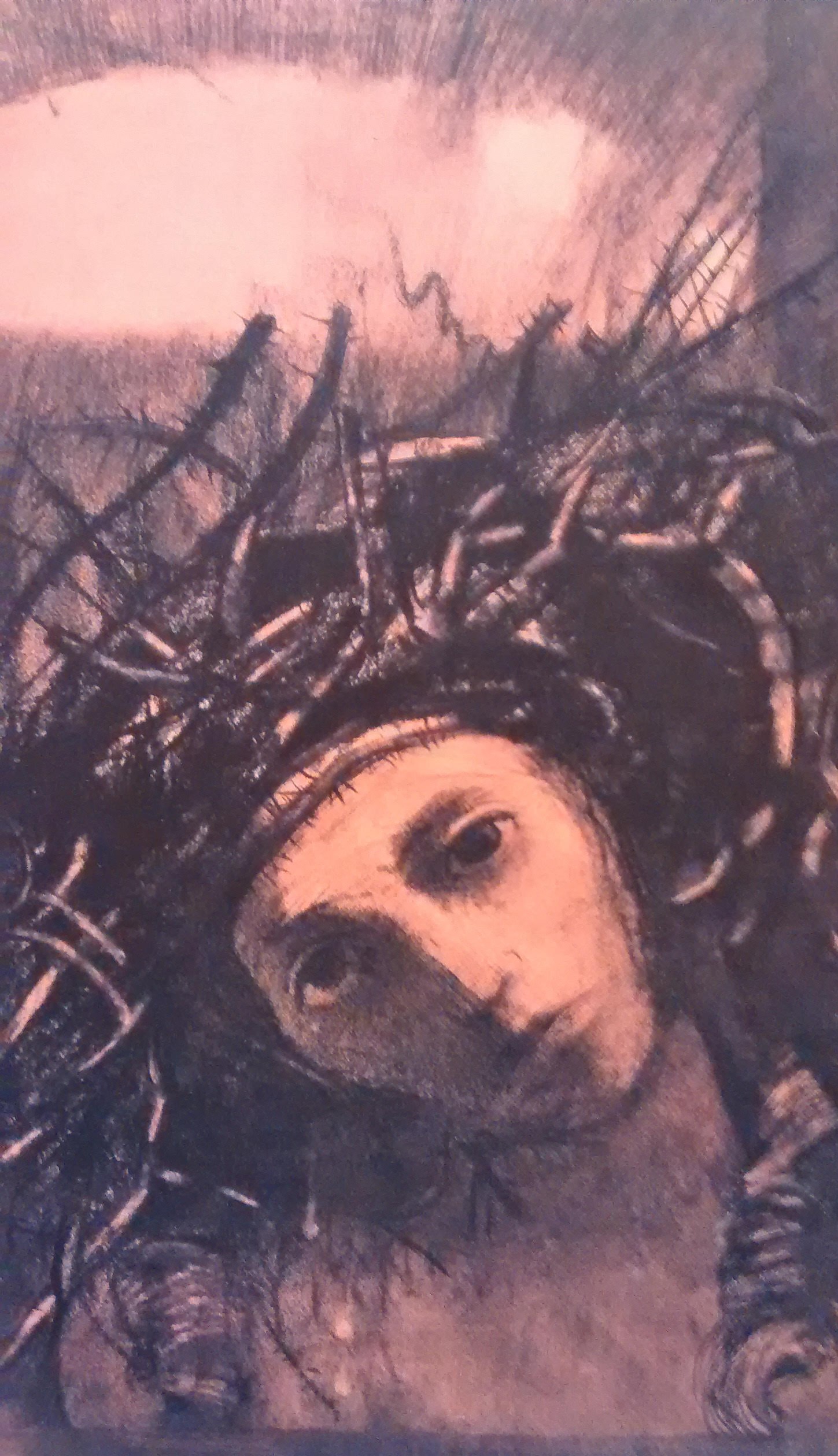
In the drawing above, Redon used charcoal, black pastel, black crayon, stumping, erasing and incising on buff paper. – Head of Christ 1895 The British museum- Master Drawings close-up – Julian Brooks. The dark charcoal tones evokes a melancholy feeling, in contrast to the light tones on the face and in the background – conveying a sense of expectation and hopefulness.

Exercise 4 Shadows and reflected light

I used charcoal and experimented with the pink paper first to see if it enhanced the shadows but I prefer the white paper for this exercise ( which is actually what we were asked to use ). We get more of a feel of the light and reflection with the black against the white and the lightest tone lifted with a putty rubber.